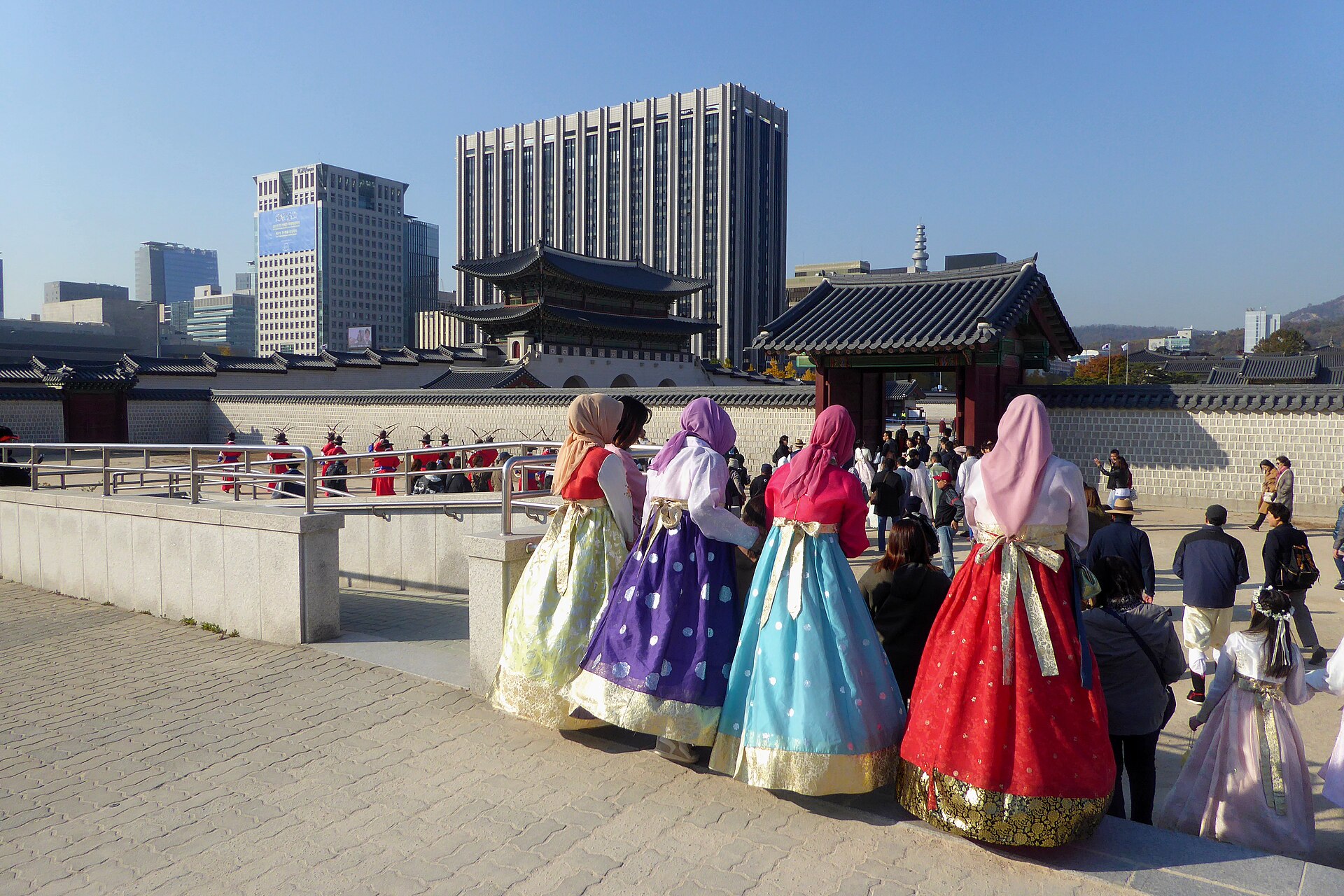
Hero image: Ethan Doyle White, Wikimedia Commons, CC BY-SA 4.0.
Walk toward Gyeongbokgung on almost any day and you’ll see dozens of people in bright, flowing 한복 (hanbok) drifting between the palace gates and the hanok alleys nearby. Almost none of them own it — they rented it an hour earlier from one of dozens of shops within a five-minute walk, and the rental itself comes with a genuinely useful perk: free entry to five of Seoul’s royal palaces.
The free palace entry rule, and what actually qualifies
Wearing hanbok gets you free admission to 5대 궁궐 (odae gunggwol), Seoul’s five grand palaces: Gyeongbokgung, Changdeokgung, Changgyeonggung, Deoksugung, and Gyeonghuigung. Staff at the entrance gate check outfits, and the standard they’re checking for is a proper top and bottom — a 저고리 (jeogori) jacket with a matching 치마 (chima) skirt or hanbok pants, not just a robe thrown over street clothes or a jeogori paired with jeans. Any rental shop will hand you a set that clears the bar without you having to think about it; the rule mostly matters if you’re mixing pieces yourself.
One 2026 timing note: if your trip falls during Chuseok (September 23–27, 2026), several palaces including Gyeongbokgung already offer free admission to everyone for the holiday — so the hanbok rule doesn’t add much that week specifically. It matters the rest of the year, when regular admission runs around ₩3,000.
Where to rent one
Rental shops cluster in a handful of walkable areas, and proximity to a palace is the whole point — you want to be in costume for as little walking as possible before the photos start:
- Near Gyeongbokgung (Samcheong-dong and the streets around the palace’s west and east sides) — the highest concentration of shops, all within a few minutes of the entrance
- Bukchon Hanok Village — shops here lean into the hanok backdrop for photos, slightly fewer crowds than directly at the palace gate
- Ikseon-dong — smaller boutique rental shops mixed in with the neighborhood’s cafés, a good pick if you’re spending the day there anyway
- Insadong — a short walk from Gyeongbokgung, with rental shops alongside the area’s craft and souvenir shops
Most operate as walk-ins — pick an outfit, get fitted, and you’re out the door in 15–20 minutes. Some shops take reservations through Naver or Klook if you want a specific outfit or time slot guaranteed, which is worth doing on weekends or during any national holiday when shops near Gyeongbokgung get busy fast.
What it costs and what’s included
Basic rentals for a roughly 2–4 hour block typically run ₩15,000–25,000 (about $11–18 USD). What’s bundled in varies by shop, but commonly includes:
- The hanbok itself, plus any accessories (hair pieces, a small bag)
- Basic hair styling — often a simple braid or updo to match the outfit
- Storage for your own clothes and bags while you’re out
Photography add-ons — a staff photographer, professional editing, a printed set — cost extra and are optional. You don’t need them; a phone camera and a friend cover most of what people actually want from the experience.
Traditional vs. “modern hanbok”
Shops usually offer two broad categories, and it’s worth knowing the difference before you pick:
- Traditional hanbok — historically accurate cuts and proportions, often in the colors and patterns associated with a specific era or royal status. This is what you’ll see in sageuk dramas.
- “Modern hanbok” (생활한복, saenghwal hanbok) — a contemporary reinterpretation with shorter skirts, simpler layers, and easier movement, sometimes mixed with modern fabrics or silhouettes.
Both qualify for free palace entry as long as they keep the top-and-bottom structure. Modern hanbok is generally easier to walk and sit in, which matters more than it sounds like it would after an hour of exploring a palace courtyard.
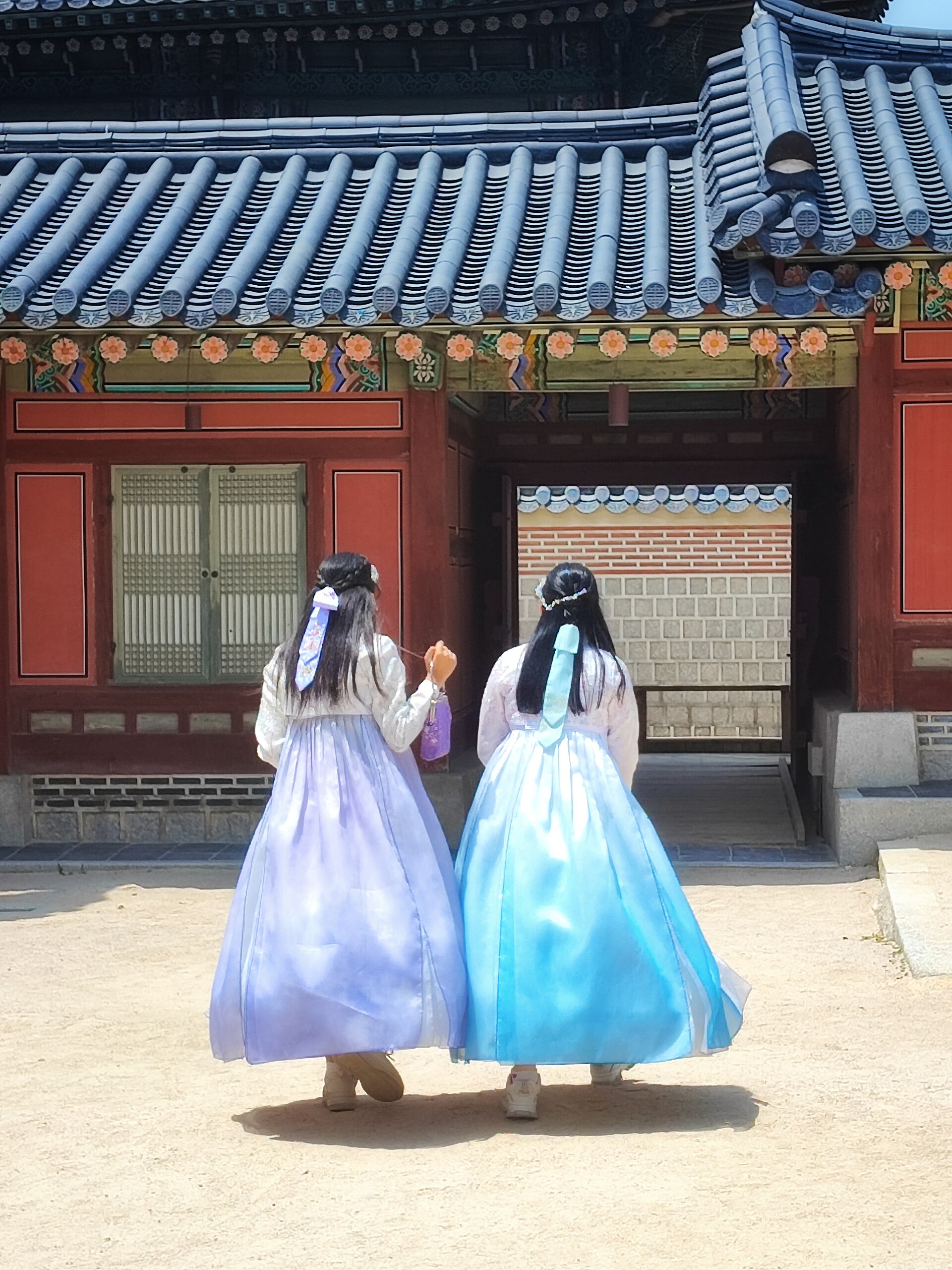
Image: Andamy, Wikimedia Commons, CC BY-SA 4.0.
Practical tips before you go
- Wear or bring flat, comfortable shoes. Palace grounds are gravel and stone, and most hanbok skirts hide your feet anyway — sneakers under a chima are a completely normal choice.
- Check the weather. Hanbok fabric runs warm in summer and doesn’t block wind in winter; shops often have seasonal weight options, so ask if you’re renting outside spring or fall.
- Don’t worry about tying it yourself. The 고름 (goreum) ribbon tie has a specific knot — staff tie it for you at fitting, and most shops will happily redo it if it comes loose.
- Go early or late for photos. Midday sun and midday crowds hit at the same time; the two hours after opening or the last hour before closing are quieter and better lit.
- Bring cash or a card for the deposit. Some shops hold a small deposit or ID until the outfit is returned — ask when you check in so there’s no surprise at pickup.
Quick planning checklist
- Pick a rental shop near the palace you’re actually visiting — Gyeongbokgung’s cluster is the default, but Bukchon or Ikseon-dong work if you’re spending the day in that neighborhood instead
- Budget ₩15,000–25,000 and about 2–4 hours for a standard rental
- Confirm your outfit has a top and bottom if you’re piecing it together yourself, rather than taking a shop’s standard set
- Skip it during Chuseok if free entry is your only reason — admission’s already free that week regardless
- Reserve ahead on weekends or holidays if you want a specific shop, style, or time slot