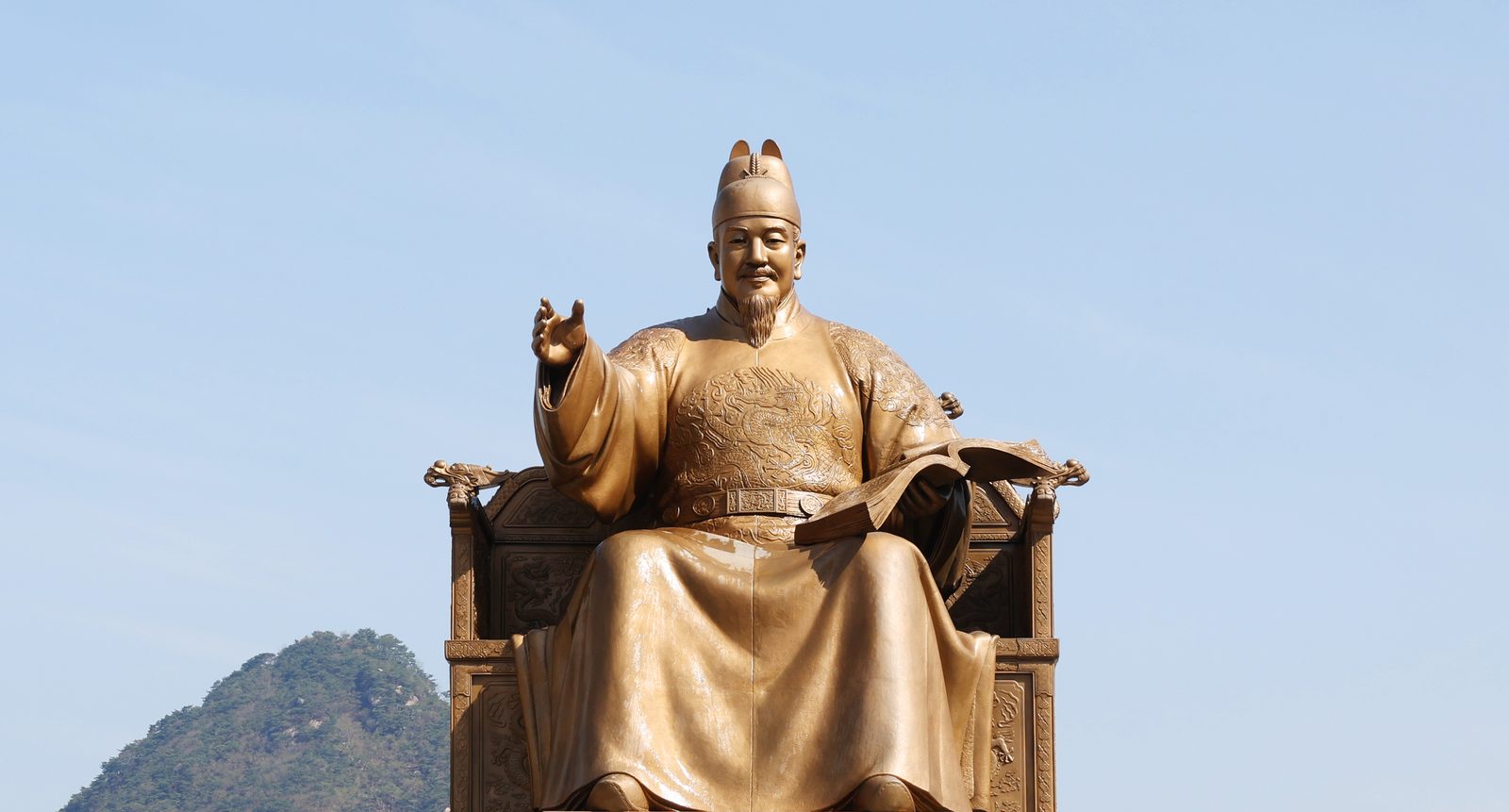
Hero image: Lee Jeong-woo / Ministry of Culture, Sports and Tourism, Wikimedia Commons, CC BY-SA 2.0. Cropped.
Most countries don’t give their alphabet a day off. Korea does. Every October 9 is 한글날 (hangeulnal), Hangul Day — a national holiday for the writing system on every sign, menu, and subway map you’ll see in Korea. It’s also a good excuse to finally learn to read it, because Hangul was designed, quite literally, so that anyone could.
Why an alphabet gets its own holiday
Before the 1440s, written Korean meant Classical Chinese characters — thousands of them, learned over years, and realistically only by the aristocracy. Most people couldn’t write down their own language at all.
세종대왕 (Sejong daewang), King Sejong the Great, set out to fix that. He completed a new script in 1443 and formally proclaimed it in 1446 in a document called 훈민정음 (Hunminjeongeum) — “the correct sounds for teaching the people.” Hangul Day marks that proclamation. The name itself says who it was for: not scholars, but everyone.
It didn’t win overnight. The elite pushed back for centuries, and Chinese characters stayed the language of official writing until the late 1800s. Hangul only became the unquestioned standard in the 20th century — which is part of why Koreans celebrate it with real pride today.
What makes Hangul so clever
Hangul is one of the very few writing systems whose inventors wrote down exactly how and why they designed it. The companion text, the Hunminjeongeum Haerye (“explanations and examples”), is listed on UNESCO’s Memory of the World register, and it reads like a design spec:
- Consonants look like your mouth. Each basic 자음 (jaeum) is a picture of where it’s said. ㄱ (g/k) shows the back of the tongue lifting toward the soft palate; ㄴ (n) shows the tongue tip touching behind the teeth; ㅁ (m) is the closed lips; ㅅ (s) is a tooth; ㅇ is the open throat.
- Related sounds share a shape. Add a stroke and you add aspiration: ㄱ → ㅋ (k), ㄷ → ㅌ (t), ㅂ → ㅍ (p). Once you know one letter in a family, you can guess the rest.
- Vowels come from three symbols. Every 모음 (moeum) is built from a dot for heaven, a flat line for earth (ㅡ), and a standing line for people (ㅣ). Put the short stroke to the right of ㅣ and you get ㅏ (a); to the left, ㅓ (eo).
- Letters stack into syllable blocks. ㅎ + ㅏ + ㄴ = 한, ㄱ + ㅡ + ㄹ = 글. That’s why Hangul looks like characters from a distance but works like an alphabet up close.
The original set had 28 letters; four fell out of use, leaving the 24 (14 consonants, 10 vowels) taught today. A line in the Haerye’s afterword famously claims a clever person could learn it in a single morning, and anyone else within ten days. For most visitors that’s closer to true than it sounds — a couple of evenings with a chart is enough to start sounding out café menus.
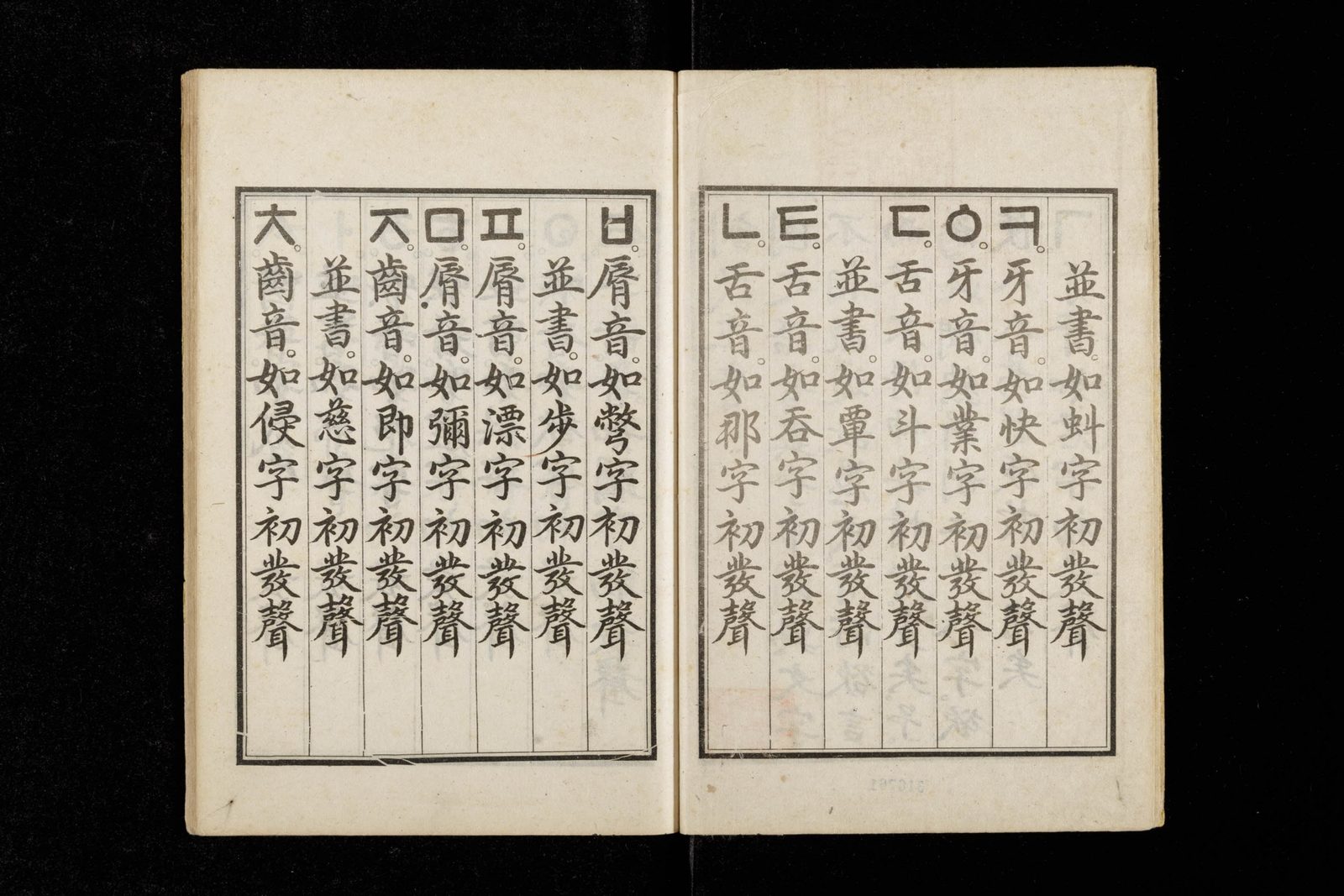
Image: reprint of the Hunminjeongeum Haerye, Wikimedia Commons, public domain.
Hangul Day in 2026: a three-day weekend
Hangul Day is a 공휴일 (gonghyuil), a full public holiday. (It was briefly demoted to a regular working day from 1991 to 2012, then restored in 2013.) In 2026, October 9 falls on a Friday, so Korea gets a long weekend from October 9–11 — coming just two weeks after the Chuseok break.
What that means if you’re visiting:
- Banks, post offices, and government offices close on the 9th. Shops, restaurants, cafés, and department stores stay open as normal.
- Palaces and major sights are busy. Expect weekend-level crowds on Friday too, and book KTX or domestic flights early if you’re leaving Seoul that weekend.
- Unlike Chuseok, nothing shuts down. It’s a day off, not a family homecoming holiday, so the city feels festive rather than empty.
(North Korea marks its own alphabet day on January 15 instead, tied to a different anniversary of the same script.)
Where to celebrate it in Seoul
- King Sejong statue, Gwanghwamun Square. The giant golden Sejong sits a short walk from Gyeongbokgung’s main gate, and the square hosts Hangul Day events most years — performances, calligraphy, and giant-letter installations. Check Seoul city listings close to the date for the 2026 lineup.
- “The Story of King Sejong” exhibition. Tucked underneath the statue (enter via the stairs behind it), this free underground exhibit covers Sejong’s inventions, Hangul included. Easy to miss, worth 30 minutes.
- National Hangeul Museum, Yongsan. A free museum dedicated entirely to the alphabet’s history, next to the National Museum of Korea (Ichon Station, Line 4 / Gyeongui–Jungang Line). It typically runs special programs around October 9.
- Try writing it yourself. Calligraphy workshops and stationery shops in Insadong are a good place to have your name written in Hangul, or to try the brush yourself.
Quick planning checklist
- Mark October 9–11, 2026 as a Korean long weekend — busy transport, open shops
- Plan errands around banks and post offices, which close on the 9th
- Pair Gwanghwamun Square with Gyeongbokgung — the statue, the underground exhibit, and the palace are all within a few minutes of each other
- Add the National Hangeul Museum if you’re already visiting the National Museum of Korea
- Learn the 24 letters before you go — it’s the most useful few hours of Korea prep you can do