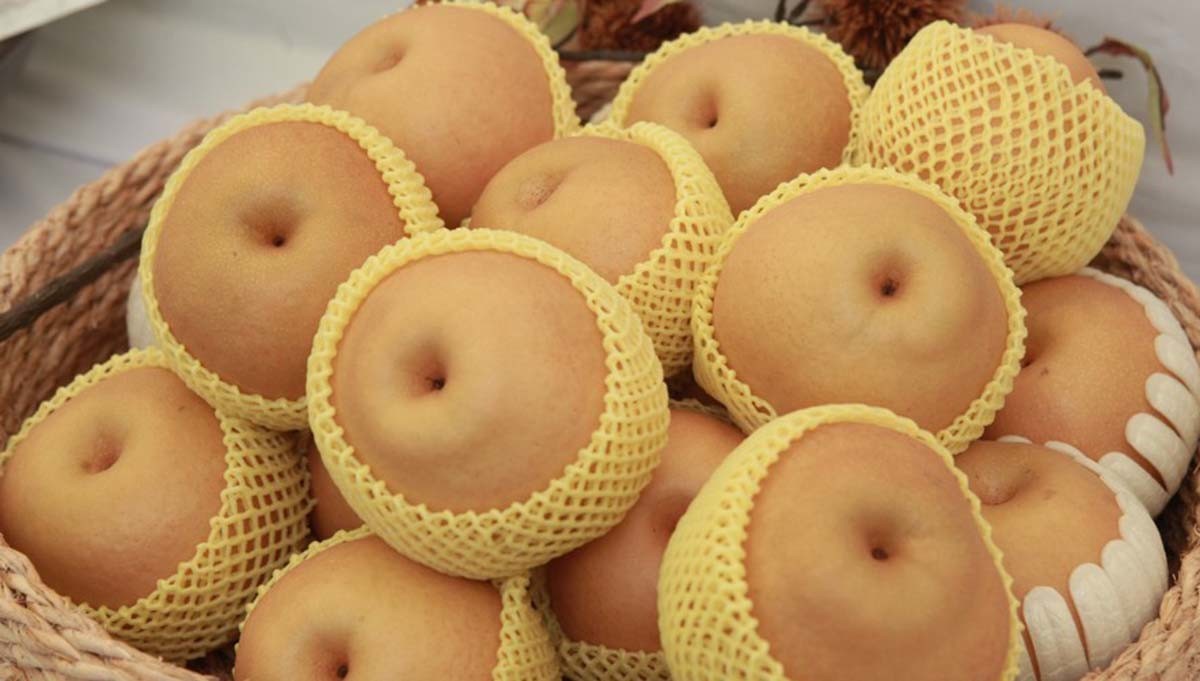
Hero image: a basket of individually wrapped Korean pears, via Wikitree.
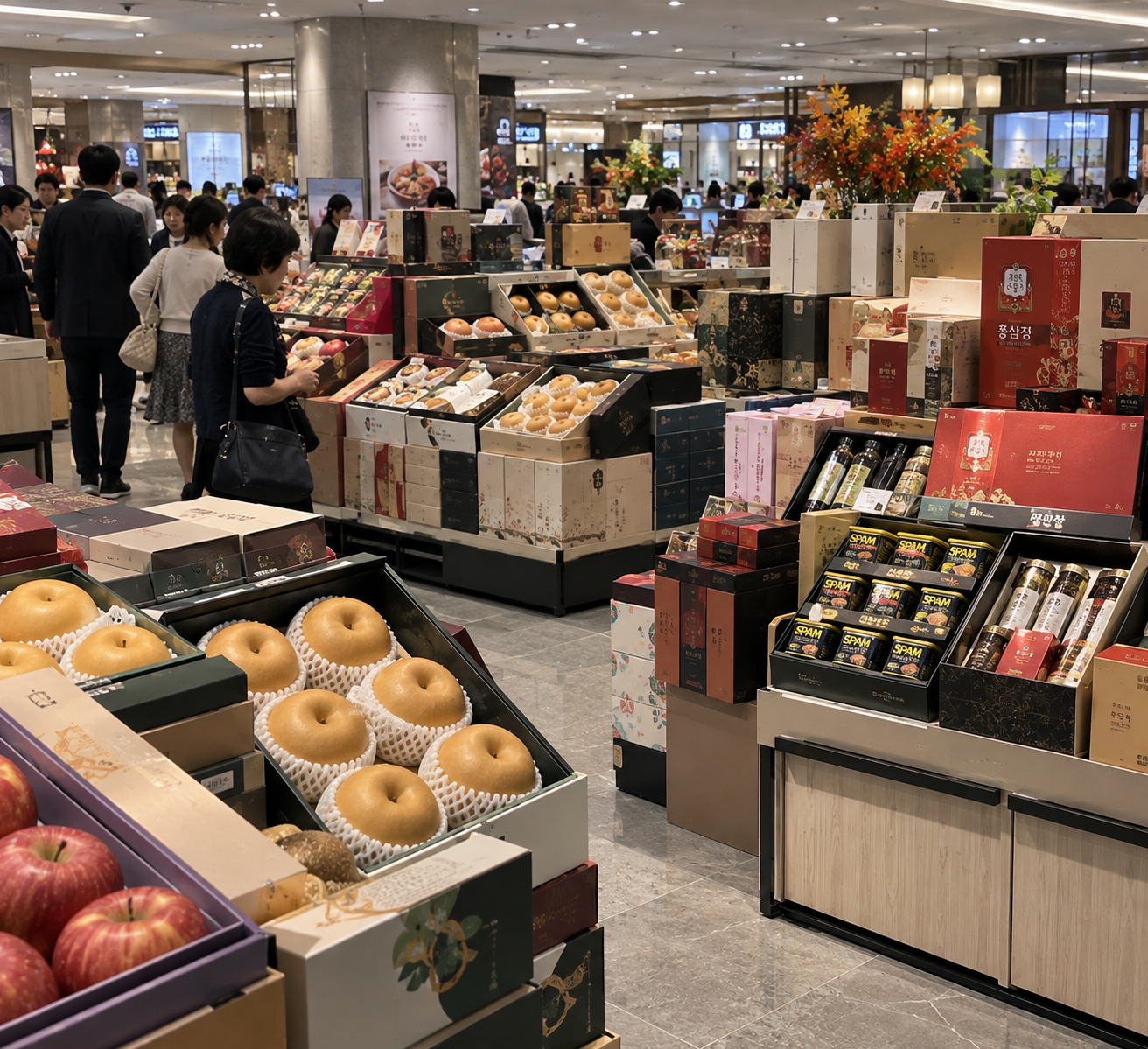
Walk through a Korean supermarket or department store before 추석 (chuseok) and ordinary products suddenly look very different. Pears sit individually wrapped inside elaborate boxes. Tins of Spam appear in presentation cases with ribbon handles. Cooking oil, tuna, shampoo, and toothpaste become carefully arranged gift sets stacked into pyramids at the entrance. Red ginseng can cost more than most people would spend on a souvenir. To a first-time visitor, some of this looks bizarre. In Korea, it makes a lot of sense — once you know what it’s actually communicating.
Gifts in Korea Aren’t Always About the Gift
A lot of Korean gift-giving is less about the object and more about the gesture — showing gratitude, marking an occasion, or simply not arriving somewhere empty-handed. It overlaps with 정 (jeong), a sense of warmth built up through small, repeated gestures, but jeong isn’t the whole explanation — plenty of it is just practical courtesy or holiday obligation, the same as anywhere else. What’s different is the range: the same culture that treats a boxed fruit set as a serious Chuseok gift for in-laws also treats a KakaoTalk coffee as a normal way to thank someone for holding the elevator. Both count. They’re just operating at different registers.
Why Are Korean Fruit Gift Boxes So Expensive?
The fruit aisle is usually where this clicks first. Korean pears — 배 (bae) — apples, and grapes are graded for size, symmetry, and sweetness, and the best of each harvest gets pulled out, individually wrapped, and boxed for gifting rather than sold loose. That grading is why a box of a dozen perfect pears can cost several times what the same weight of ordinary fruit would — you’re paying for selection, presentation, and seasonality, and buying it signals more effort than a regular grocery run. Handing someone a box like that around Chuseok reads as generosity in a way a plastic bag of produce doesn’t.
Yes, Spam Really Is a Gift
This is the one that trips up almost every foreigner: Spam, boxed with tins arranged like a jewelry set, is a completely normal and respectable Korean gift. It dates back to the postwar period, when imported canned meat was scarce and expensive, and CJ CheilJedang later began producing it domestically and marketing boxed sets specifically for Chuseok and Seollal. That association with a useful, slightly premium pantry staple stuck — it’s treated the way a set of good olive oil or a nice bottle of wine might be elsewhere, not as a joke item. The same logic covers tuna, cooking oil, sesame oil, shampoo, and toothpaste gift sets: something a household will genuinely use, bought at a nicer tier than you’d buy for yourself.
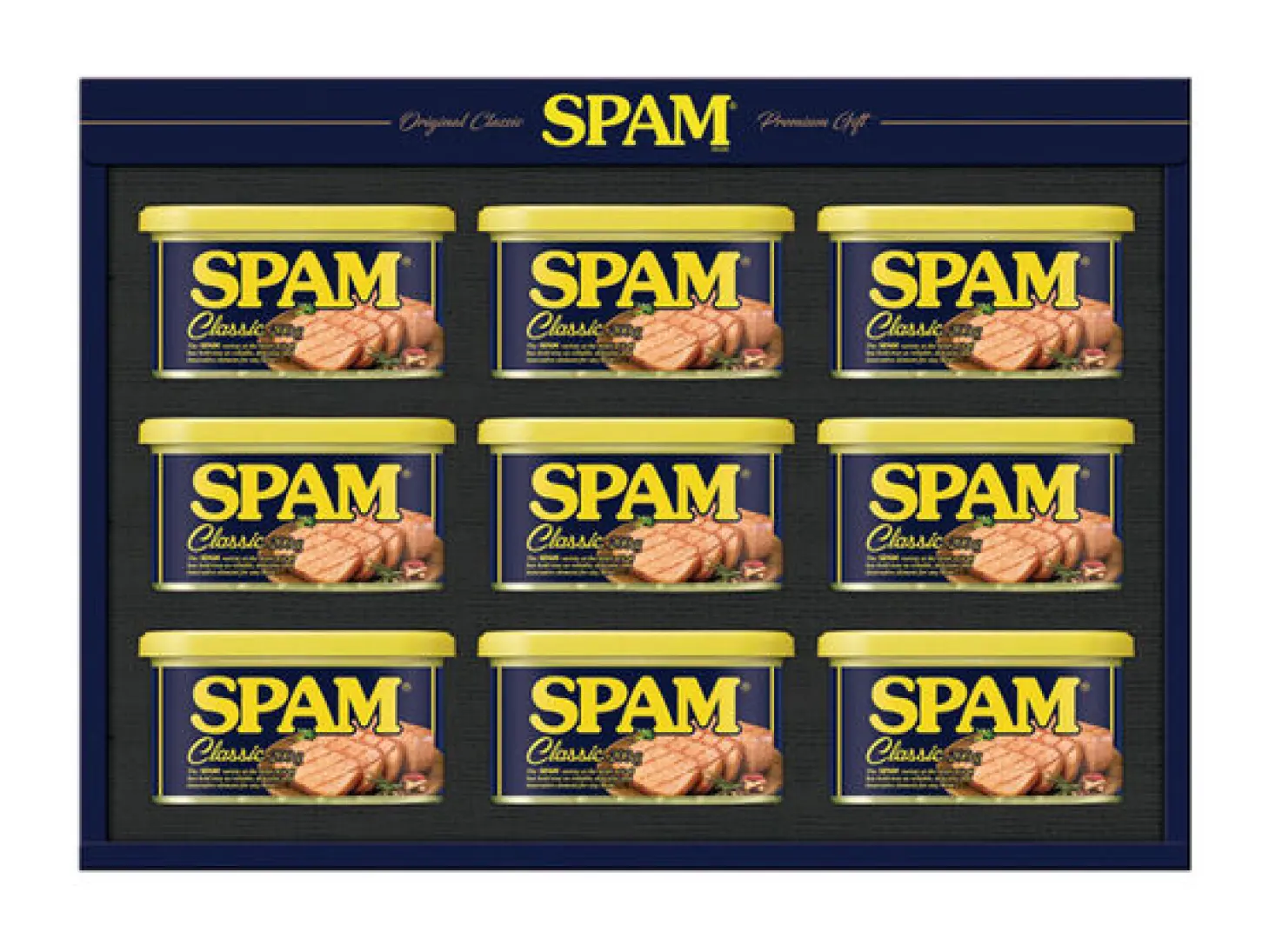
Image: CJ CheilJedang, via Korea JoongAng Daily.
The World of Korean Holiday Gift Sets
Everything intensifies around 추석 and 설날 (seollal). Department stores, supermarkets, and online retailers roll out dedicated gift-set catalogues weeks ahead, organized by category and price: fruit, hanwoo beef and other meat, seafood, health products, red ginseng, packaged cooking staples, and alcohol where it suits the recipient — ranging from a few dollars for a canned-food set to hundreds for premium hanwoo or ginseng. The point isn’t the catalogue itself; it’s that the category and price tier someone picks is a message about how formal the relationship is and how much effort they want it to show.
Why Red Ginseng Is Such a Classic Gift
홍삼 (hongsam), red ginseng, occupies its own tier above ordinary food gifts. It’s steamed and dried ginseng root, sold as extract, tea, or candy, and marketed heavily around wellness and stamina, which has made it a default gift for parents, grandparents, and anyone you want to show particular respect to. Worth being precise: this is about reputation and marketing, not medical fact — Korean brands promote it as a general wellness product, not a treatment for any condition. What matters for gifting purposes is the price tier and who it’s considered appropriate for, not the health claim itself.
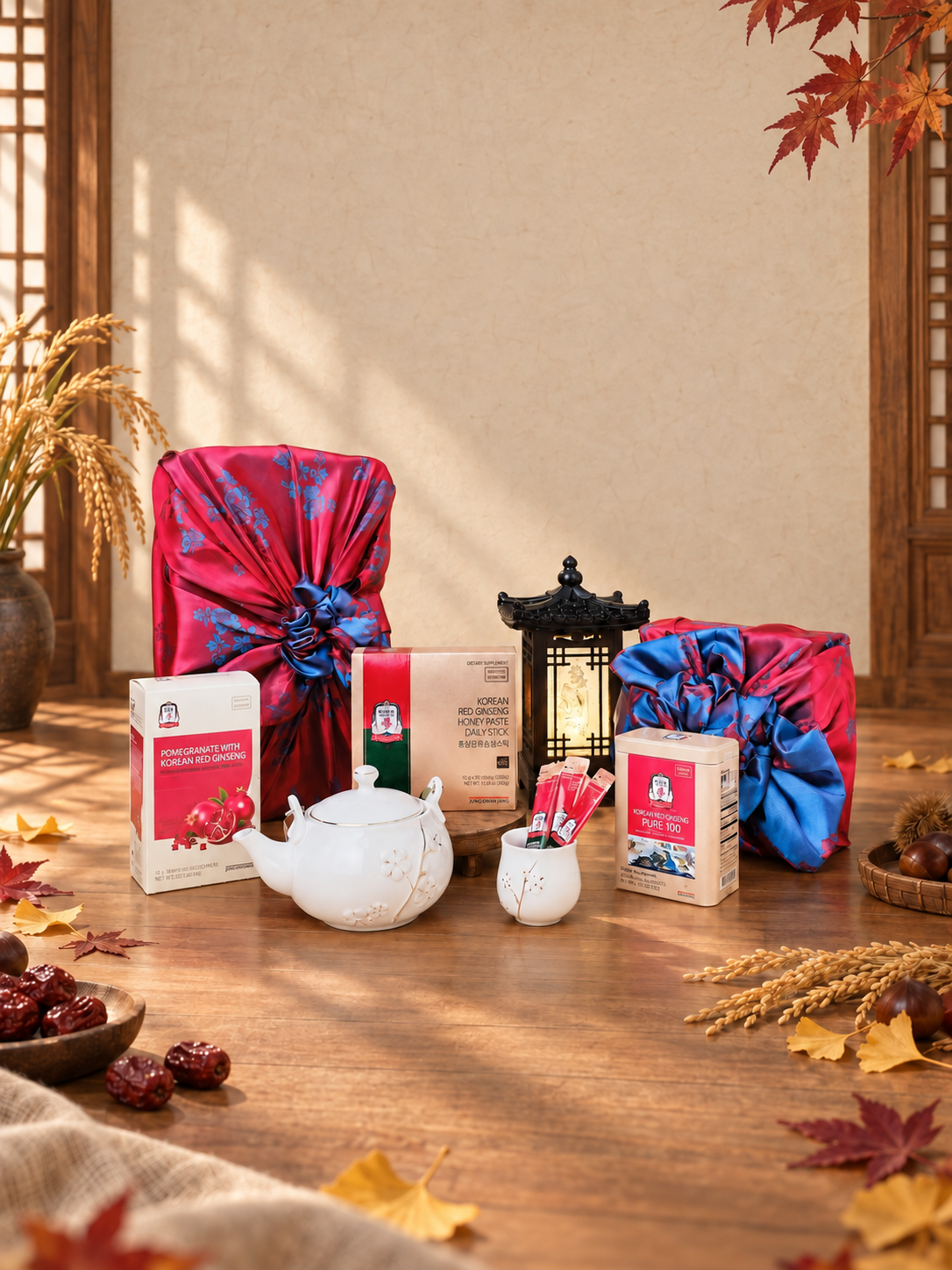
Image: Jung Kwan Jang (KGC).
What Should You Bring When Visiting a Korean Home?
If someone invites you to their home, bringing something small is a nice gesture rather than a strict requirement. Fruit, a boxed dessert, bakery items, or coffee all work well because they’re easy to share on the spot. Wine can work depending on the household. Something small from your home country is often genuinely appreciated, since it’s specific to you rather than something they could’ve bought themselves. An expensive gift generally isn’t expected or necessary — the gesture matters more than the price tag.
[AUTHOR NOTE OPPORTUNITY]
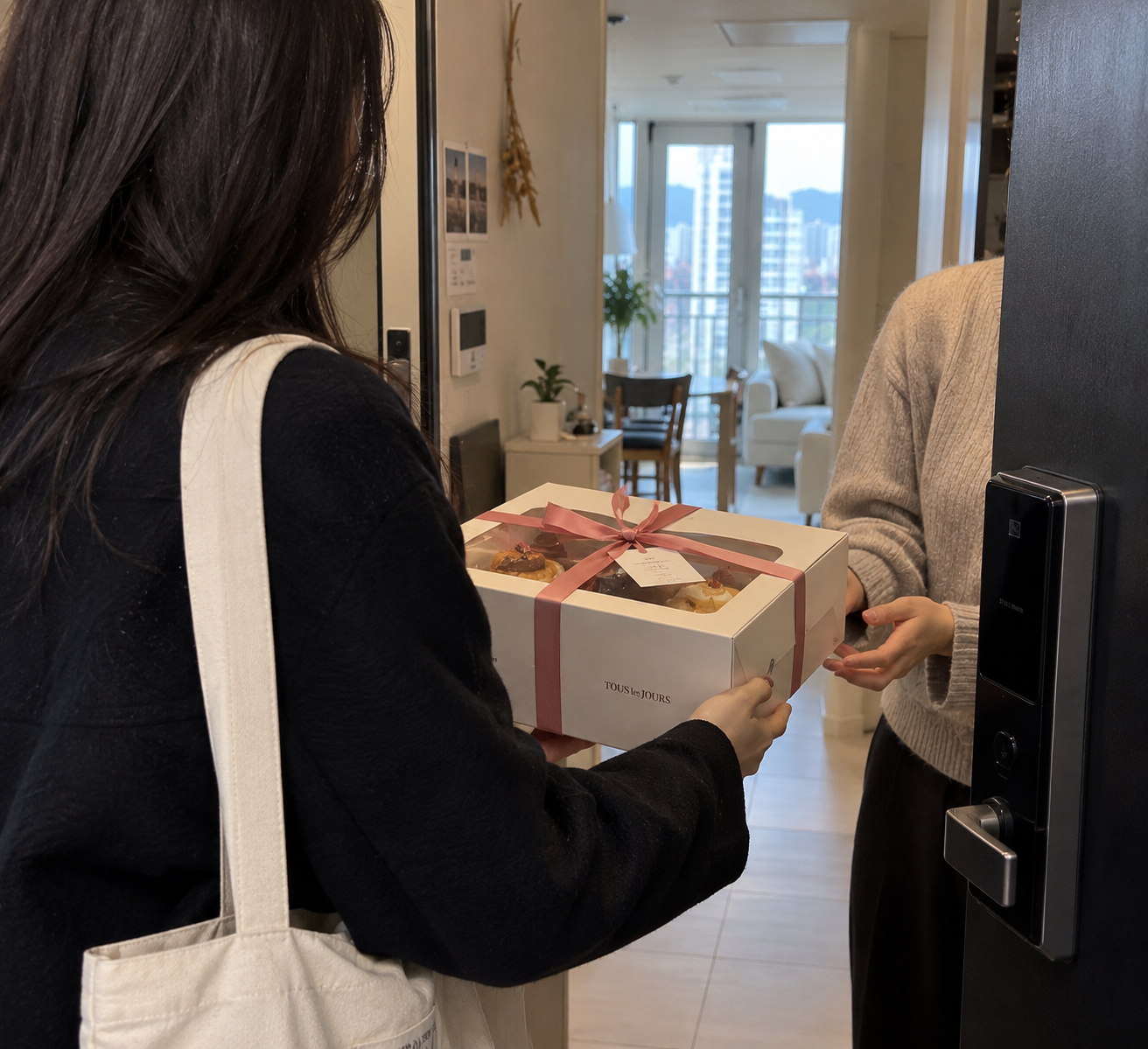
K-Decoded Tip: If you’re unsure, something edible and shareable is often easier than trying to choose a highly personal object.
Housewarming Gifts Can Be Surprisingly Practical
집들이 (jipdeuri), a housewarming gathering, has its own traditional gift pairing: toilet paper and laundry detergent. The logic behind them is genuinely charming — toilet paper’s rolls unwind smoothly, symbolizing a life that unfolds without trouble, and detergent’s foam represents prosperity multiplying. Whether every guest still thinks about it in those terms is a different question. Plenty of younger Koreans now bring flowers, a nice candle, kitchenware, or just a bottle of something to drink instead, and treat the toilet-paper-and-detergent pairing as more of a running cultural reference than an actual rule. Both are still perfectly acceptable gifts — just don’t assume everyone under 40 is expecting them specifically.

The Gift That Changed Everything: KakaoTalk
카카오톡 선물하기 (kakaotok seonmulhagi), KakaoTalk’s built-in gifting feature, is where most everyday Korean gift-giving actually happens now. You pick something — a coffee, a slice of cake, a convenience-store snack, cosmetics, a restaurant voucher, a physical product — attach it to a chat, and the recipient redeems it at a real store. It’s shown up as a genuine reason to say “thanks for helping me,” “good luck today,” “happy birthday,” or “sorry I couldn’t make it” without any of the formality of a wrapped present. This is the part that’s easy to miss if you only read about Chuseok and weddings: a huge share of Korean gift-giving is small, casual, and sent from a phone in about ten seconds.

Image: Asiance.
Money Can Also Be a Gift
Cash is a completely standard gift at weddings, funerals, first birthdays (doljanchi), and certain family milestones, handed over in a plain white 봉투 (bongtu), an envelope, rather than loose or in a card. There’s no single fixed amount — it depends on how close you are to the person, your own age and income, and local norms that shift by region, so treat any specific figure you read online as a rough starting point, not a rule.
Gifts for Korean Parents and In-Laws
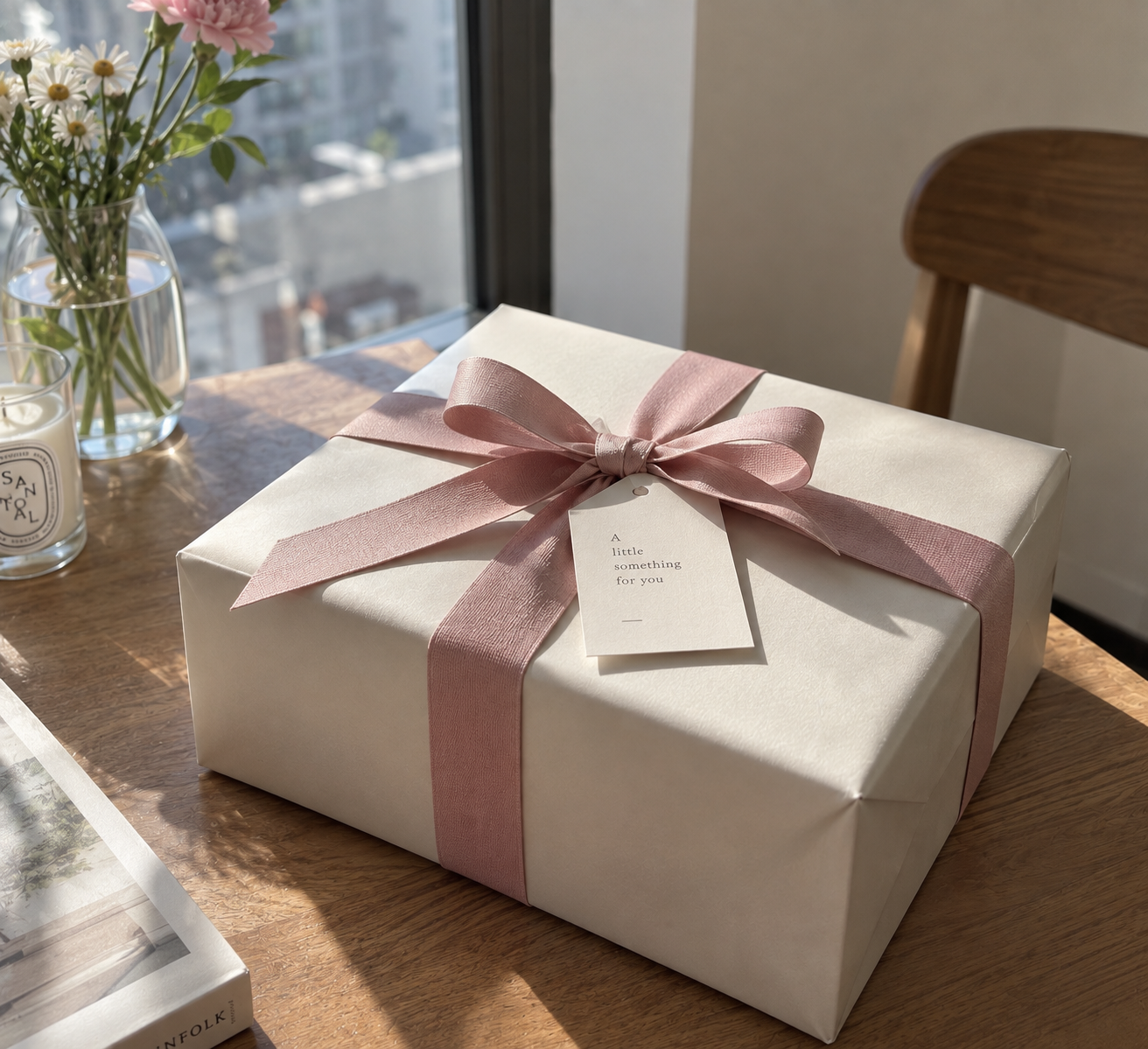
For a partner’s family, the categories that tend to land well are similar to what you’d bring anywhere in Korea, just at a slightly higher tier: premium fruit, a health product like red ginseng, well-made food, or something thoughtful and specific from your home country. Relationship, age, occasion, and the individual’s own taste matter far more than finding one “correct” Korean gift — a parent who loves baking and a parent who loves golf aren’t going to be impressed by the same box, regardless of what a gift guide says is traditional.
[AUTHOR NOTE OPPORTUNITY]
Are There Gifts You Should Avoid?
Plenty of English-language etiquette lists repeat the same handful of warnings — never give shoes, never write a name in red ink, never give four of something — as though every Korean household still observes them strictly. Some have real roots: 사 (sa), the word for “four,” sounds like the word for death, so hospitals and some buildings still skip a fourth floor, and writing a living person’s name in red is traditionally linked to funerals. But as everyday gift etiquette, these are mostly things people have heard of rather than actively police — background trivia, not hard rules. The mistakes that actually matter are more mundane: something so expensive it pressures the recipient to reciprocate, something too personal for how well you know them, ignoring a dietary restriction, or assuming alcohol is a safe default when you don’t know if they drink. Read the relationship, not a superstition list.
Do You Need to Give Something Back?
Reciprocity is real, but it’s looser than a ledger. A coffee sent over KakaoTalk might come back as lunch a few weeks later. A holiday gift set might be returned with a different one next season. Someone who brought food to your place might show up with something else the next time you meet. It’s less about matching value and more about keeping the relationship moving — which is really the same function gift-giving has been serving throughout this whole article.
Quick Guide: What Should I Give?
| Situation | Safe Gift Idea | Typical Feel |
|---|---|---|
| Visiting someone’s home | Dessert or fruit | Thoughtful but casual |
| Housewarming (jipdeuri) | Household item or food | Practical |
| Meeting a partner’s parents | Premium fruit or a thoughtful food gift | More formal |
| Chuseok / Seollal | A traditional gift set | Family/formal |
| Thanking a friend | Coffee or dessert, often via KakaoTalk | Casual |
| Birthday | A personalized gift or Kakao gift | Depends on relationship |
| Wedding | A cash gift in a bongtu | Conventional |
None of this is mandatory — it’s a starting point, not a rulebook.
The Logic Behind the Boxes
Once you understand what they’re doing, the boxed pears, the tins of Spam, and the expensive red ginseng stop looking strange. They’re not chasing luxury in the Western sense — they’re saying, in a few different registers: I thought of you. Thank you. I didn’t want to show up empty-handed. Take this home to your family. Once you can read that, you’re not just shopping for a gift anymore — you’re reading a small, everyday piece of how people here actually treat each other, which tells you more about a place than another photo stop ever could.
FAQ
Why do Koreans give fruit as gifts?
Because premium fruit — especially Korean pear and apple — is graded, individually wrapped, and boxed specifically for gifting, which makes it read as a deliberate, generous choice rather than an everyday grocery item. It’s especially common around Chuseok and Seollal.
Why is Spam a popular gift in Korea?
Spam became associated with imported, premium pantry goods after the postwar period, and Korean food companies later built boxed Spam gift sets specifically for holiday gifting. It’s treated as a genuinely respectable, useful present, not a novelty item.
What should I bring when visiting a Korean home?
Something small and shareable — fruit, a boxed dessert, bakery items, or coffee are all safe, easy choices. An expensive gift usually isn’t necessary; the gesture of not arriving empty-handed matters more than the price.
What is a traditional Korean housewarming gift?
Toilet paper and laundry detergent are the classic jipdeuri (housewarming) gifts, tied to symbolism about things unfolding smoothly and prosperity multiplying. Many younger Koreans now bring flowers, kitchenware, or drinks instead, so it’s more of a well-known tradition than a strict rule today.
Do Koreans give gifts through KakaoTalk?
Yes. KakaoTalk’s built-in gifting feature (카카오톡 선물하기) is a major, everyday part of Korean gift culture — used for everything from sending a friend coffee to more significant birthday and holiday gifts, all sent directly through a chat.