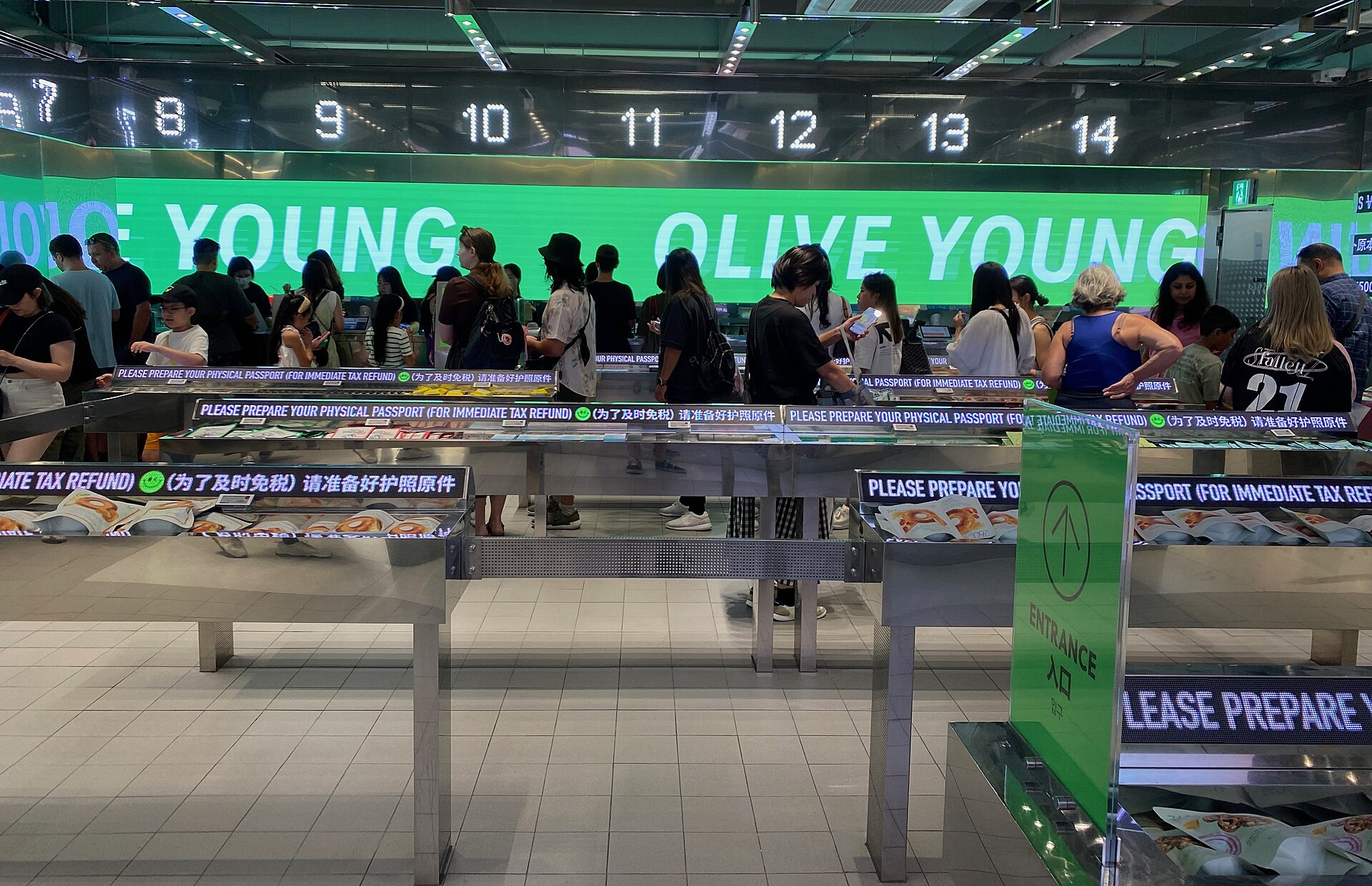
Hero image: the checkout floor at Olive Young in Myeongdong. Photo: Sgroey / Wikimedia Commons (CC BY-SA 4.0).
A few years ago, the flex for a young Korean office worker was the 미라클 모닝 (mirakeul moning), the “miracle morning”: up at 5 a.m., gym, study, side project, all before work. Now the flex is the opposite. People are posting their sleep scores. The trend has an English-borrowed name, 슬립맥싱 (seullip maeksing), sleep maxxing, and the goal is 꿀잠 (kkuljam), literally “honey sleep.”
Why Korea is so tired
Korea has an old saying that boils down to “you can sleep when you’re dead.” Young Koreans grew up on it, and the numbers show it:
- Only 7% of Koreans say they sleep well every day, about half the global average of 13% (Korean Sleep Research Society, 2024).
- Sleep-tech company A-Sleep found Koreans spend an average of 6 hours 39 minutes in bed but only sleep 5 hours 25 minutes.
- 32.2% of people aged 19 to 34 reported burnout in 2024, according to the national statistics agency’s Quality of Life of Youth 2025 report.
- Patients treated for sleep disorders rose from 1.04 million in 2020 to 1.3 million last year.
So the 20s and 30s flipped the script. Instead of sleeping less to do more, they’re optimizing the sleep itself. “Maxxing” is internet slang for maximizing, and it’s about quality, not just hours.
What a sleep maxxer’s night looks like
The Korea Times talked to a few. Their routines are surprisingly similar:
- A smartwatch that tracks total sleep, deep-sleep percentage and a morning sleep score. One 35-year-old said the score made them “obsessed” with sleep, and they quit caffeine to watch it climb.
- A wind-down routine: lights dimmed, an e-book instead of a phone, a massager, then a 온열 안대 (oneyeol andae), a heated steam eye mask. A 31-year-old IT worker compared it to warming up before exercise.
- Gear: sleep mask, earplugs, a pillow mist sprayed on the bedding.
- Supplements: theanine, magnesium and melatonin-type gummies.
There’s a catch, and a Samsung Medical Center neurologist pointed it out: stressing about sleeping well can wake your brain up and make sleep worse. Her advice was a steady daily rhythm, not chasing a perfect score every night.
The numbers
Korean retailers have been riding this all year.
- Olive Young: buyers of sleep supplements up 315% in 2025, and relaxation goods like aroma oils and eye masks up 28%. It expects sleep foods to grow another 50%+ this year.
- Zigzag: sales of 숙면 (sungmyeon, deep sleep) products up 3,092% year on year in early 2026.
- 29CM: sleep masks +161%, pajamas and loungewear +55%, blinds +54%.
- CJ Wellcare’s Melamate gummies: December sales up 1,633% from February.
- The whole Korean sleep industry, which Koreans call 슬리포노믹스 (seullipoenomikseu, sleeponomics), is now worth around ₩4–5 trillion a year, up from ₩480 billion in 2011.
It goes all the way up. Shinsegae Kaza sells a mattress that costs over ₩10 million, and its sales rose 23% in five months.
Paying to nap
Then there’s the 쪽잠 (jjokjam), catnap, business. Sleep cafés in office districts like Gangnam charge about ₩10,000 an hour for a recliner and quiet. Megabox cinemas even ran lunchtime “nap” screenings for ₩3,000, with calming music, a heated eye mask and a coffee for when you wake up.
Of course, Korea had nap spaces long before the trend got a name.
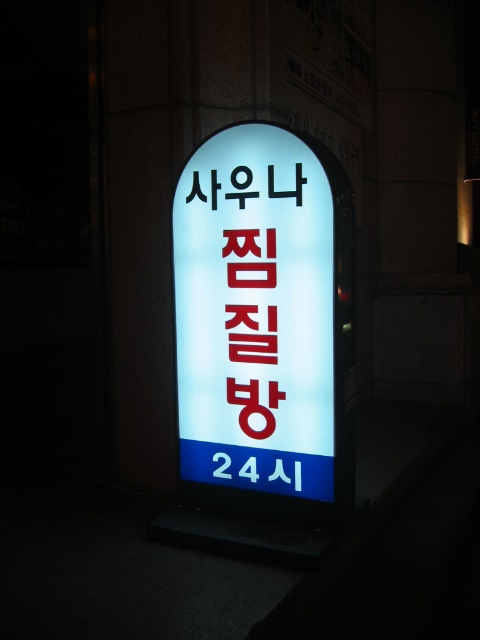
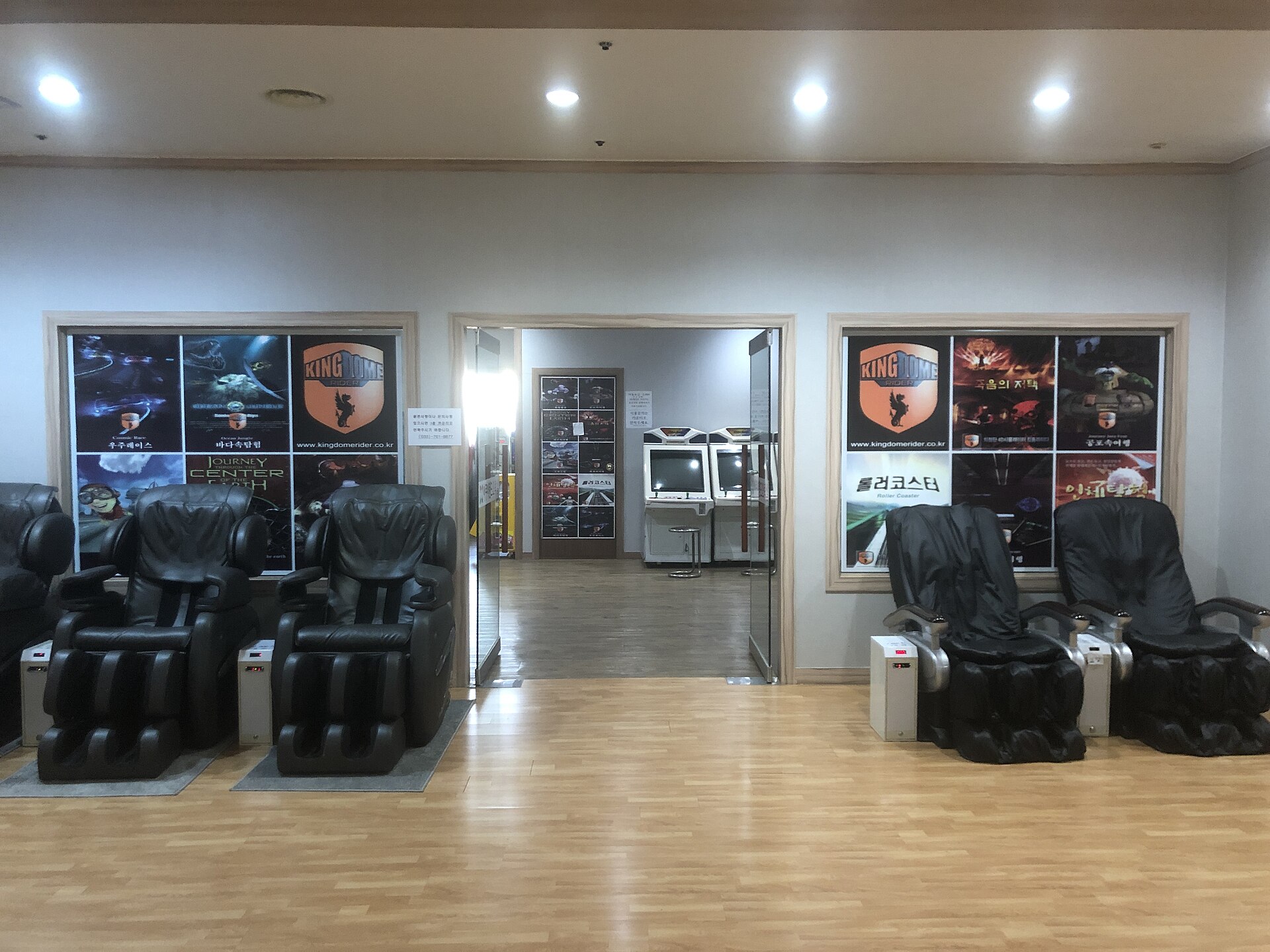
Photos: Enni84 / Wikimedia Commons (CC BY-SA 3.0); Choikwangmo9 / Wikimedia Commons (CC0).
The 24-hour 찜질방 (jjimjilbang), Korea’s bathhouse-and-sauna, has always been where people crash on heated floors after a late night or a missed last train. If you want the old-school version of sleep maxxing, that’s still the cheapest one in Seoul.
Sleep maxxing, tourist edition
Jet lag is the perfect excuse to try this. Here’s what to look for:
- Heated eye masks. The single-use steam masks are everywhere at Olive Young and Daiso. Search for 온열 안대 or look for 숙면 on the packet. They’re light, cheap and make a good gift.
- Pillow and room mists. Olive Young’s aroma section has sprays meant for bedding. Look for 필로우 미스트 (pillo miseuteu, pillow mist).
- Sleep gummies. Melatonin is a prescription drug in Korea, so the gummies on Olive Young’s shelves are sold as plant-based “melatonin” food supplements, labeled 식물성 멜라토닌 (sikmulseong mellatonin). Check with a doctor before you take anything new, and check your home country’s rules before packing supplements.
- Pajamas. 29CM and Musinsa’s Seongsu stores carry the Korean loungewear brands driving those numbers.
- Tax refunds. Stocking up? Spend ₩15,000 or more in a participating store and you can claim the VAT back. Our tax-free shopping guide explains how.
And if you’re heading out late, read our Seoul transportation guide first, so you know when the last subway leaves.
Sources: The Korea Times / Hankook Ilbo, Kukmin Ilbo via Daum, Dong-a Ilbo via Daum, News1.