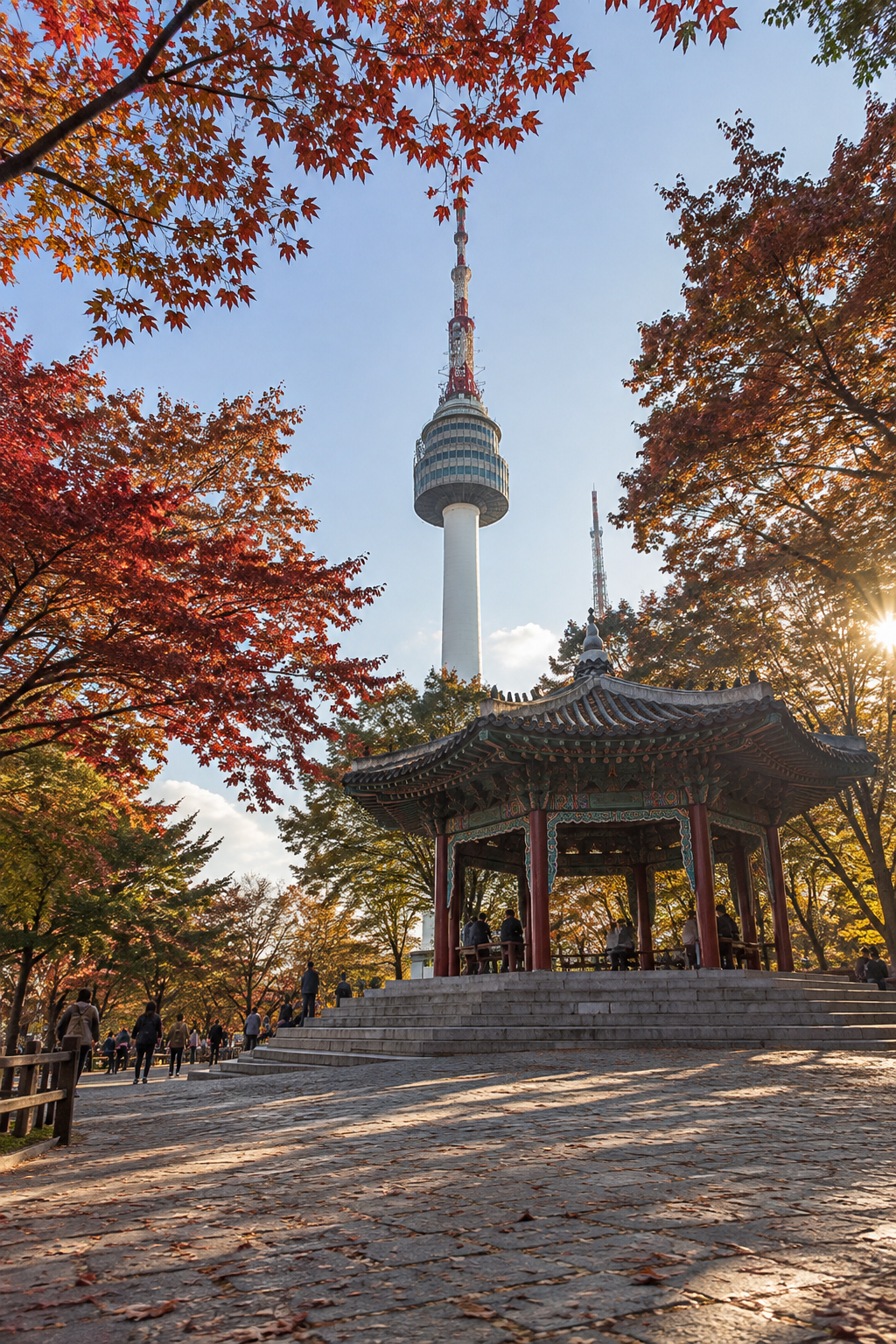
Seoul in August is a city you survive rather than enjoy — the heat and humidity push most sightseeing around air conditioning. Then, usually sometime in September, it breaks. The air thins out, people start eating lunch outside again, and the whole country seems to exhale.
This is the first article in a new K-Decoded series on autumn in Korea, and it answers one question before we get into any details: why is this actually a good season to visit? Not a full itinerary, not a packing list — just the case for booking a September, October, or November trip.
The Weather Is Made for Exploring
Summer in Korea isn’t just hot, it’s the kind of humid that turns an afternoon of walking into a chore. Autumn strips that away. Temperatures settle into a range comfortable enough for hours outside at a stretch — a neighborhood with no real destination, a full afternoon at a palace instead of ducking in and out, an outdoor market without needing a cold drink every ten minutes. Day trips and hiking, miserable propositions in July, suddenly make sense.
Coming next: Korea Autumn Weather — September vs. October vs. November.
Korea Completely Changes Colour
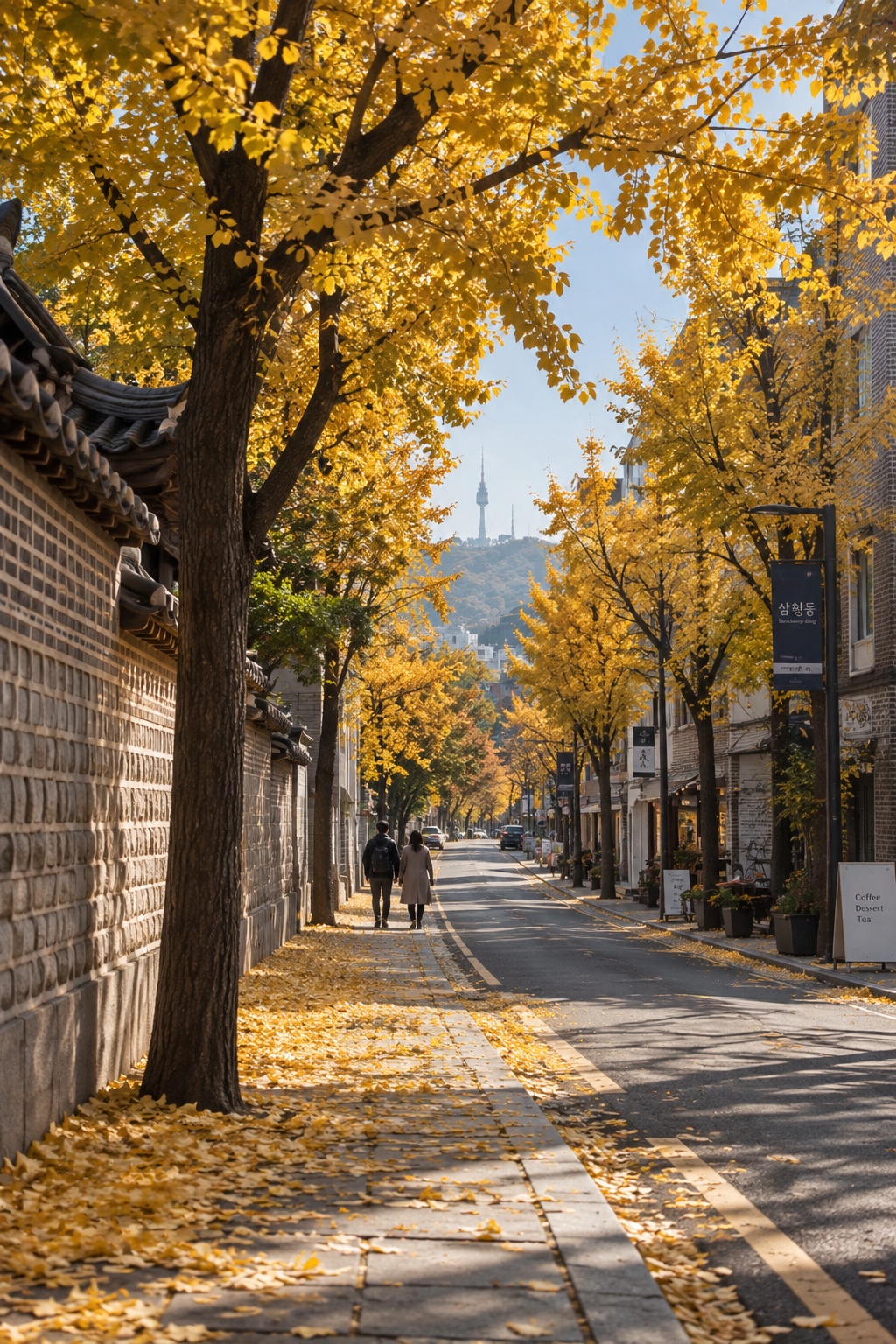
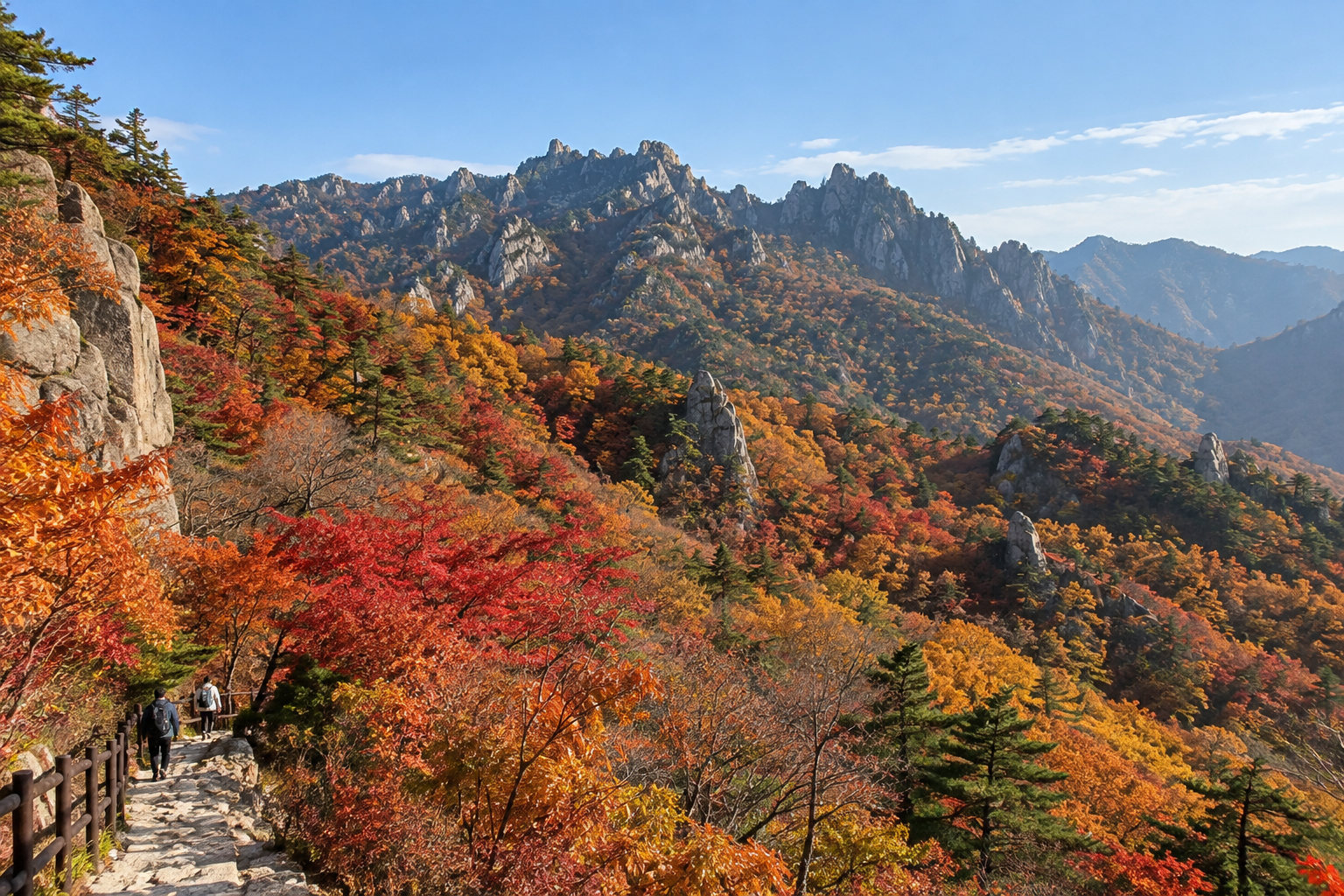
The other half of the appeal is visual. Korea’s mountainous geography means autumn foliage isn’t limited to a few parks — it moves through the country in a wave, turning mountainsides red and gold before working down into cities. Seoraksan is the country’s most famous foliage destination for a reason, but the colour shows up everywhere: Seoul Forest’s tree-lined paths, the grounds of Changdeokgung, the slopes of Namsan, the historic streets of Gyeongju.
Exactly when it peaks shifts every year, moving north to south and mountain to city over several weeks — which is why we’re not giving you a specific 2026 date here. That’s its own guide, coming later: Korea Fall Foliage 2026 Guide.
[AUTHOR NOTE OPPORTUNITY: a specific memory of turning a corner in Korea and being surprised by how much a familiar street or trail had changed colour.]
It’s One of Korea’s Best Hiking Seasons
Hiking in Korea is closer to a national pastime than a niche hobby, and autumn is when it’s at its most crowded and most photogenic. That can sound intimidating if you’re picturing a serious mountain trek, but it doesn’t have to mean one. Bukhansan and Seoraksan are the names most visitors will hear, but plenty of people get the same seasonal payoff from an easier route, or from just walking through a park like Seoul Forest with the leaves turning overhead. What makes the season interesting isn’t the difficulty level — it’s how central hiking culture is to daily life once the weather turns, with quiet summer trails filling up with people of every age on any clear weekend.
[AUTHOR NOTE OPPORTUNITY: an observation about who you actually see on the trail in Korea in autumn — the full range of ages and hiking gear is part of the story.]
Palaces Look Completely Different in Autumn
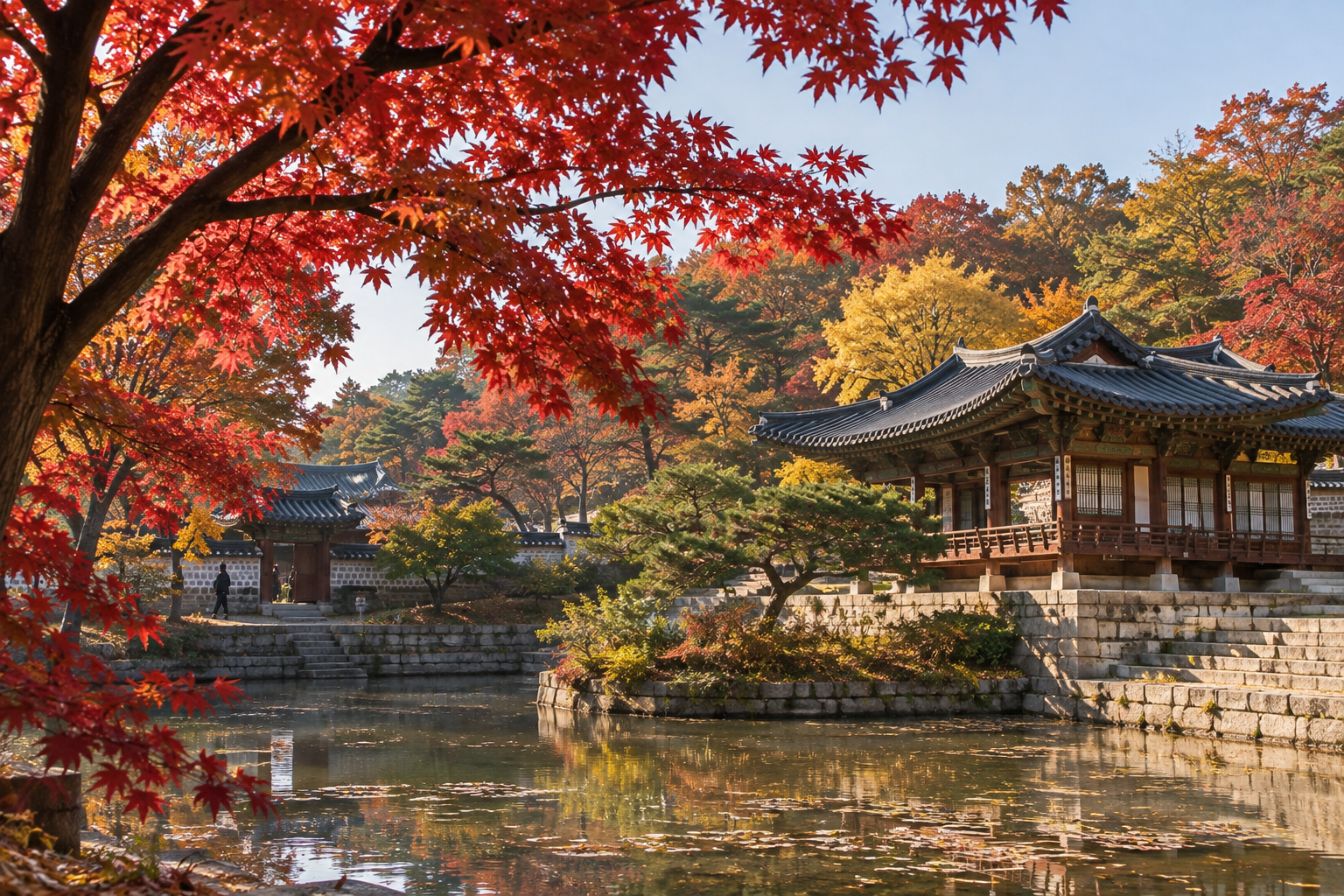
Korea’s palaces are worth visiting in any season, but autumn changes them. Gyeongbokgung, Changdeokgung, and Deoksugung are all built around courtyards, ponds, and old trees — and that architecture reads differently against red and gold than against the flat green of summer. It might be the single easiest sell in this whole article: the same buildings you’ve seen in a hundred photos simply look better for a few weeks each year.
Autumn Food Starts Appearing
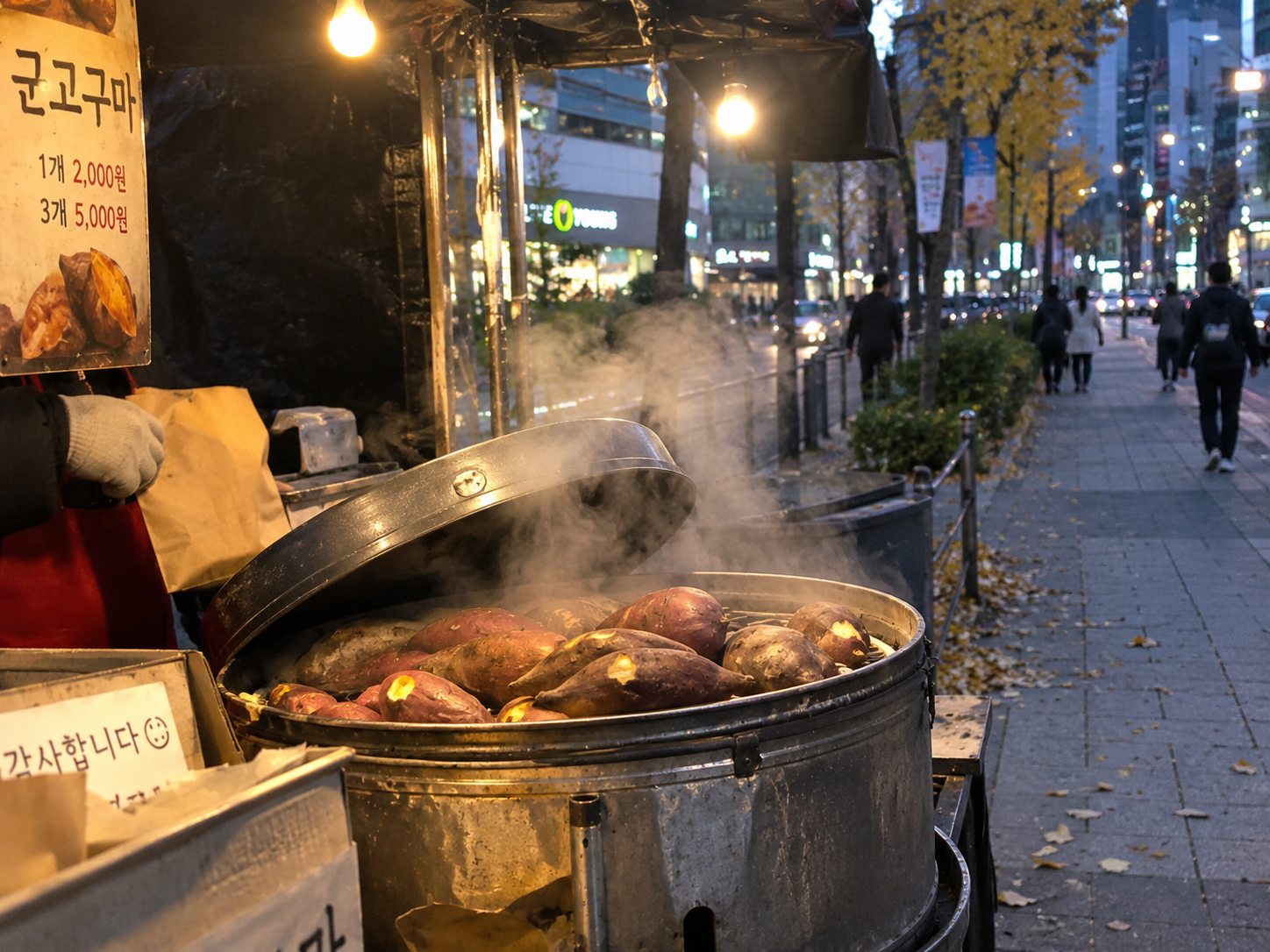
Seasonal eating is still a real thing in Korea, and autumn has its own signals. Street carts start selling 군고구마 (gun-goguma), roasted sweet potato, and 군밤 (gunbam), roasted chestnuts, often from the same cart. Produce shifts too — 감 (gam), persimmon, and 배 (bae), Korean pear, both hit their best stretch. As evenings cool further, hotteok and other warm street foods skipped all summer start making sense again.
We’re going deeper on this in What to Eat in Korea During Autumn — this is just the preview.
Festival Season Is in Full Swing
Autumn is also when Korea’s festival calendar gets busy: traditional harvest festivals, food festivals, lantern festivals, and a run of music and film events that tend to cluster into these months once the weather cooperates. Rather than list them all here and risk getting dates wrong this far out, we’ll cover the specifics in Best Autumn Festivals in Korea 2026 once official schedules are confirmed.
Exploring Seoul Becomes Much More Enjoyable
Beyond the foliage, autumn is just when Seoul is easiest to live in for a few days. Neighborhoods like Seongsu, Ikseondong, Hongdae, and Yeonnam are built for walking and sitting outside, and summer heat cuts that short. Autumn gives it back: a coffee at an outdoor table, a longer loop through the palace districts, an actual walk along the Han River instead of a quick look and a retreat indoors. It’s less about any single sight and more about how much of the day you can spend outside without planning around the heat.
[AUTHOR NOTE OPPORTUNITY: a specific café, street, or moment in Seoul that captures how different the city feels once the heat lifts.]
Autumn Is Perfect for Exploring Beyond Seoul
The same weather that makes Seoul easier makes the rest of the country worth the trip. Gyeongju pairs its historic sites with the same seasonal colour found in Seoul’s palaces, spread across an entire old capital. Busan adds coastal scenery, and its foliage generally turns later, which can stretch your window. Seoraksan remains the single most famous autumn landscape in Korea. And Jeonju offers a slower pace built around traditional architecture and food rather than a checklist of sights. Each deserves its own guide rather than a paragraph here — they’ll get one later in this series.
So, Is Autumn the Best Time to Visit Korea?
For a first trip, it’s about as easy a recommendation as we can make. The weather cooperates, the country looks its best, hiking and outdoor sightseeing both make sense, and there’s a genuine food and festival calendar running the whole time.
It isn’t without downsides, though. The best-known foliage spots get crowded exactly when the colour peaks, and accommodation prices climb during the busiest weekends. Chuseok, Korea’s autumn harvest holiday, can disrupt domestic transport and shorten opening hours if your trip overlaps with it. And no one, including us, can promise an exact date for peak colour a year in advance.
None of that changes the basic case — it just means the details are worth getting right, which is what the rest of this series is for.
Continue the Autumn in Korea Series 🍂
This article is the starting point. Here’s where the series goes from here:
- Korea in September: Weather, What to Wear & What to Expect
- Korea in October: The Perfect Autumn Month?
- Korea in November: Late Autumn Travel Guide
- Korea Fall Foliage 2026: When & Where to Go
- Seoul in Autumn: Best Places to See Fall Colours
- What to Wear in Korea During Autumn
- Korea Autumn Packing List
- Best Autumn Day Trips From Seoul
- What to Eat in Korea During Autumn
- Best Autumn Festivals in Korea 2026