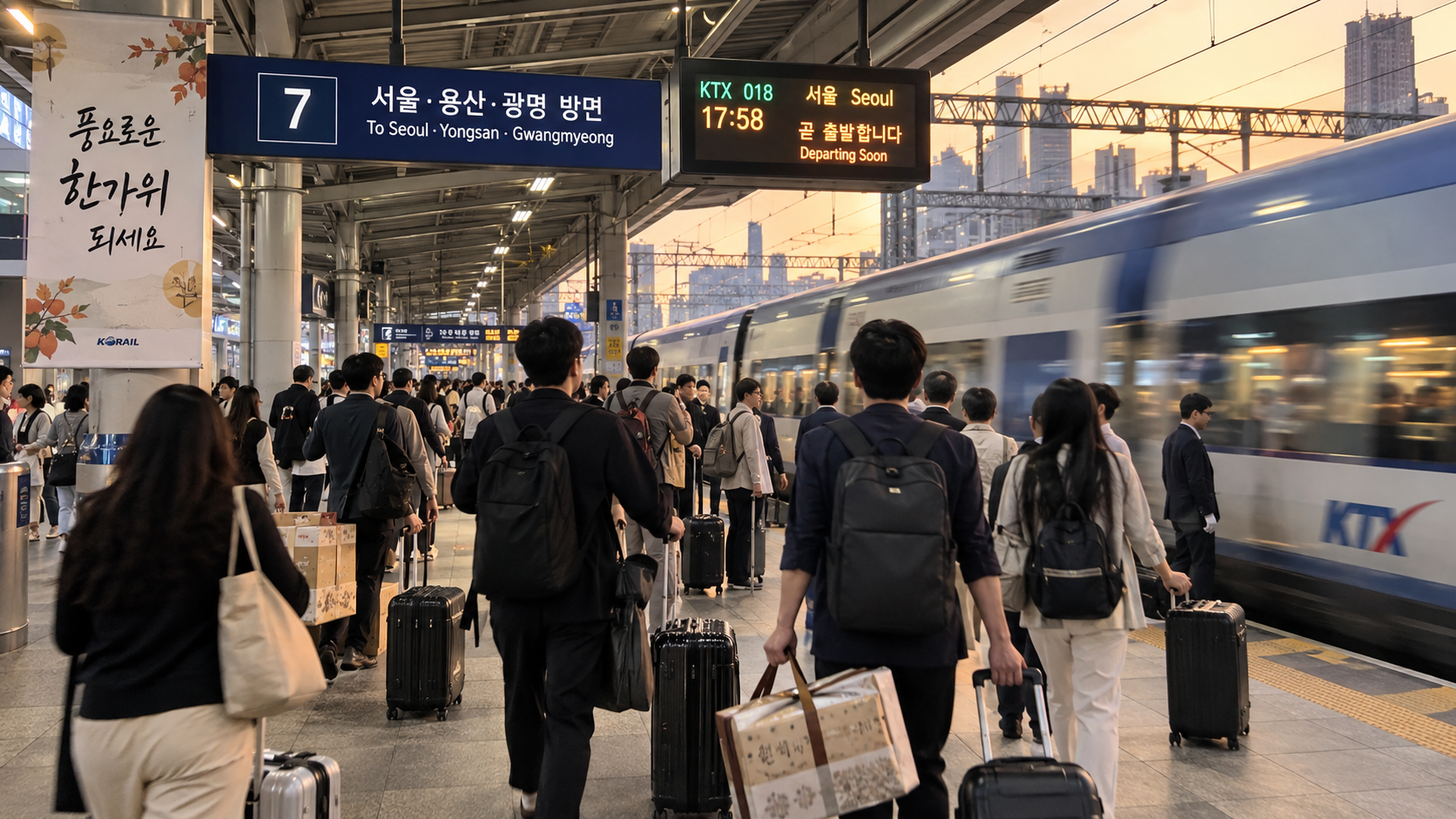
Chuseok falls on September 25, 2026, with the official public holiday running September 23–27 once the weekend shift is applied. If your trip lands in that window, it’s worth knowing this isn’t a quiet pause — it’s Korea’s biggest annual travel event, and it reshapes the country for a few days in ways that catch first-time visitors off guard.
What Chuseok actually is
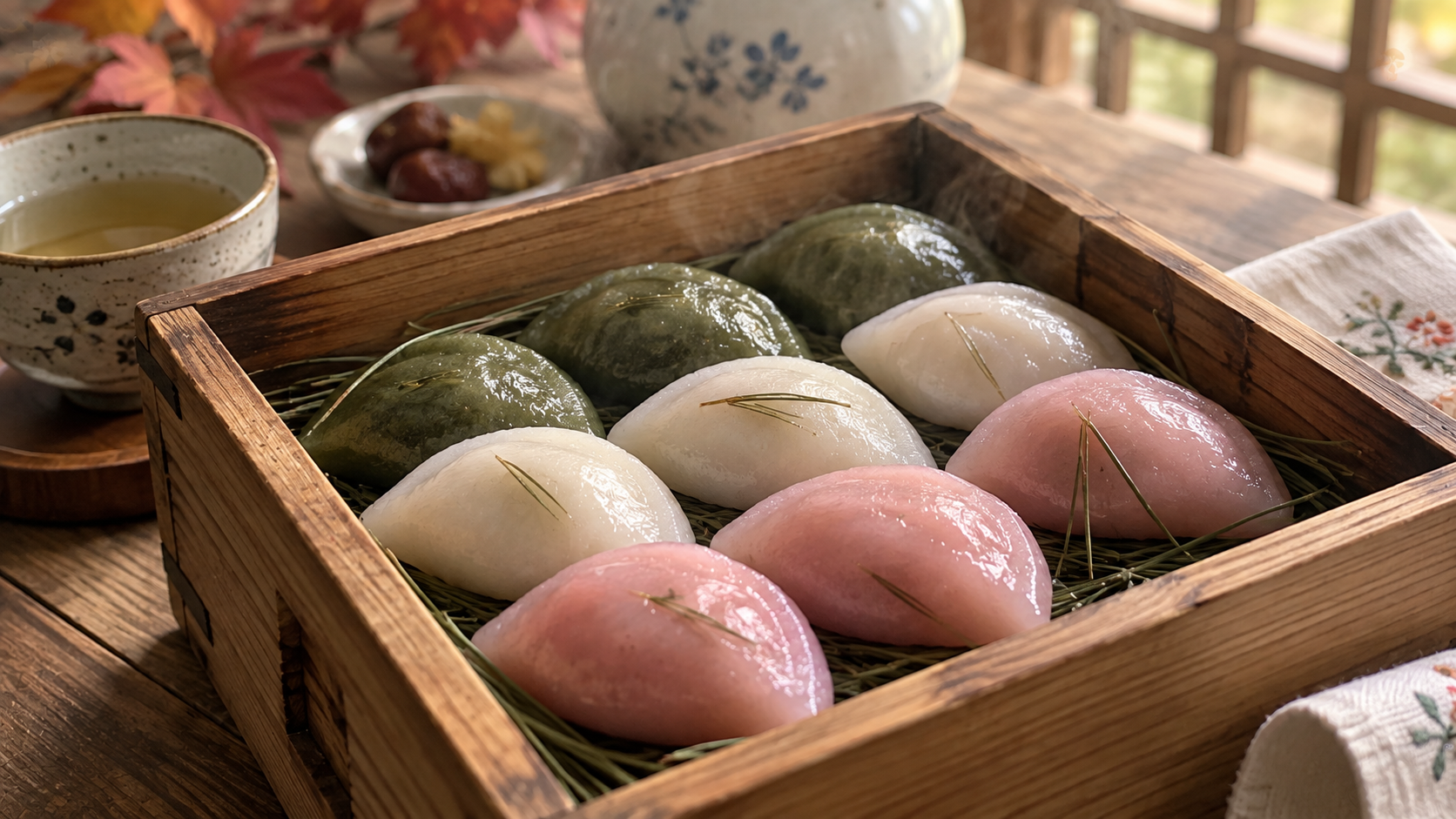
추석 (chuseok) is a harvest festival built around family and ancestor veneration. On the morning of the holiday, many families hold 차례 (charye), a memorial rite with food set out for deceased relatives, often followed by a visit to family graves. The signature food is 송편 (songpyeon), half-moon rice cakes traditionally steamed over a layer of pine needles.
The part that affects your trip: everyone travels at once
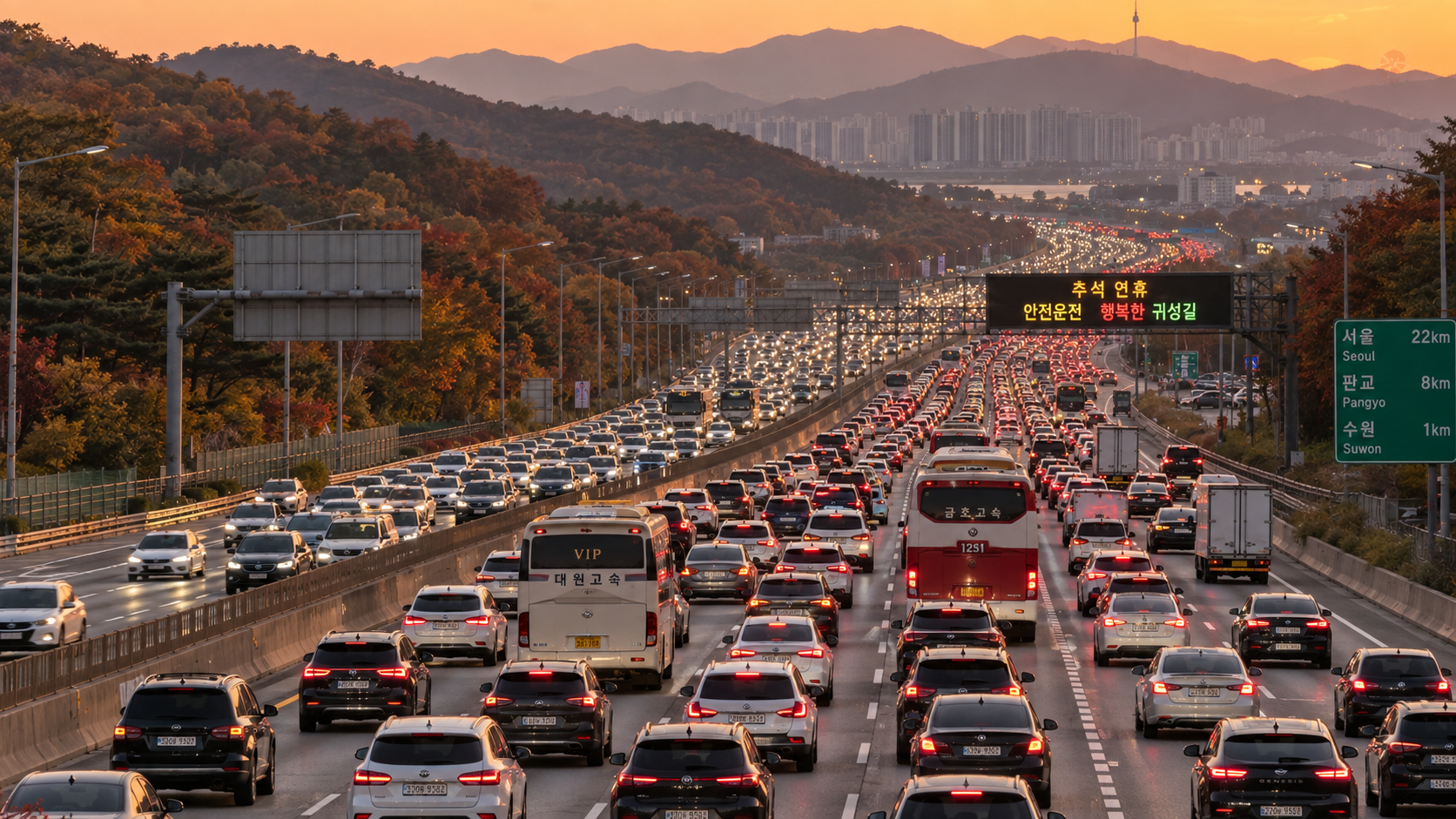
Koreans call the holiday travel crunch 귀성길 (gwiseong-gil) — the road home. Tens of millions of people leave the cities where they work to spend the holiday with family, usually in a smaller hometown. That means:
- KTX and intercity trains sell out fast, especially the days immediately before and after the holiday. Tickets typically go on sale about a month ahead, and the popular routes (Seoul–Busan, Seoul–Gwangju) go first.
- Highways are jammed. A normally 4-hour drive can stretch past 8. If you’re renting a car for a road trip, avoid the two days before and the day after Chuseok.
- Incheon and Gimpo airports get busier, since some families use the long weekend for overseas trips instead of hometown visits — expect longer security and check-in lines.
If your itinerary includes inter-city travel, book transportation now and build in slack, or consider staying put in one city for the holiday itself.
What’s open, what’s closed
This is the part that surprises visitors the most: big commercial neighborhoods that are normally packed can feel empty, while a few things stay running as usual.
Likely closed or reduced hours:
- Small family-run restaurants and cafés, particularly in residential neighborhoods
- Traditional markets like Gwangjang or Namdaemun (some stalls close for 1–3 days)
- Government offices, banks, and post offices
- Some smaller shops in areas like Ikseon-dong or Bukchon
Usually open:
- Convenience stores (CU, GS25, 7-Eleven) — nearly always, holidays included
- Large department stores and malls (Lotte, Shinsegae, Hyundai) — most stay open, sometimes with adjusted hours on the holiday itself
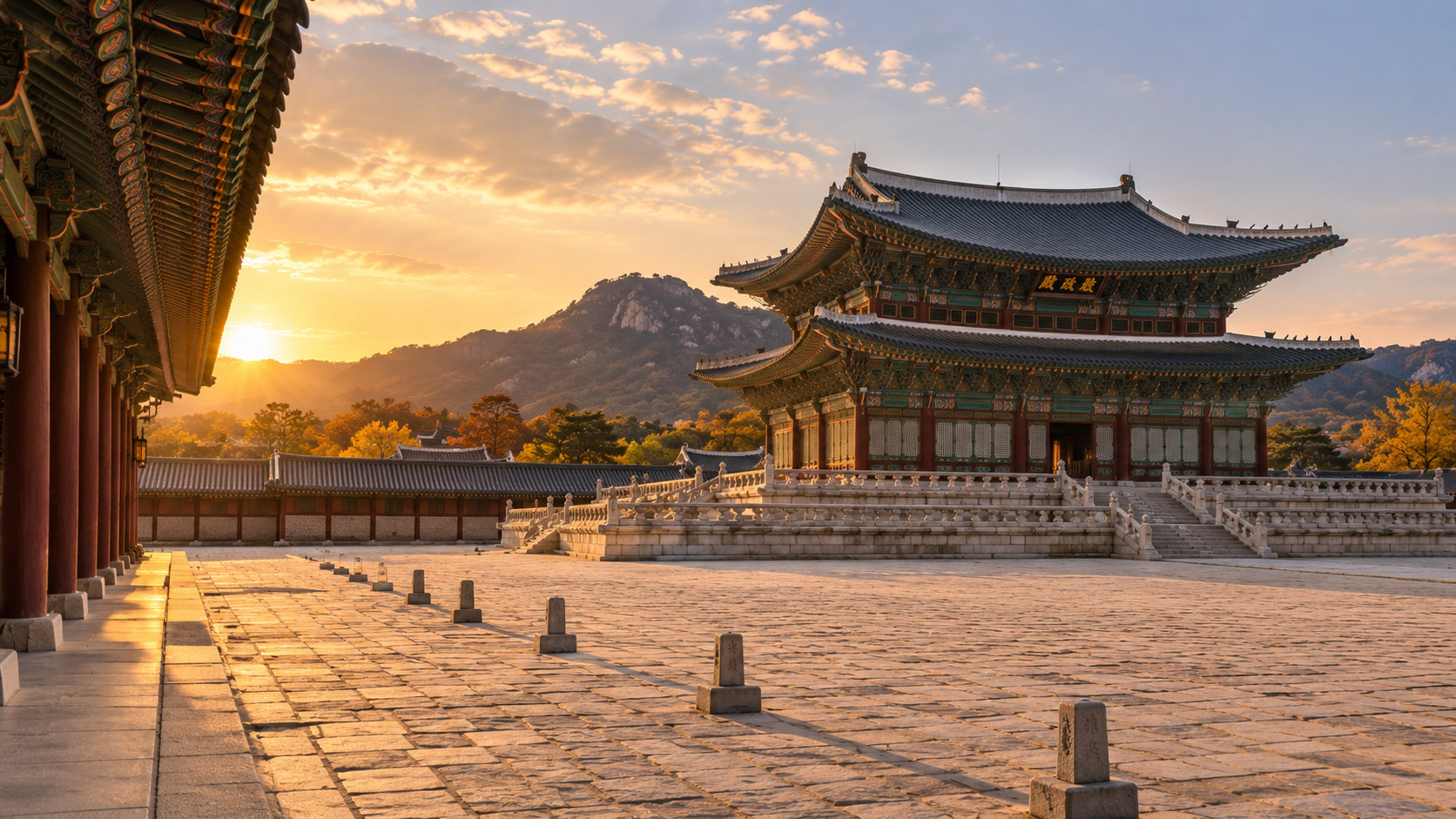
- Palaces — several, including Gyeongbokgung, actually offer free admission during Chuseok, and some run special holiday programs
- Major tourist attractions like Myeongdong, Hongdae, and N Seoul Tower
Always check a specific restaurant or shop’s hours a day or two ahead — Naver Map and Kakao Map both show holiday hours when a business has posted them, and it’s the fastest way to confirm before you walk over.
The upside for visitors
A quieter Seoul is still a real upside. Streets and photo spots that are normally shoulder-to-shoulder — palace courtyards, Bukchon’s hanok alleys, popular cafés — thin out noticeably as locals leave for their hometowns. Free palace admission during the holiday is also a genuine deal if you were planning to visit Gyeongbokgung or Changdeokgung anyway.
Quick planning checklist
- Book KTX/intercity trains now if your trip involves moving between cities September 20–28
- Avoid highway road trips on September 22, 24, and 26
- Check restaurant hours on Naver Map or Kakao Map before heading out, especially outside major commercial districts
- Take advantage of free palace admission if it lines up with your dates
- Don’t expect traditional markets to run at full capacity — have a backup for meals in those areas