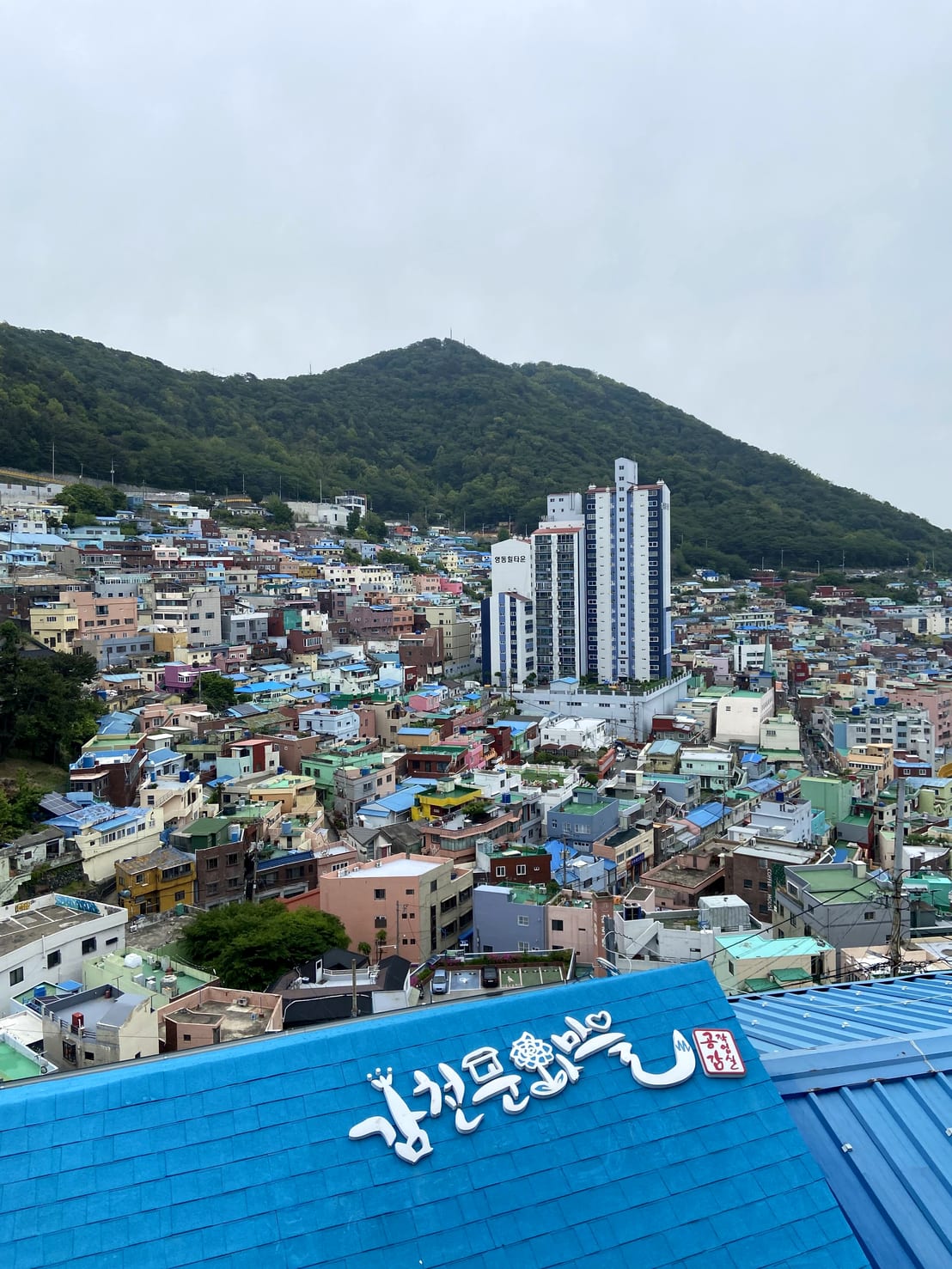
We took a taxi up to 감천문화마을 (Gamcheon Munhwa Maeul), Gamcheon Culture Village, and it was worth every won. Public transport does get you there too, but ask around and you’ll hear two versions of that story: one where the walk up from the bus stop is a real workout, and one where the bus route itself turns into a bit of an adventure. Either way, the village at the top makes up for it.
Getting there: taxi vs. the bus
Gamcheon is built up a steep hillside on the western edge of Busan, and that geography follows you all the way to the entrance. A taxi drops you right at the top with none of the climb — which is exactly why we went that route. If you’re taking public transport instead, budget extra time either way: some people connect via a local bus from Toseong Station and end up on a route that winds through more of the neighborhood than expected, and others get off closer to the base and end up climbing a genuinely steep stretch of 계단 (gyedan), stairs, to reach the entrance. Neither option is wrong, just know which trade-off you’re signing up for.
If you’d rather skip the transport math entirely, a guided Busan day tour that includes Gamcheon along with other city highlights takes care of the route and the driving for you.
Book a Busan day tour with Gamcheon →
Affiliate link — we may earn a small commission at no extra cost to you.
A hillside canvas
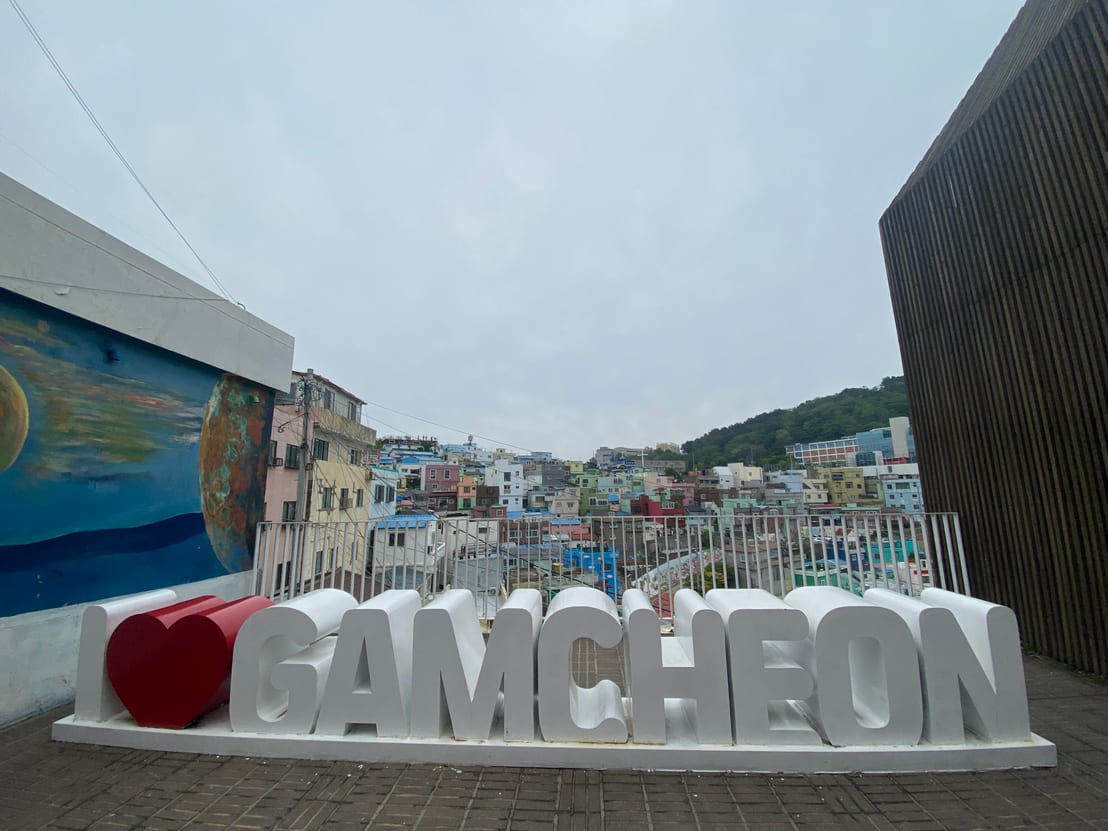
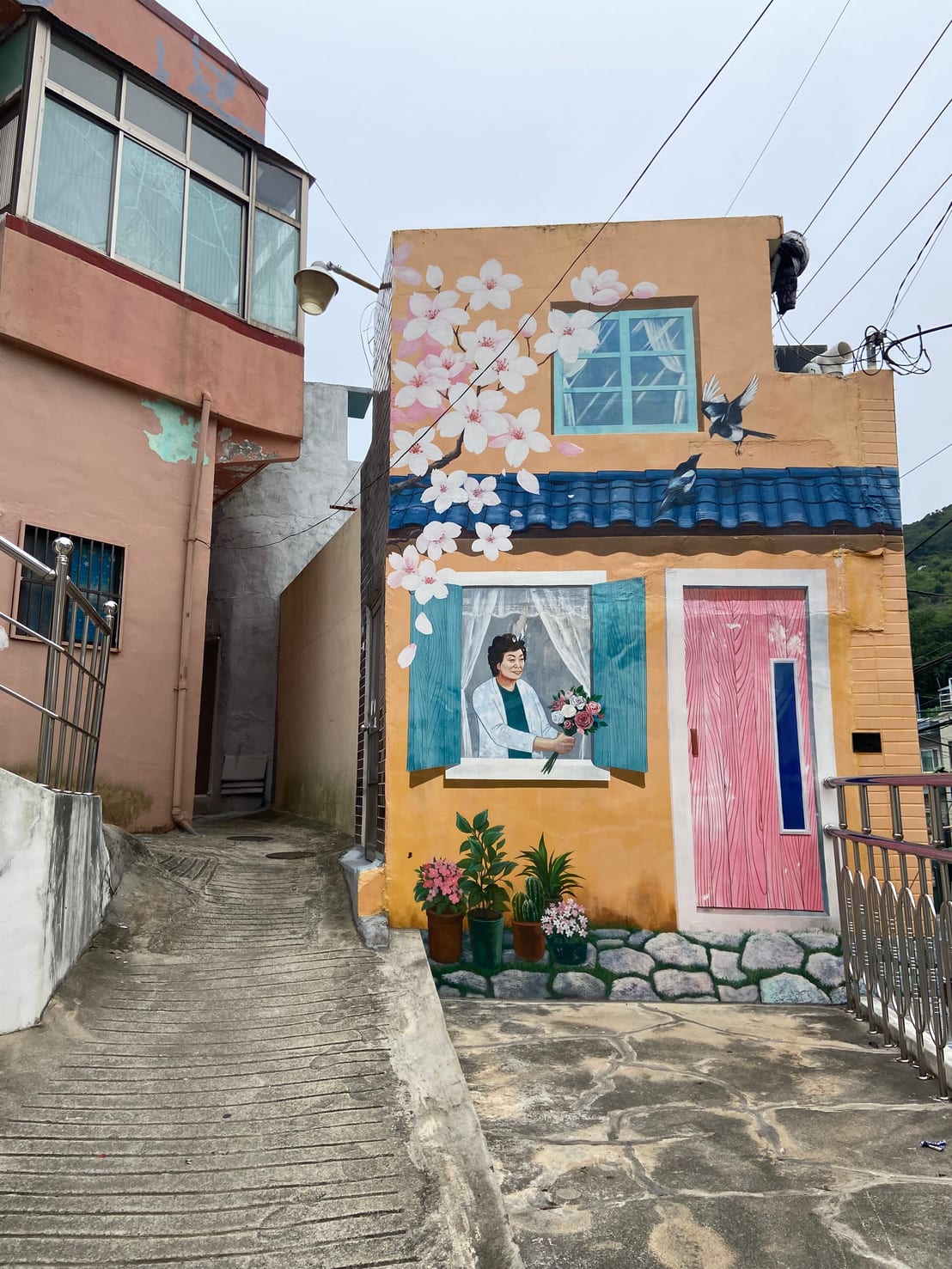
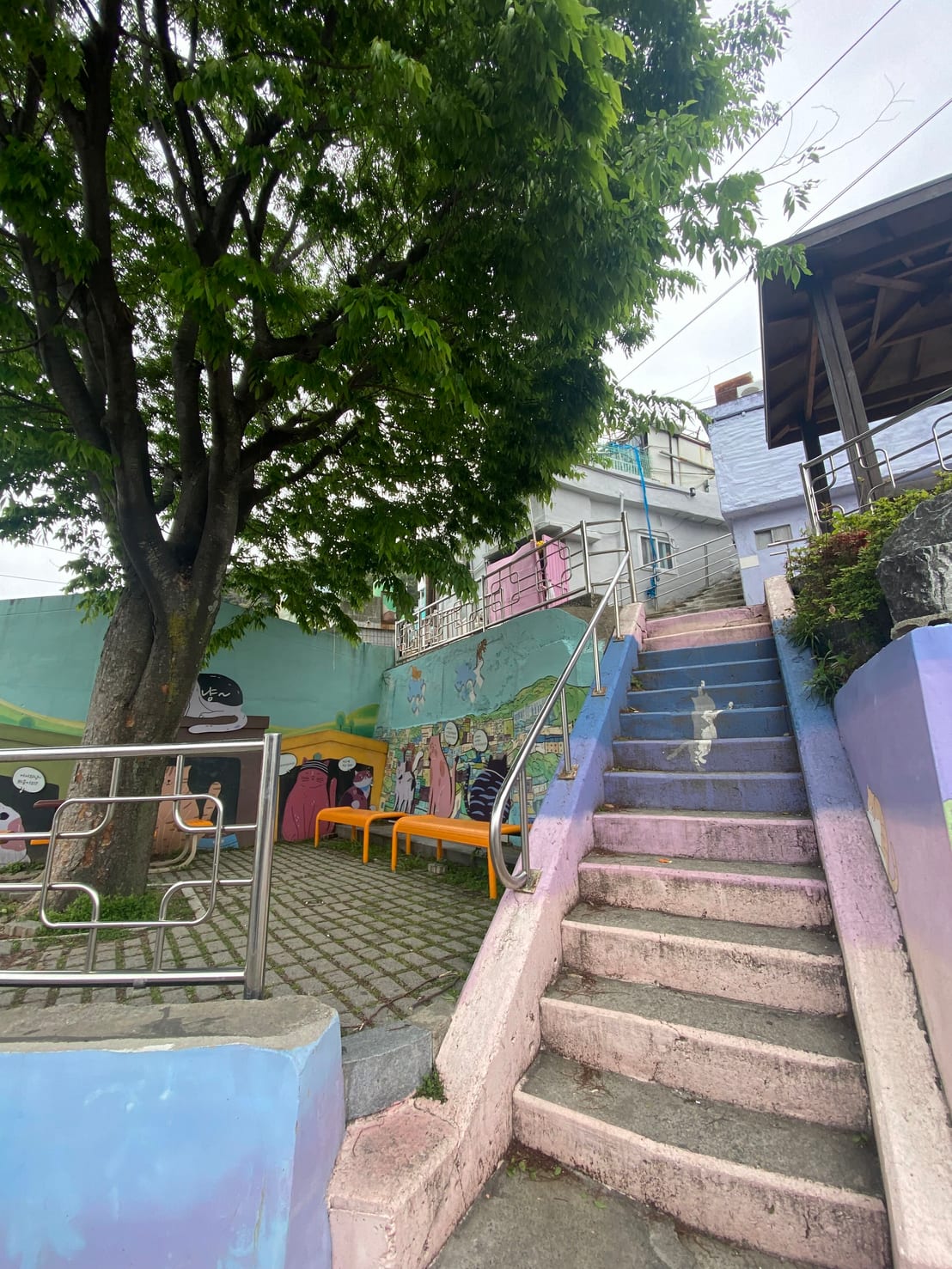
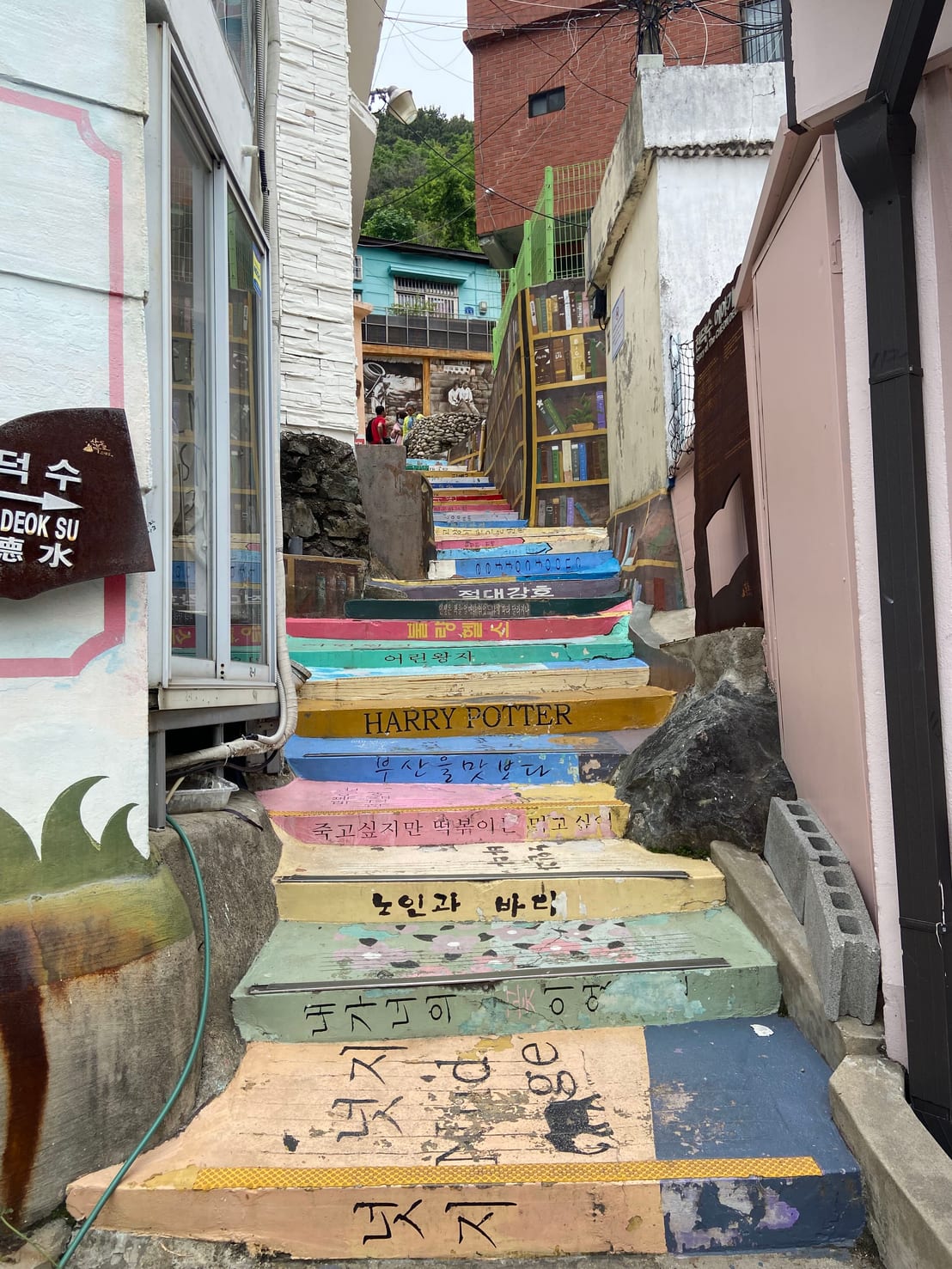
What makes Gamcheon so photogenic isn’t just the pastel houses stacked up the hill — it’s the 벽화 (byeokhwa), murals, painted across nearly every surface in between. The palette shifts constantly — one alley is all warm oranges and yellows, the next is cool blues and teals — and the artwork ranges from huge wall-sized scenes to small, easy-to-miss pieces tucked into stairwells and doorframes. The longer you wander, the more you notice you haven’t actually seen it all; Gamcheon rewards backtracking down alleys you already walked through once.
Why the Little Prince is everywhere
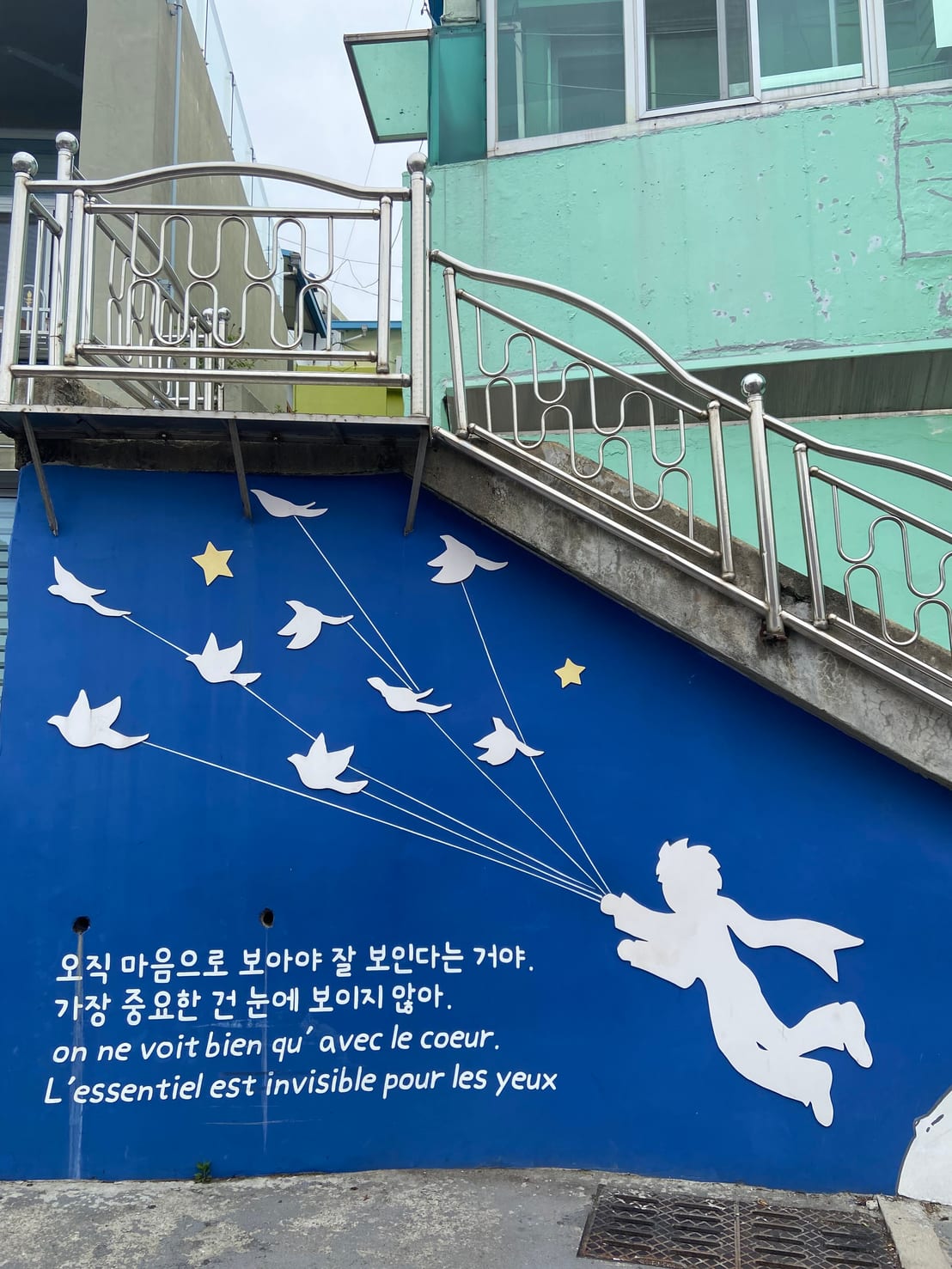
A lot of the murals and one especially famous statue pay homage to 어린왕자 (eorin wangja), The Little Prince — and if you look into why, it makes a lot of sense once you’re standing there. The book’s little prince lives on a tiny, self-contained planet he can watch the sunset from just by turning his chair, and Gamcheon’s maze of tiny houses stacked on a hillside, best taken in from a 전망대 (jeonmangdae), viewpoint, above it — gives off a similar feeling: a whole small world you can take in at once. The village leaned into that connection during its 2009 art revitalization project, and the Little Prince and fox statue perched on a wall overlooking the rooftops has become one of the most photographed spots in the entire village, usually with a short line waiting to sit next to it.
The stamp rally
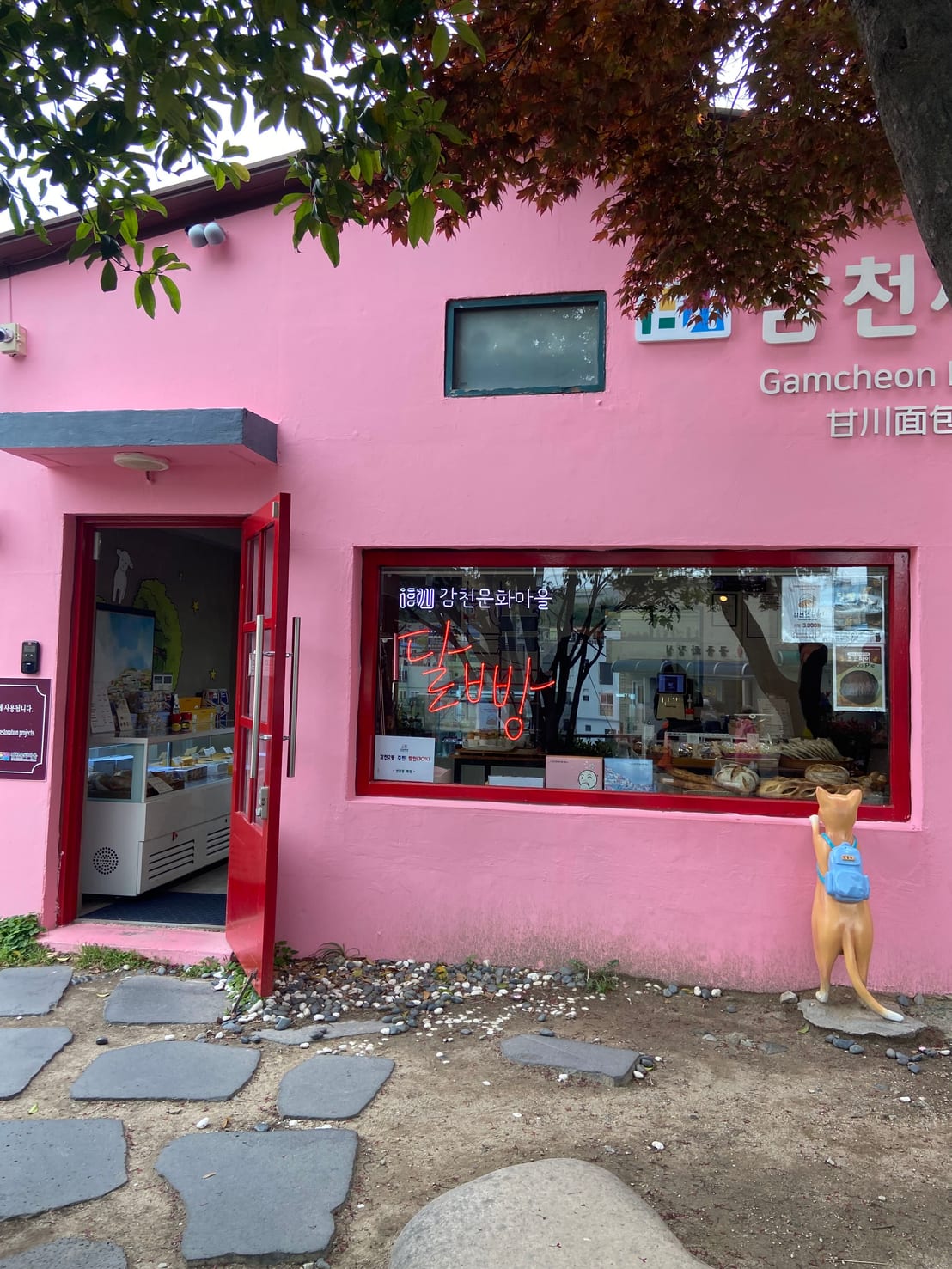
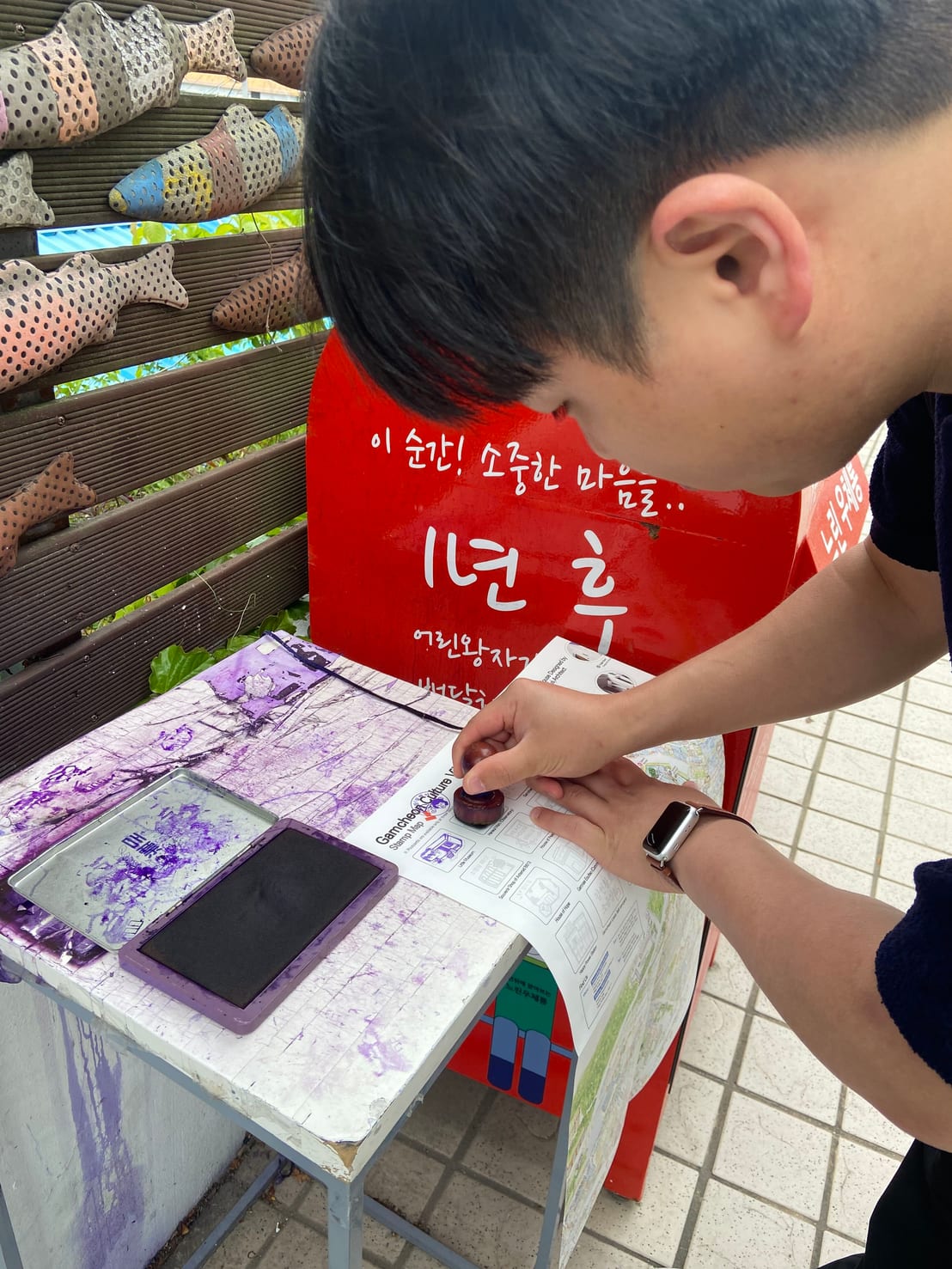
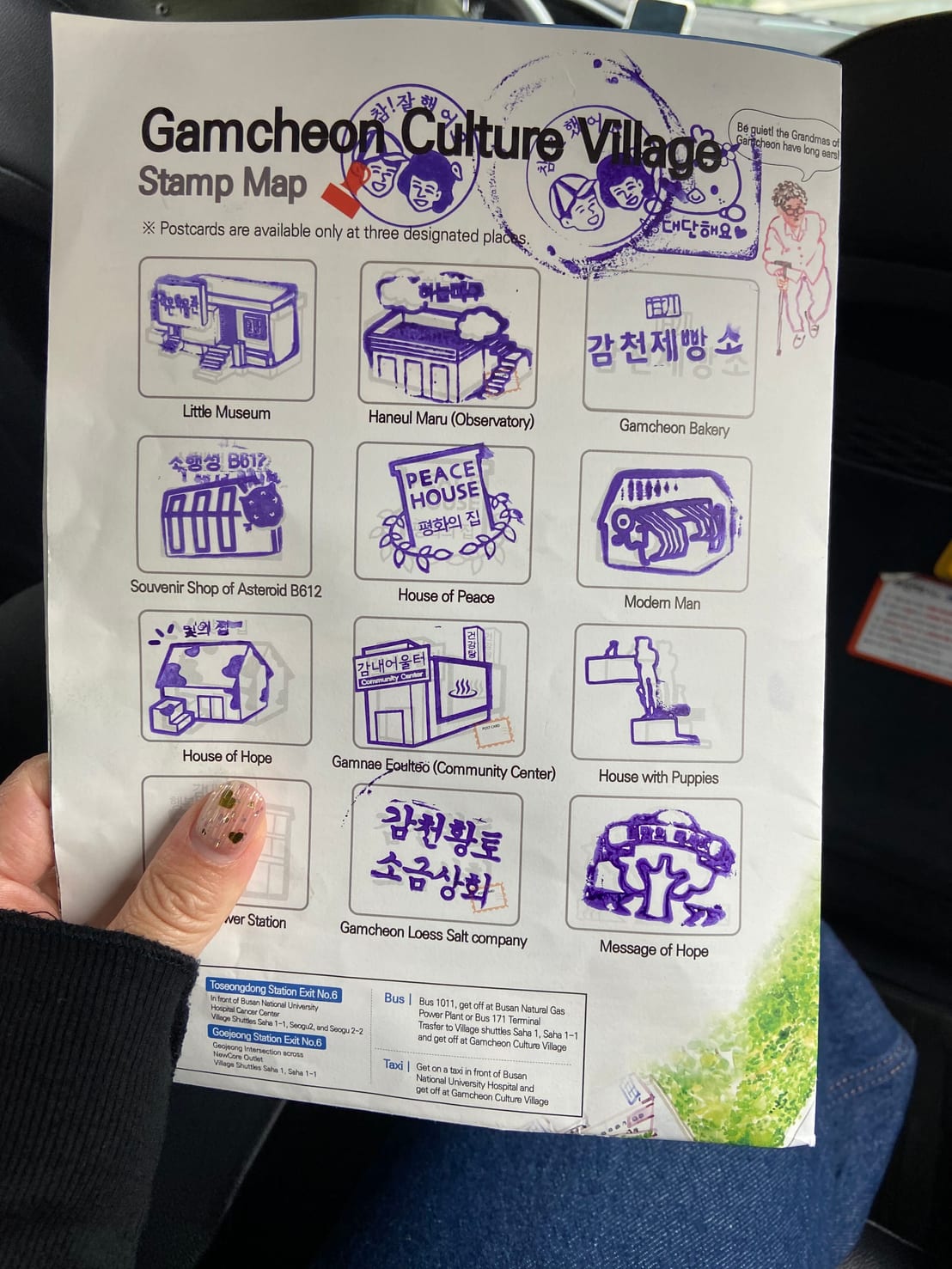
One of the best structured ways to actually see the village rather than wander it aimlessly: pick up a map from the tourist center at the entrance and go hunting for 도장 (dojang), stamps, hidden at marked points around the village. It doubles as a built-in excuse to explore alleys you might otherwise skip past, and once you’ve found every stamp on the map, you get free postcards to take home — a nice, low-effort souvenir for something that mostly just cost you a bit of walking.
Hidden art spaces
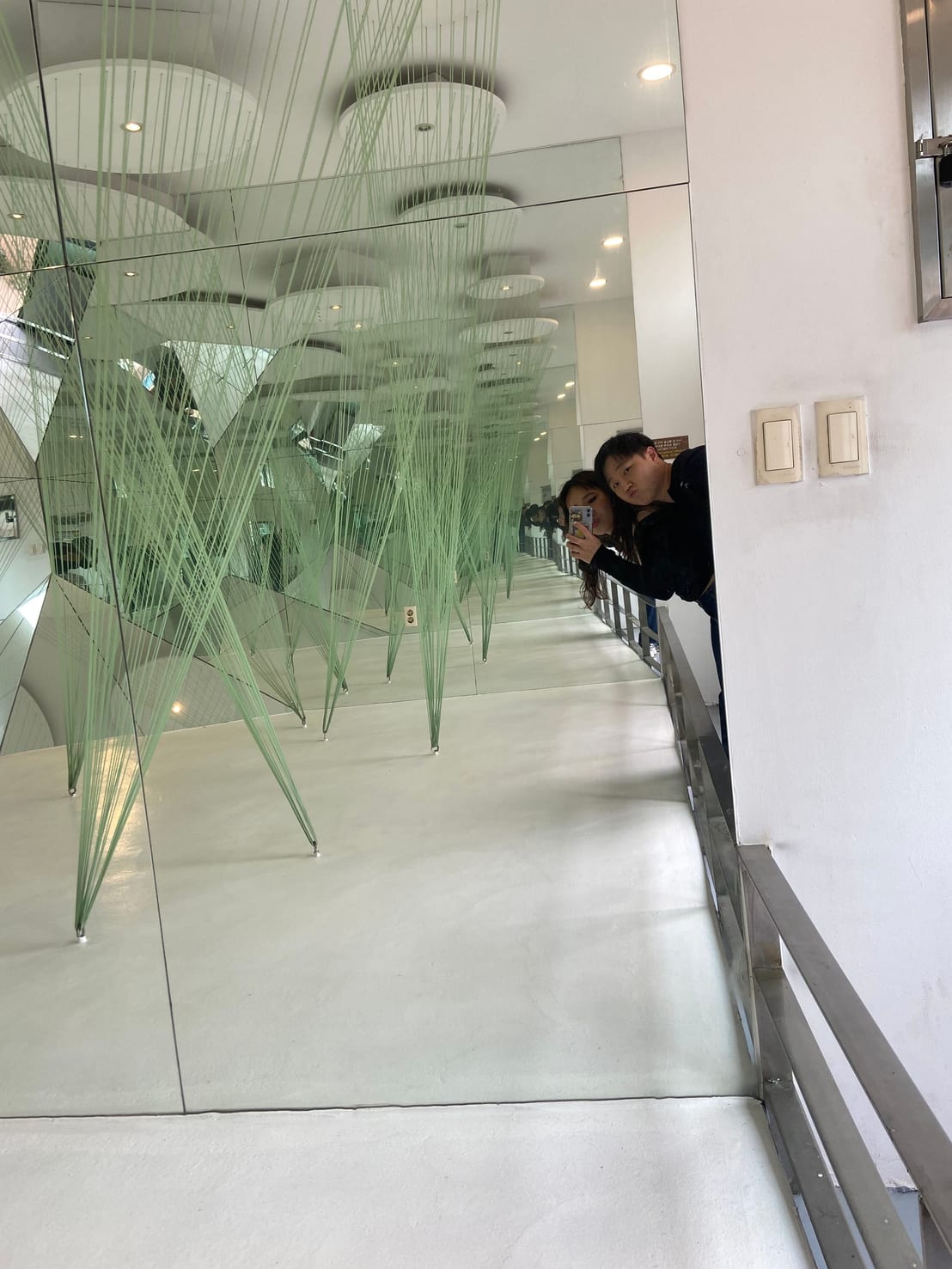
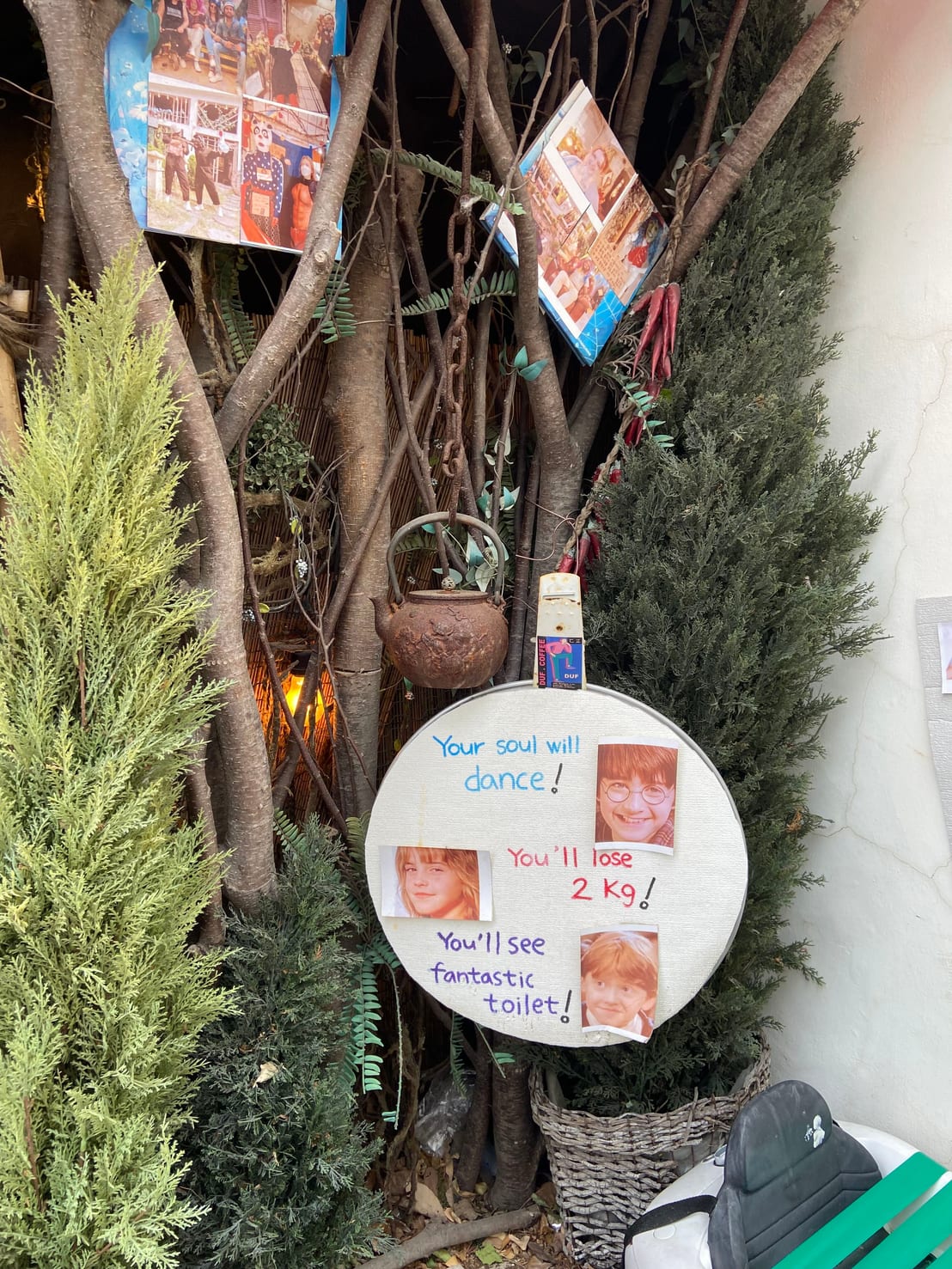
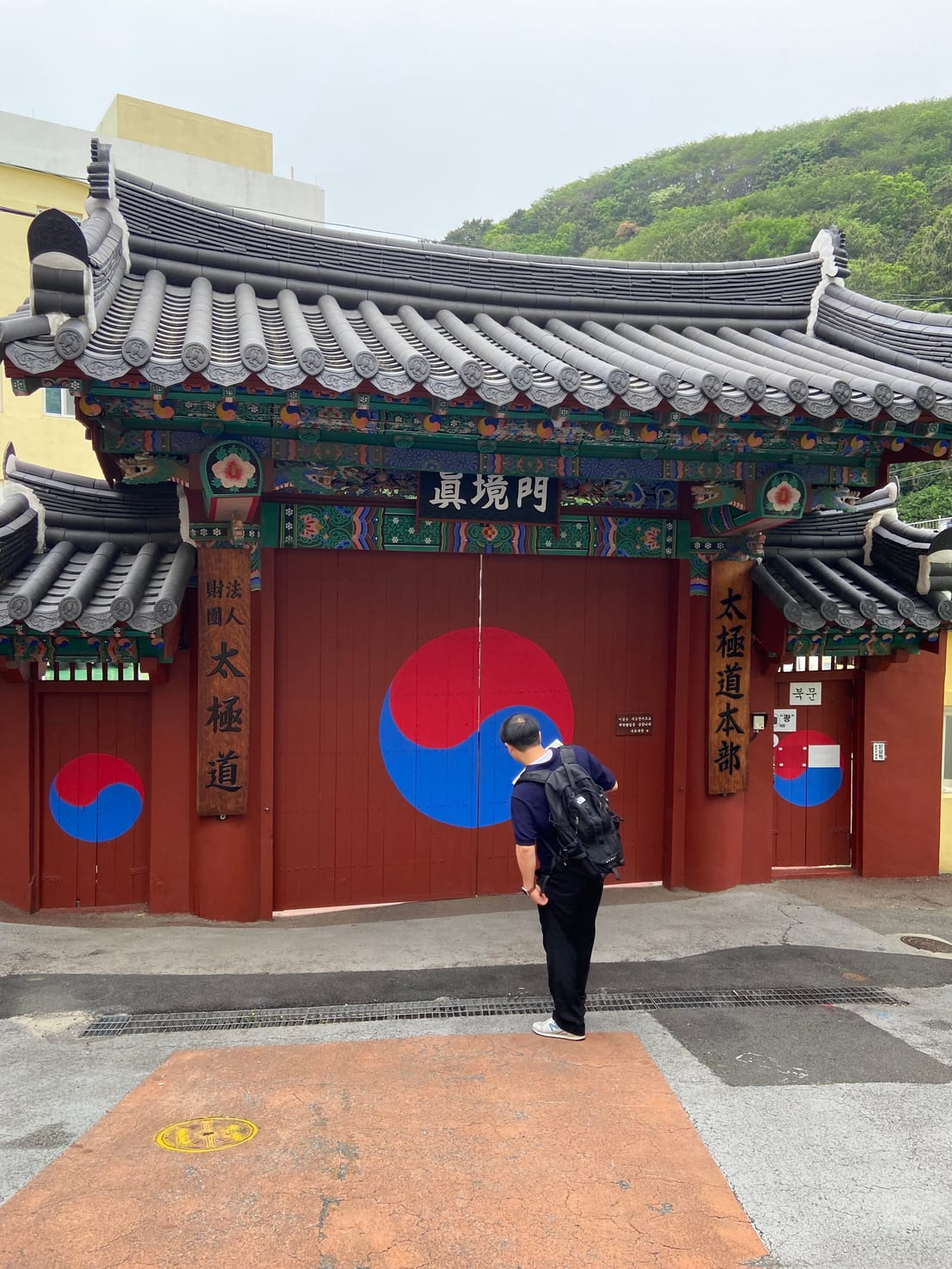
Beyond the murals out in the open, Gamcheon also has small galleries and art spaces tucked away that aren’t obvious from the main paths — the kind of thing you only stumble onto by actually ducking down the narrower, quieter alleys instead of sticking to the routes everyone else is walking. Worth setting aside time to get a little lost on purpose.
Is it worth the visit?
Completely. Gamcheon packs a lot into one hillside: a genuinely unique visual identity, a scavenger-hunt structure that gives your visit some direction, a well-earned literary easter egg once you know the story behind it, and enough tucked-away corners that even a slow, thorough visit won’t show you everything. Taxi up if you want to save your legs for the walking you’ll already be doing once you’re inside — you’ll want the energy for all the backtracking.