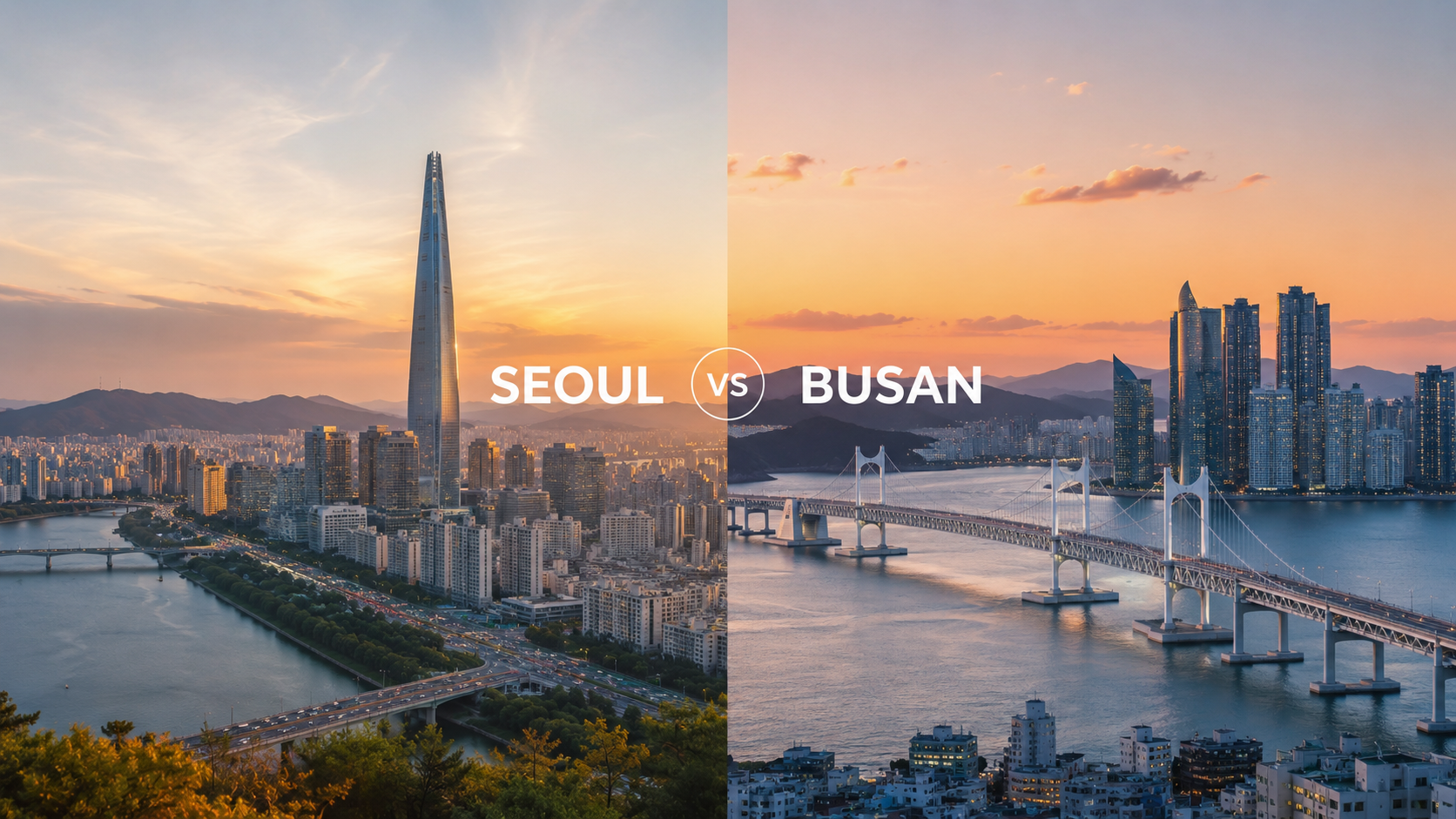
If you’re planning a first trip to Korea, the question isn’t really “Busan or Seoul” — it’s how to split your time between them, and which one deserves more of it. Here’s an honest breakdown.
The quick answer
Go to Seoul if you want the full range in one city — palaces, K-beauty shopping, nightlife, K-pop culture, and modern city life at maximum intensity. It’s the essential first Korea trip.
Go to Busan if you want the ocean, a slower pace, standout seafood, and a city with its own identity rather than a smaller version of the capital.
The honest verdict: most people who visit both end up preferring Busan’s food and pace, even though Seoul wins on sheer density of things to do. They’re different trips, not competing versions of the same one.
How they actually compare
| Seoul | Busan | |
|---|---|---|
| Nightlife | Bigger, more variety | Quieter, still solid |
| History/palaces | Strongest in the country | Coastal temples, different vibe |
| Food | More variety, more fine dining | Distinct local dishes, seafood-forward |
| Pace | Fast, dense, intense | Slower, less crowded |
| Cost | 10–20% higher baseline | Cheaper, especially accommodation |
| Beaches | None | Haeundae & Gwangalli — real beach culture |
Busan’s food identity is genuinely its own, not a smaller Seoul menu. 돼지국밥 (dwaeji gukbap), milky pork bone broth with rice, is the city’s default comfort meal — similar to how Seoul leans on kimchi jjigae — and it’s worth seeking out around Seomyeon specifically.
The Myeongdong equivalent: Seomyeon
If Seoul has Myeongdong, Busan has 서면 (Seomyeon), its busiest downtown shopping and nightlife district, sitting at the crossing point of Busan’s Subway Lines 1 and 2 — the same T-money or Climate Card you use in Seoul works here too. It’s home to Lotte Department Store, underground shopping malls, and Seomyeon Market — famous for its own dwaeji gukbap alley — plus Jeonpo Cafe Street next door for a slower coffee-shop detour. It’s less overwhelming than Myeongdong but scratches the same itch: shopping, street food, and people-watching in one dense area.
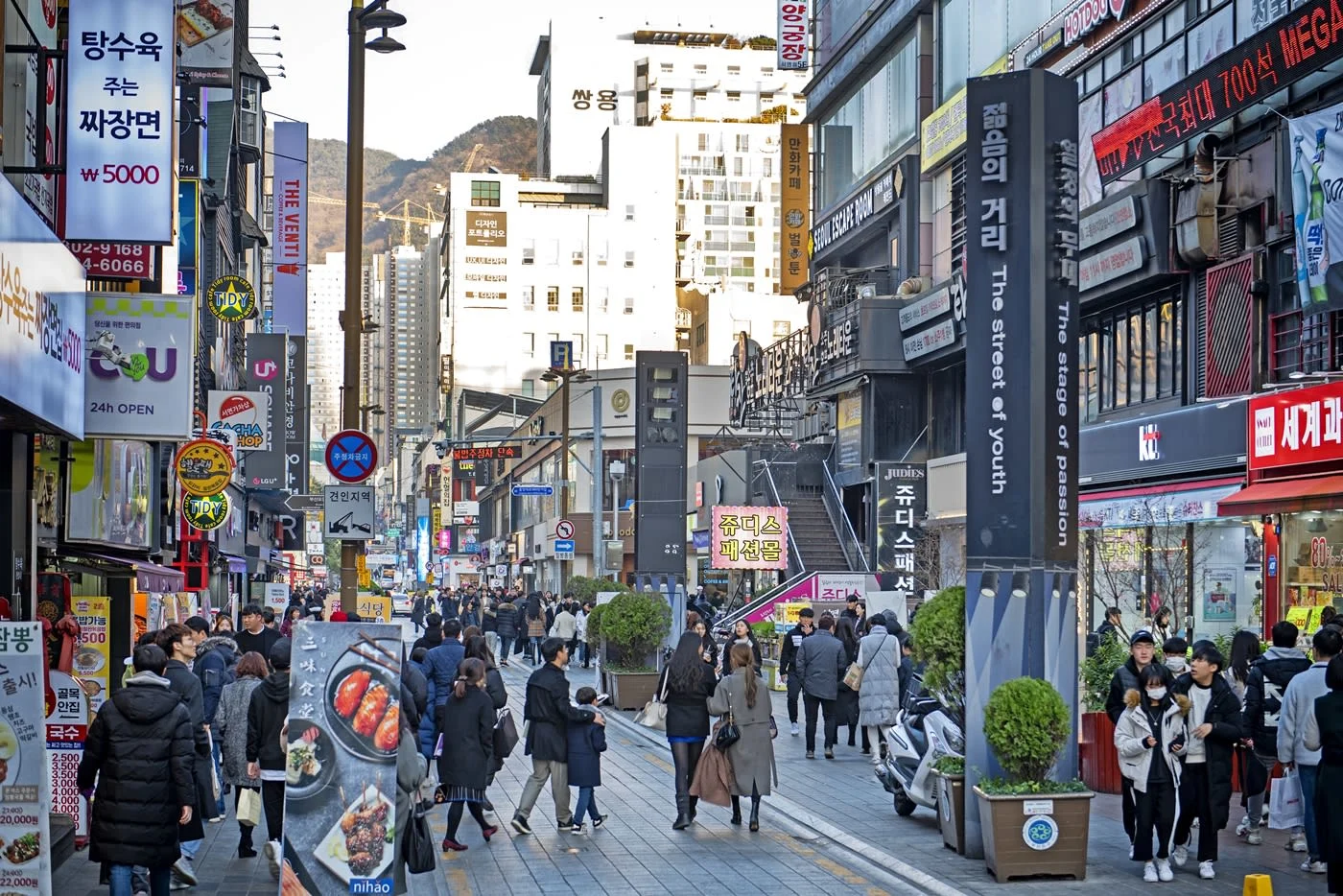
Photo: NOL World.
Markets: Mangwon vs. Jagalchi
Both cities have a market worth building a meal around.
Mangwon Market (Seoul) — a local favorite that’s stayed less touristy than the big-name markets, known for creative, viral street food without the inflated tourist pricing some of Seoul’s more famous markets have picked up. A better pick if you want an authentic market experience without the crowds or markup.
자갈치시장 (Jagalchi Sijang) (Busan) — Korea’s largest seafood market, right on the harbor. The draw here is freshness over variety: live seafood, straight off the boats, prepared on the spot. It’s less about street snacking and more about a proper seafood meal.
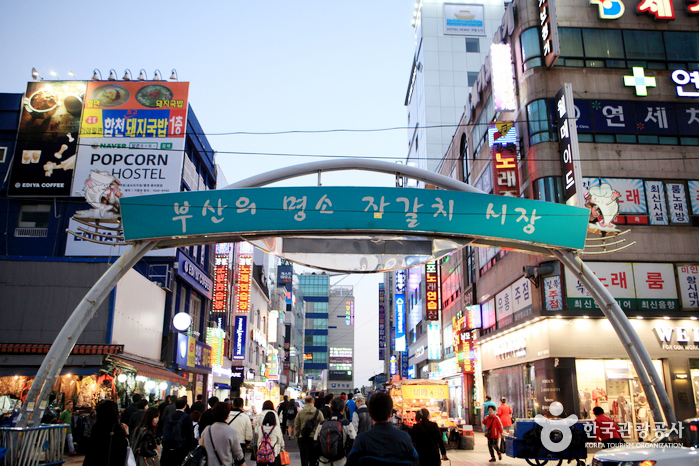
Photo: Korea Tourism Organization via koreaetour.com.
Mural villages: Gamcheon vs. Ihwa
Worth a quick correction if you’ve heard of “Ewha Village” — the mural village in Seoul is actually Ihwa Mural Village. Ewha, similarly spelled, refers to Ewha Womans University, a completely different place.
Gamcheon Culture Village (Busan) — Korea’s most-visited mural village, built into a hillside in stacked, colorful houses overlooking the sea. It has a well-organized visitor map (stamp booklet available for a few thousand won) and residents directly benefit from tourism income through cafes and shops.
Ihwa Mural Village (Seoul) — smaller and quieter, tucked near Naksan Park, with a more complicated relationship with tourism: some murals were painted over by frustrated residents in past years due to noise and overcrowding. It’s still worth a visit, but go respectfully, keep noise down, and treat it as a residential neighborhood first.
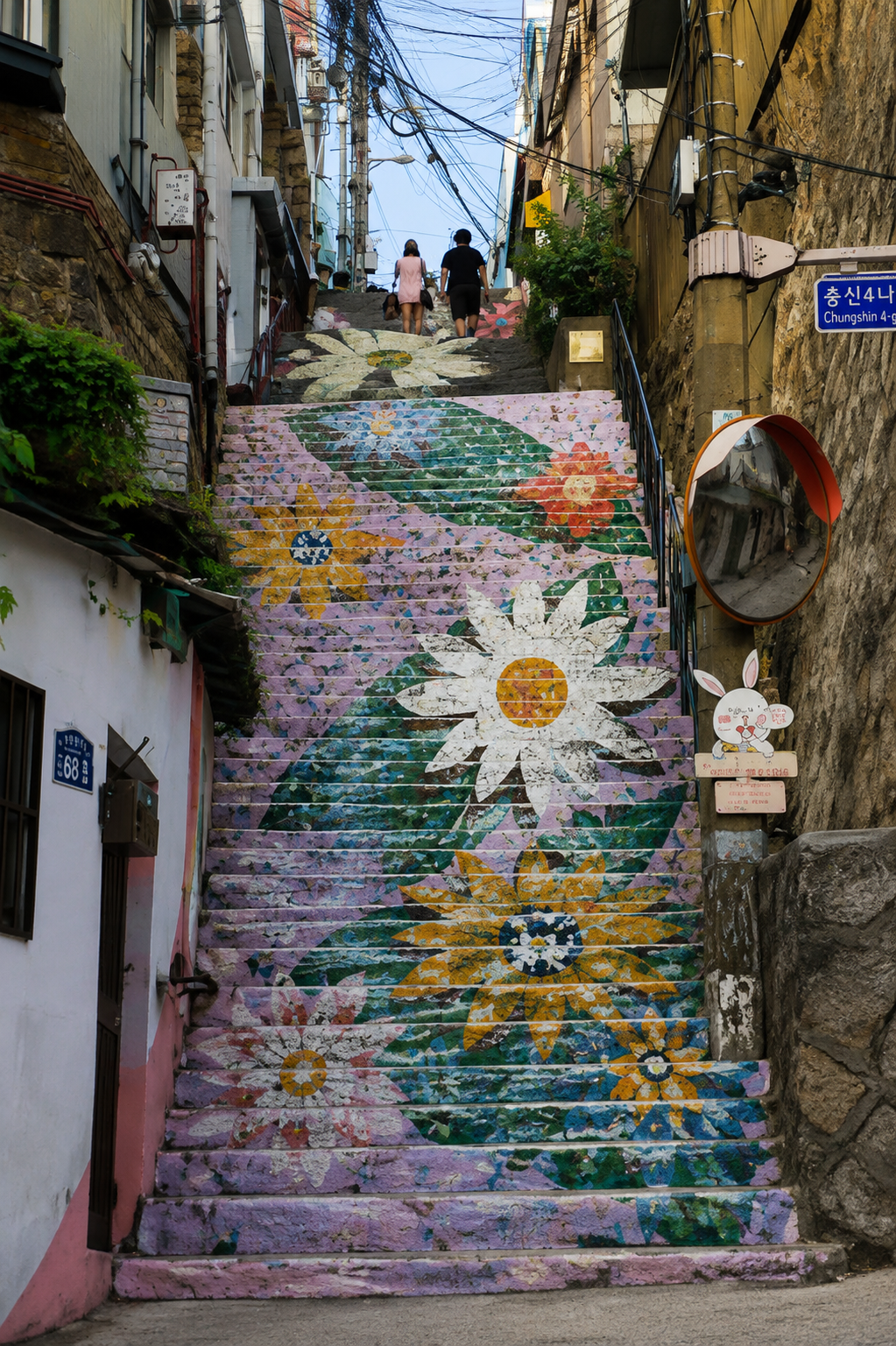
If you only have time for one: Gamcheon is the more polished, tourist-ready experience. Ihwa is smaller, more low-key, and better suited to a quiet afternoon than a big group outing.
Beaches: Busan’s clear win
This is one category where Seoul simply can’t compete — it’s landlocked and has no real 해변 (haebyeon), beach, equivalent. Busan’s two standouts:
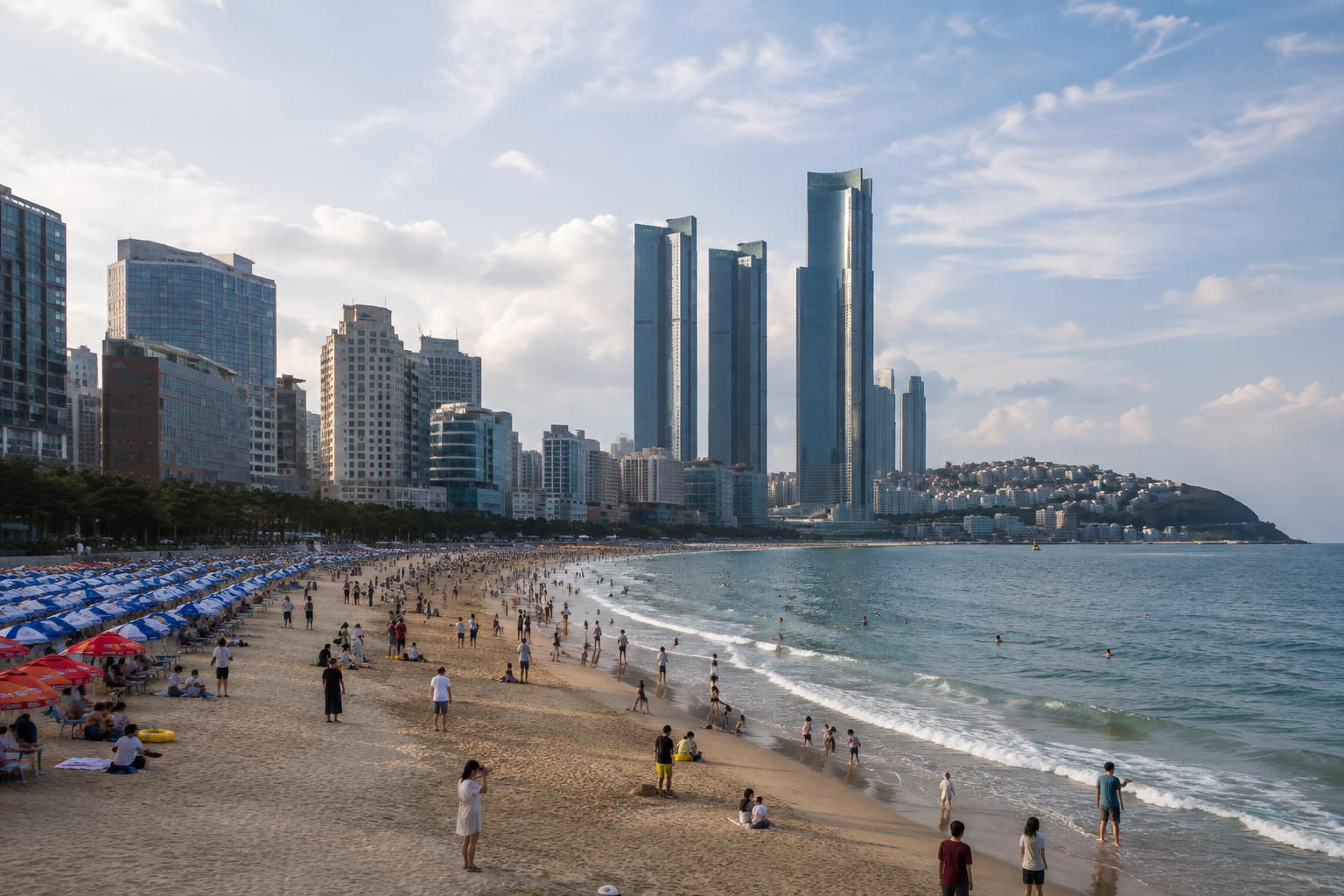
해운대 (Haeundae) Beach — the most famous and most crowded, a wide stretch of sand backed by a proper beach town: hotels, restaurants, and bars right on the boardwalk. Good for a classic beach day, especially paired with Haedong Yonggungsa 사찰 (sachal), temple, nearby.
Gwangalli Beach — smaller and a bit more low-key during the day, but the real draw is the evening view of the Gwangan Bridge lit up across the water. A better pick for a relaxed evening than a full beach day.
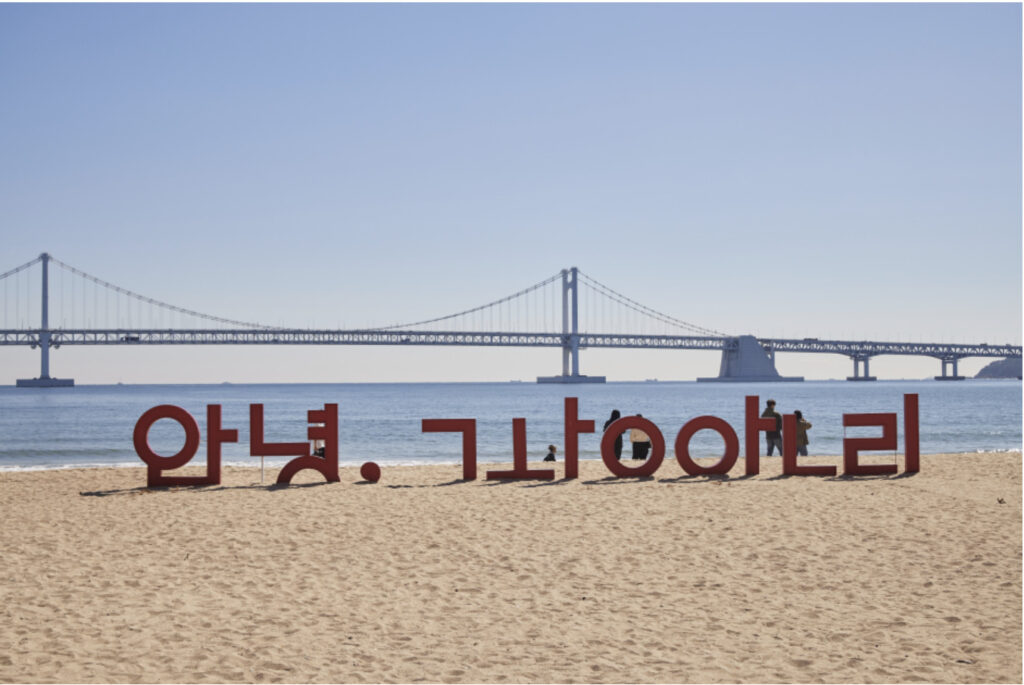
Photo: Korea Tourism Organization via koreaetour.com.
If beach time matters to your trip at all, that alone can be reason enough to give Busan more than a rushed day trip.
Getting between them
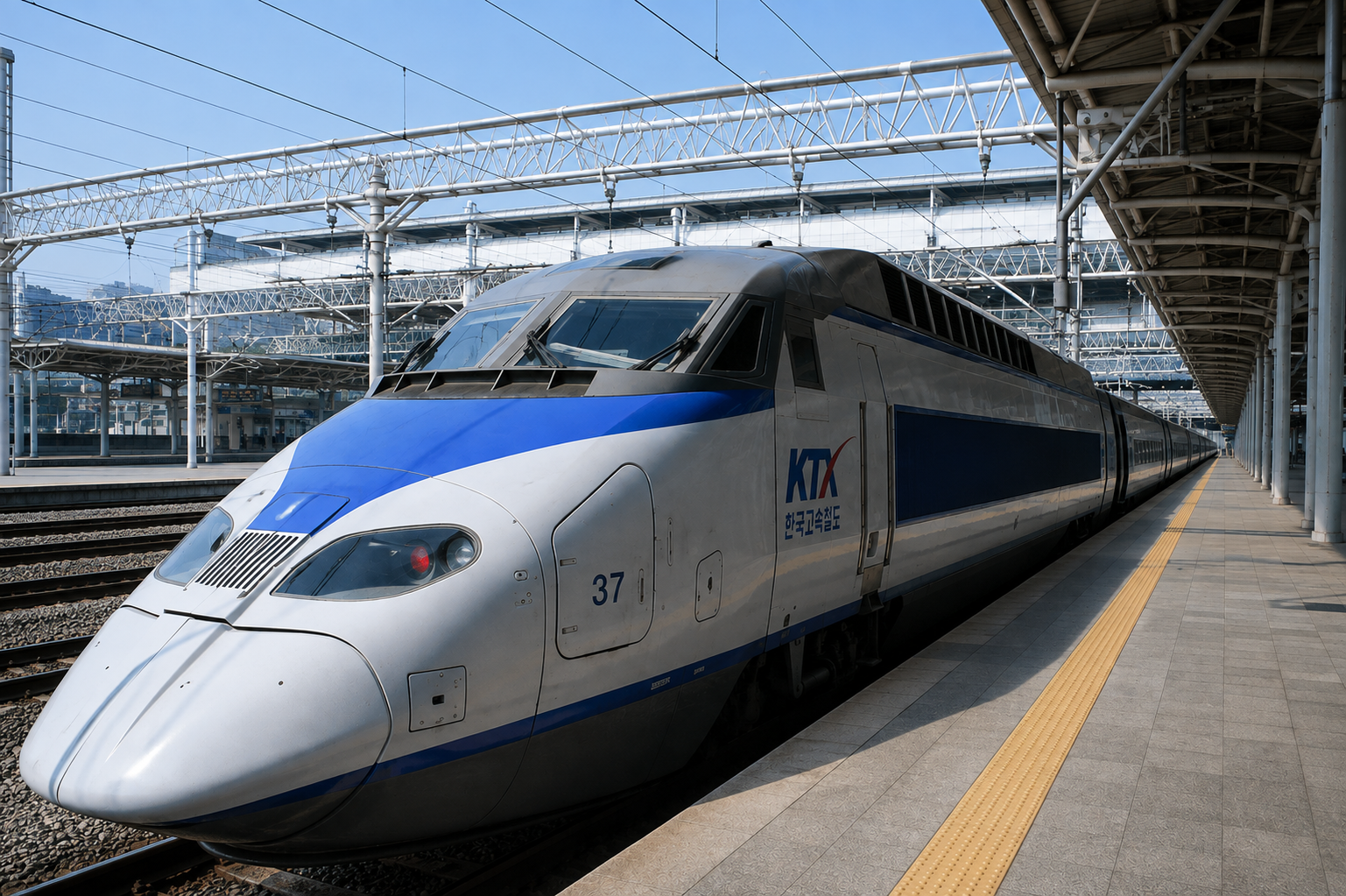
The KTX 고속열차 (gosok yeolcha), bullet train, from Seoul Station to Busan Station runs roughly every 30 minutes at peak times, takes about 2 hours 20–40 minutes, and costs around ₩59,800 (~$43) for a standard advance-booked seat. This makes doing both cities in one trip genuinely easy — no need to choose only one.
How to split your time
- 5 days total: Spend all 5 in Seoul. Splitting a short trip between both leaves you feeling like you didn’t do either justice.
- 6+ days: A 4 Seoul / 2 Busan split is a solid starting point.
- 2 days in Busan: Enough for a real impression — one day for Haeundae Beach, Haedong Yonggungsa (a temple built dramatically on coastal cliffs), and Gwangalli in the evening; a second day for Jagalchi Fish Market, Gamcheon Culture Village, and dinner in Seomyeon.
- 3+ days in Busan: Adds breathing room — a morning 등산 (deungsan), hike, up Geumjeongsan, and time to explore Gamcheon without rushing.
- Have an extra afternoon in Seoul? Mangwon Market and Ihwa Mural Village are in different parts of the city, so treat them as two separate stops rather than a single loop — Mangwon pairs well with a Hongdae afternoon, while Ihwa fits naturally alongside Naksan Park.
A few practical notes
- Book Busan accommodation early if traveling in July–August — beachfront areas around Haeundae spike in price during peak summer.
- Visit Gamcheon or Jagalchi before 9am if you can — both get significantly more crowded and less enjoyable later in the day.
- Build in cross-city travel time within Busan itself — 45–60 minutes between neighborhoods like Haeundae and Gamcheon is normal; don’t assume it’s a quick hop.
- The e-Arrival Card is mandatory for all foreign visitors as of January 2026 — fill it out online before you fly, it takes about five minutes. Our entry paperwork guide walks through it.
- Set up navigation before you land. Naver Map and KakaoMap both work better than Google Maps in Korea, and you’ll want them in Busan just as much as Seoul. See our eSIM & navigation apps guide for what to install before you fly.
Bottom line
Seoul is the trip most people should take first — see our 4-day Seoul itinerary if you’re planning that leg. Busan is the trip worth taking once you realize Korea has more than one personality. If your schedule allows for both, the KTX makes it an easy add rather than a logistical headache — just don’t shortchange either city by rushing through in a single day.