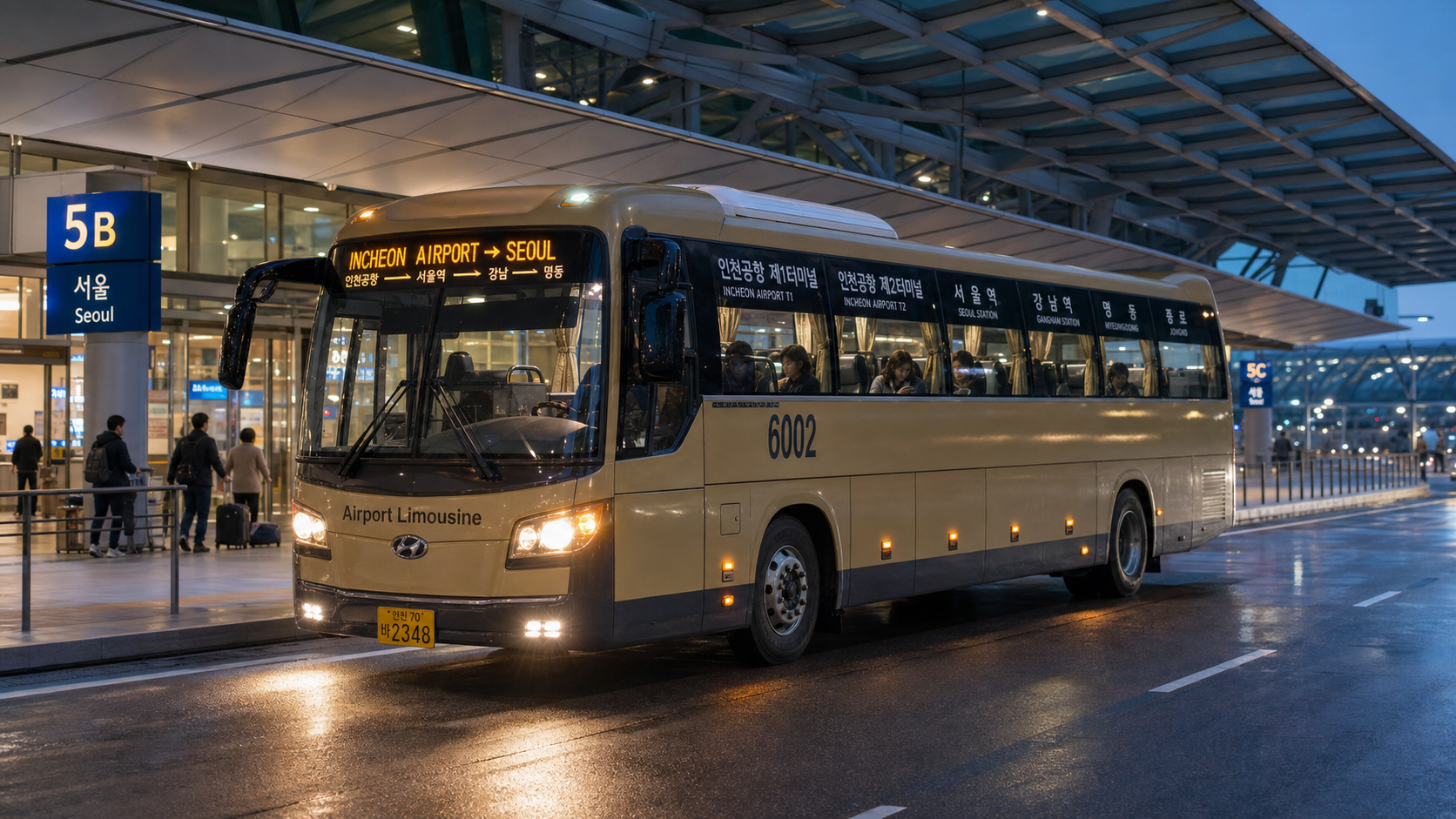
We always take the train in from 공항 (gonghang), airport — it’s the default, it’s fast, and it’s what everyone recommends. This trip, for the first time, we took the 리무진 버스 (rimujin beoseu), limousine bus, instead, and it’s genuinely underrated. Nobody talks about it the way they talk about AREX, but after one ride we’re not sure we’re going back.
Why it beats the train, honestly
The train is quick, but it comes with a specific kind of stress: hauling your own 짐 (jim), luggage, through crowded carriages, then up and down stairs at every transfer, trying not to block anyone while you wrestle a suitcase onto an escalator. It’s manageable, but it’s not relaxing.
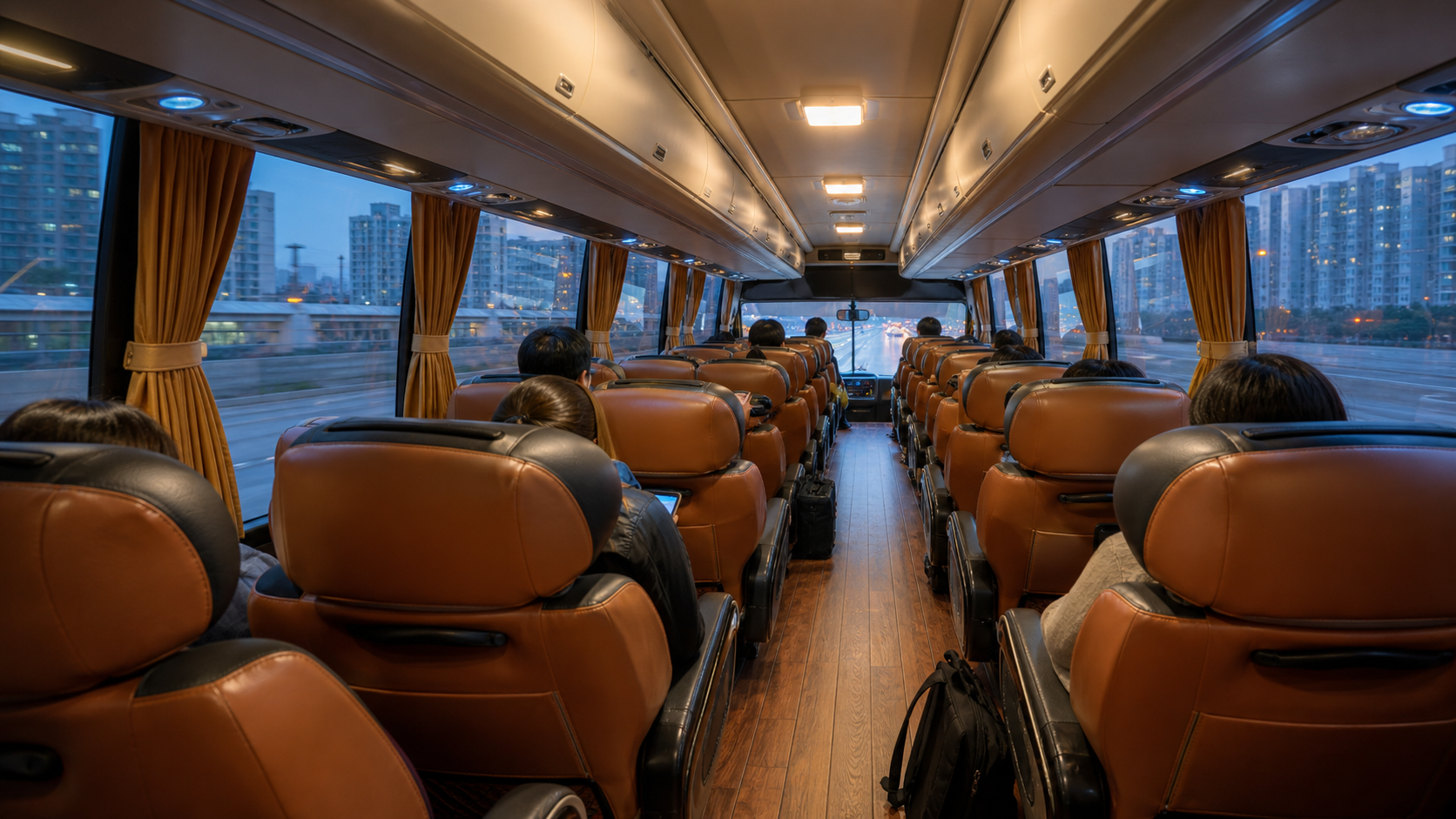
The limousine bus removes all of that. You hand your suitcase to the staff once, at the curb, and you don’t touch it again until Seoul. There are no stairs, no transfers, no standing room — just a wide, comfortable coach seat for the entire ride. After a long flight, that difference is bigger than it sounds.
How it actually works
The process is simple enough that it doesn’t need much explanation, but here’s exactly how it went for us:
-
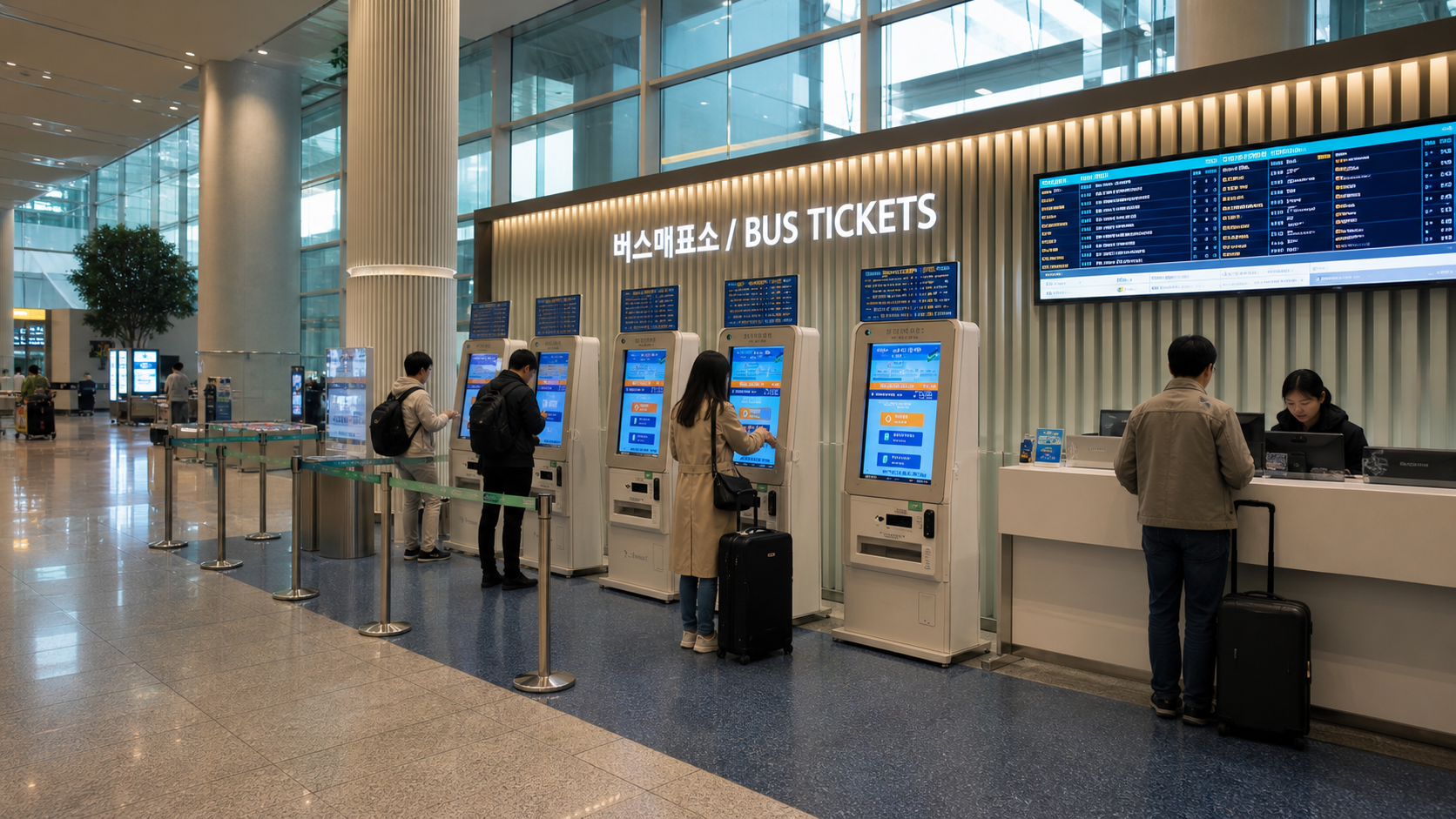
Buy your ticket at a 매표소 (maepyoso), kiosk, or staffed counter in the arrivals area. Kiosks take credit cards and run in English, Korean, Chinese, and Japanese; counters take cash too if you need it.
Book your limousine bus ticket in advance →
Affiliate link — we may earn a small commission at no extra cost to you.
-
Check the gate number printed on your ticket. That number is your 정류장 (jeongnyujang), bus stop — in Terminal 1 it’s a letter-and-number combo (like 12A) marking a specific spot outside the arrivals hall; in Terminal 2, every stop is downstairs at the indoor transportation center, so you’re never standing outside in the weather.
-
Wait at your stop and hand your suitcase over when the bus pulls in. The staff loading the under-bus compartment are meticulous about it — bags go in fast, organized, and without you having to lift a finger.
-
Get on, find your 좌석 (jwaseok), seat, and that’s it. Smooth sailing from there.
What it costs, and how long it takes
Standard limousine routes run about ₩17,000, with the premium “K-Limousine” buses slightly higher at around ₩18,000 — those come with extra legroom and fewer stops. Kids between 6 and 12 ride for roughly ₩11,000. Trip time is typically 60–90 minutes depending on your destination in Seoul, though Friday afternoon traffic can add another 30–60 minutes on top, same as it would in a taxi.
It’s not the fastest option on paper — AREX will usually beat it to Seoul Station — but once you factor in zero stair-hauling, guaranteed seating, and not having to watch your bags every second, the extra time stopped feeling like a downside on this trip.
Would we take it again?
Yes, without much hesitation. If you’re arriving with real luggage, traveling with someone less mobile, or just landed after a long-haul flight and don’t have the energy to fight a suitcase through a train transfer, the limousine bus is worth the small price difference. We’ll still take the train when we’re moving light, but for a proper arrival with bags, this is our new default.