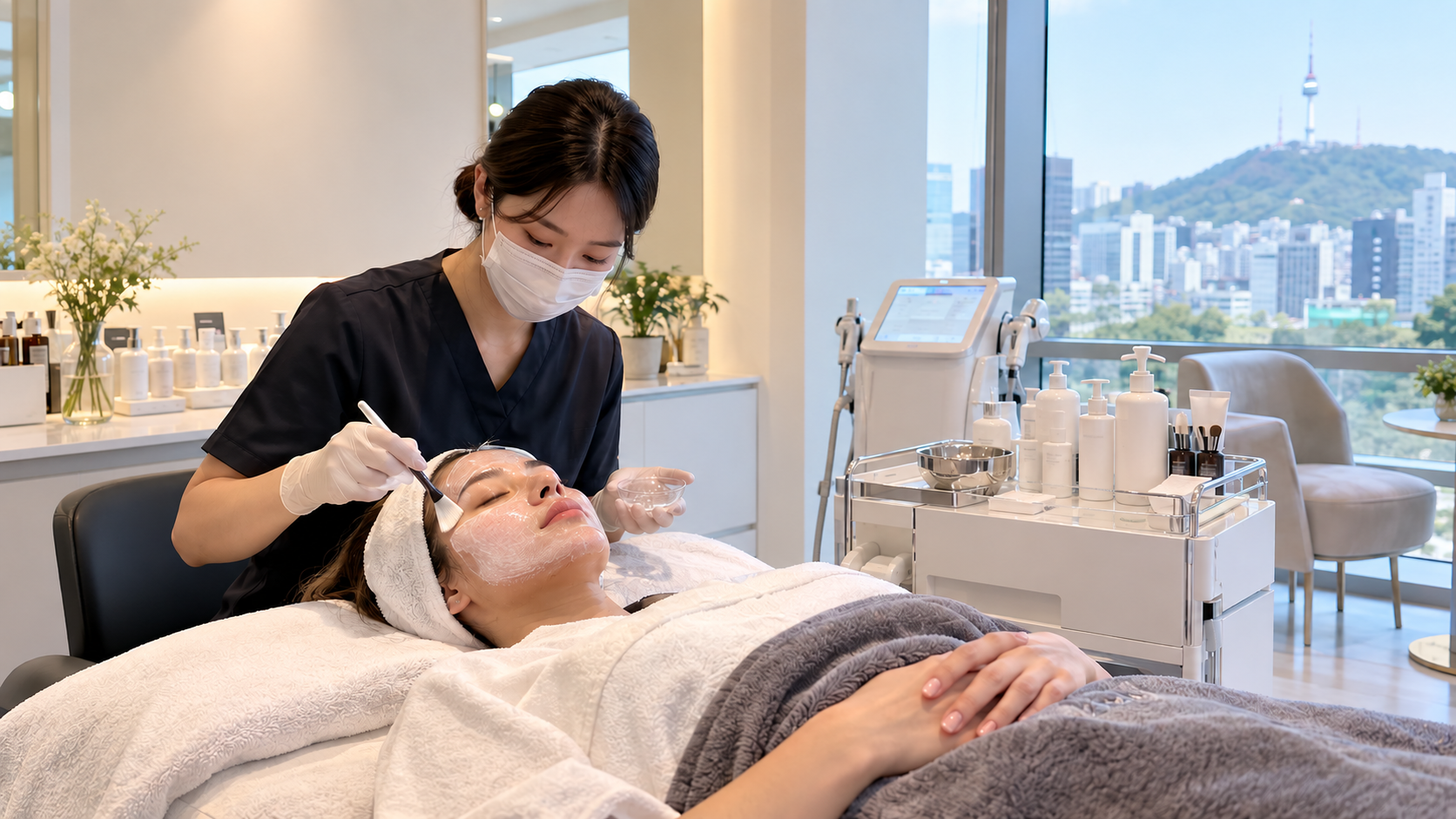
Korea didn’t just quietly become a beauty destination — it’s now treating K-beauty as a national economic strategy, with the numbers to back it up. If you’ve been on the fence about timing a trip around it, here’s what’s actually happening.
The numbers behind the boom
- 1.2 million people traveled to South Korea specifically for beauty and aesthetic reasons in 2024, a figure projected to keep climbing toward an estimated £21.13 billion in beauty-tourism revenue by 2030.
- Foreign visitors spent ₩843.3 billion (~$548 million) on Korean beauty services last year alone — dermatology, hair styling, wellness spas — a 38% jump year-over-year.
- Korea’s cosmetics exports hit $11.4 billion in 2025, officially making it the world’s second-largest cosmetics exporter and overtaking France as the top cosmetics exporter to the US.
- Small and medium-sized beauty brands now account for 72.5% of that export volume, up from 63.6% just two years earlier — this isn’t only the big conglomerate brands driving it.
- The government has set a 2030 target of ₩400 trillion (~$260 billion) for the broader “K-Culture” market, with beauty positioned as a pillar alongside K-pop and entertainment, not a side effect of them.
What people are actually flying in for
It’s not just shopping trips anymore. Visitors are booking:
- Skin-brightening lasers and lifting/sculpting facials
- Rejuran treatments (salmon-DNA skin boosters used to stimulate collagen)
- 18-step head spa rituals
- AI-driven skin analysis and personalized facial treatments
- Traditional Korean spa experiences with full-body exfoliation
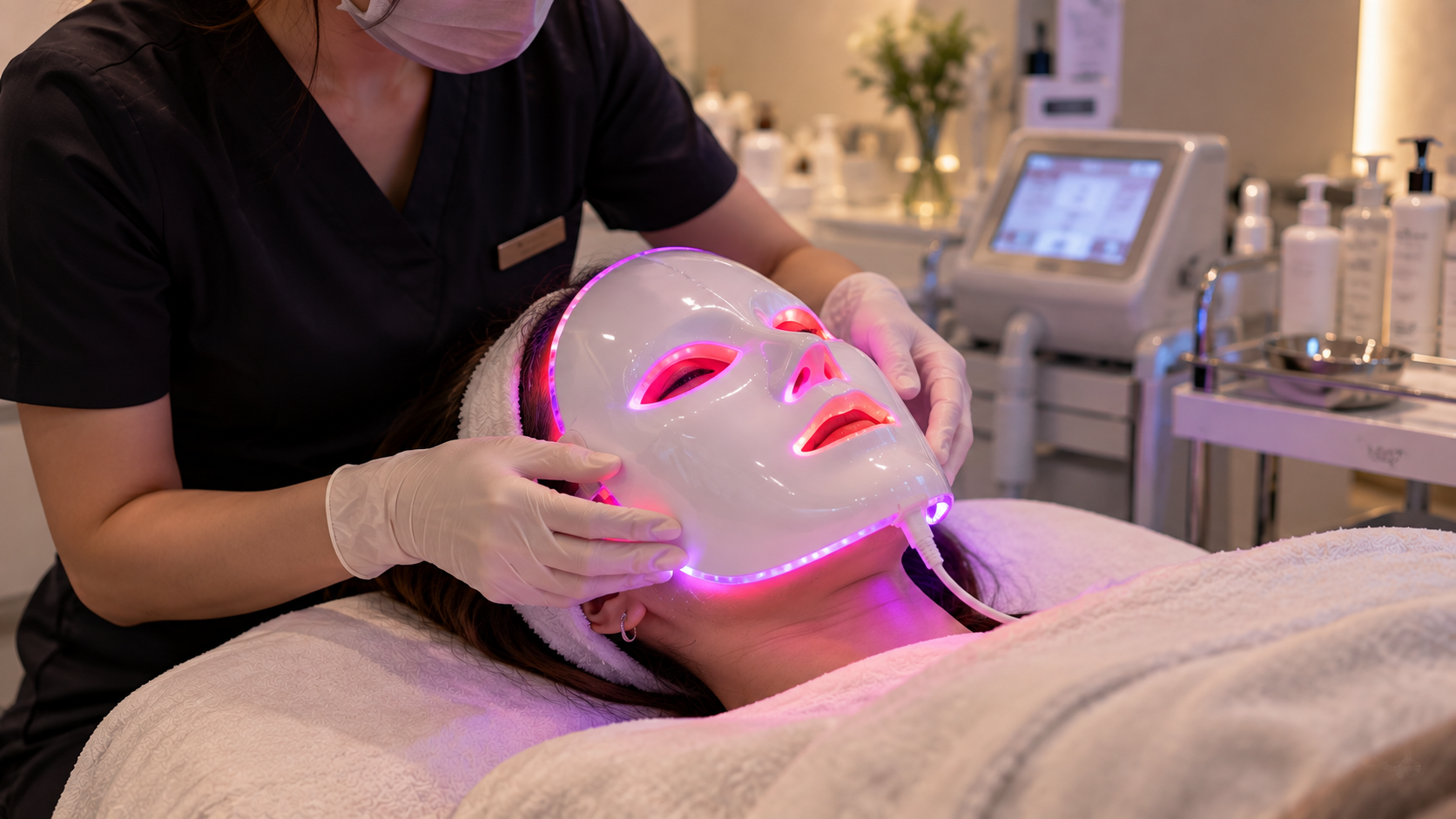
Treatments in Korea typically run 30–50% cheaper than equivalent procedures in the US or Europe, without a drop in quality — a big part of why this has scaled from “nice bonus on a Seoul trip” to “the reason for the trip.”
Where they’re actually going
A few neighborhoods keep coming up as the real hubs, beyond the obvious Myeongdong shopping strip:
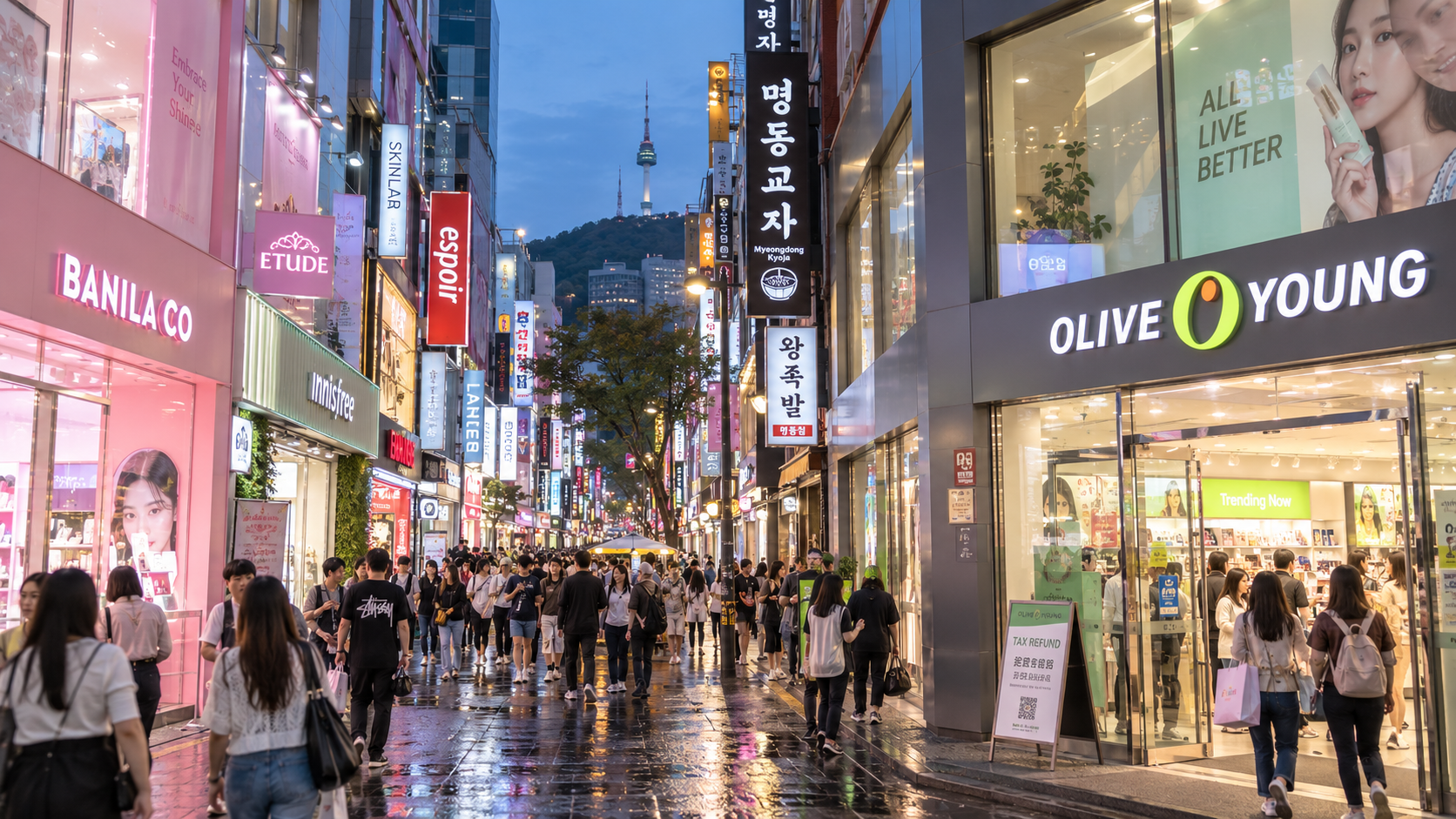
- Seongsu — Amore Pacific’s flagship store here runs AI-matched serum stations; it’s also where Shin Ramyun’s 40th anniversary pop-up landed, if you want to make a day of the neighborhood.
- Gangnam — dermatology and aesthetic clinics (Medicube among them) are concentrated here.
- Hongdae — home to color-analysis studios; see our personal color analysis guide if that’s the specific booking you’re after.
- Cheongdam — K-pop-style makeover studios.
- Busan — Spa Land at Centum City, the country’s largest traditional jjimjilbang-style spa.
The government’s big bet
Two flagship events this year show how seriously this is being treated as policy, not just marketing:
The 2026 Korea Beauty Festival ran June 24–July 19 at HiKR Ground in Seoul, run directly by the Ministry of Culture, Sports and Tourism and the Korea Tourism Organization. It turned the venue into an experiential hub with AI personal color diagnosis stations and idol-style makeup tailoring, and appointed actress-singer Hyeri as its promotional ambassador.
Seoul Beauty Week ran August 22–25 at Dongdaemun Design Plaza, pairing 152 beauty companies with 115 global buyers across a trade show, a regulation-and-tech forum, and hands-on consumer programs — generating roughly ₩17.7 billion in export contracts in a past edition alone.
Both have wrapped for the year, but they’re clearly becoming annual fixtures rather than one-off events — worth watching for if you’re planning a summer trip next year.
Still live: something you can actually book right now
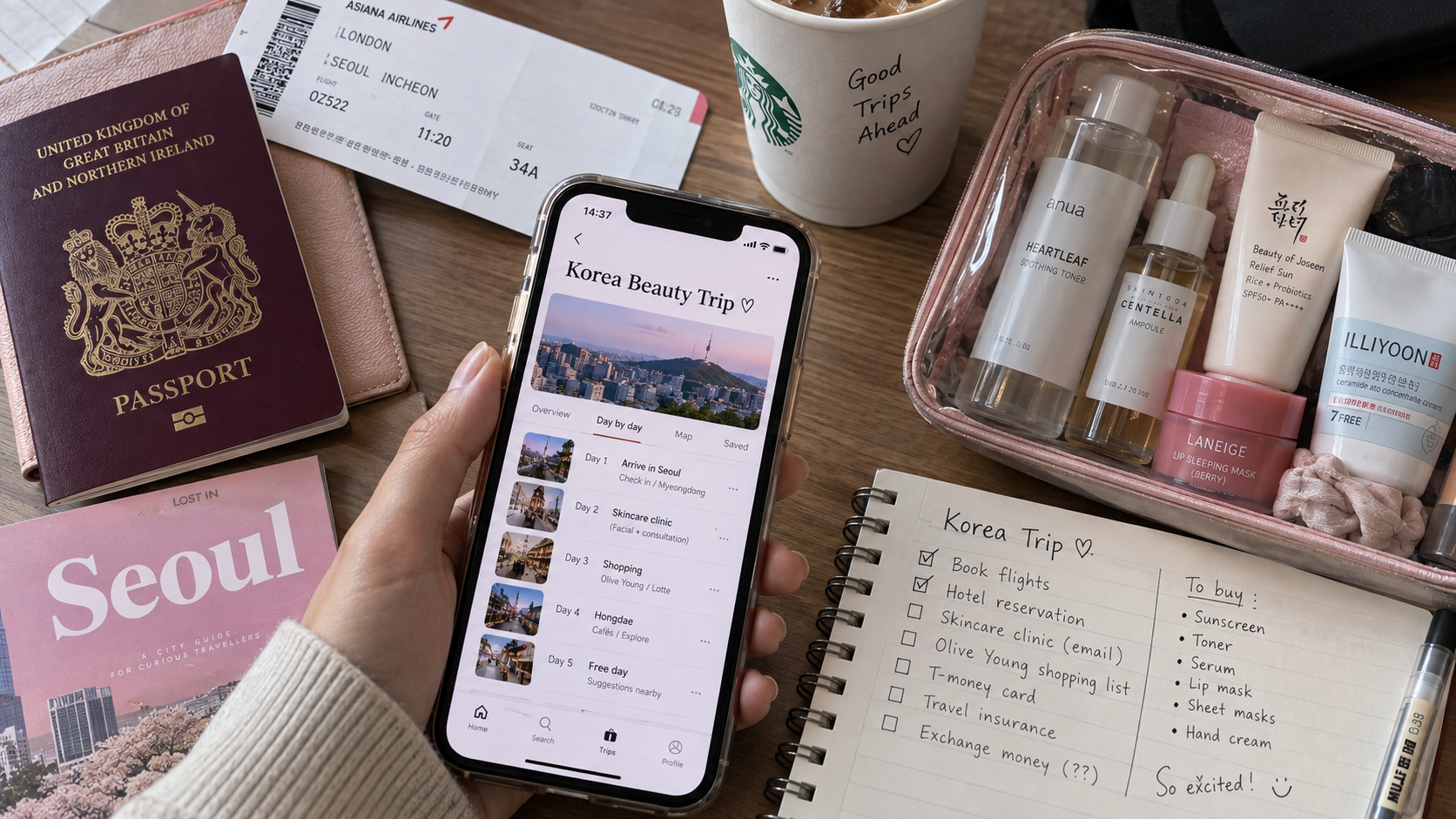
Here’s the part that isn’t just retrospective — a coordinated push between the Korea Tourism Organization and nine global booking platforms (Klook and Trip.com among them) launched roughly 800 curated beauty trip itineraries, built out of a travel mart that brought in tour operators from 16 countries. Those campaigns are running through September 30, 2026 — so if a beauty-focused Korea trip has been on your list, this is a genuinely live window rather than something you missed.
Bottom line
This isn’t a passing social-media moment — it’s backed by export data, government funding, and two major festivals in a single summer. If you’re planning a Korea trip around beauty specifically, you’re not early to this anymore, but you’re also not late: the infrastructure (clinics, festivals, curated tour packages) is being built out faster than most travelers have caught up to.