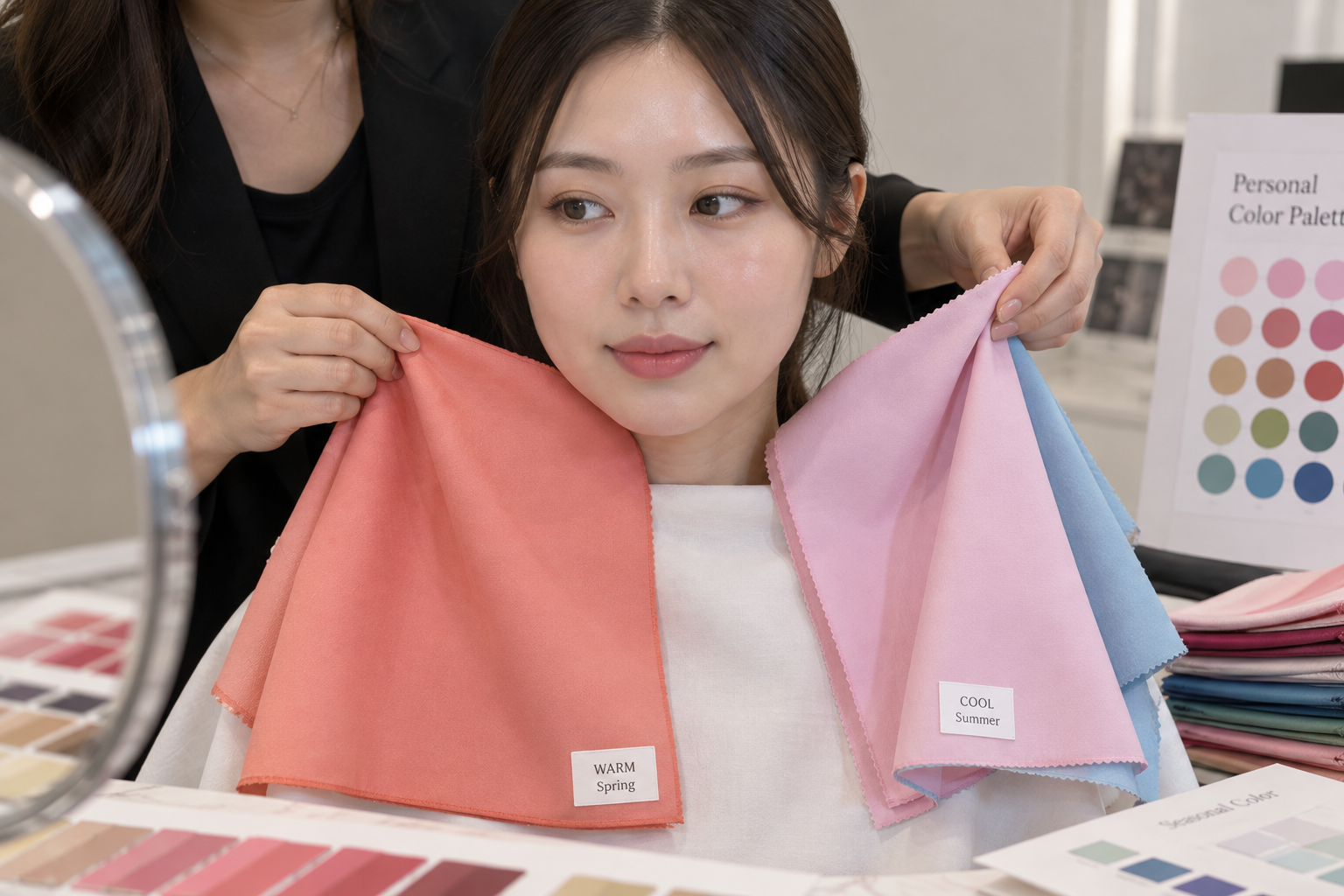
If you’ve noticed Seoul travel content suddenly full of people holding up colored fabric swatches under their chin, you’re not imagining a niche trend — personal color analysis has become one of the most searched first-timer activities for visitors planning a Seoul trip, right up there with palace visits and skincare shopping.
What it actually is
퍼스널 컬러 (peoseoneol keolleo), personal color, is a consultation that figures out your natural undertone and hands you a palette of colors — clothing, makeup, hair — that are scientifically flattering against your specific skin, rather than colors that are just generally trendy. It’s not a new idea (the concept has roots in Western color theory going back decades), but Korea has turned it into a genuinely polished, science-backed service industry of its own.
What happens in a session
A typical 진단 (jindan), diagnosis, runs 60–90 minutes and moves through a few stages:
- A skin reading. Many studios start with a spectrophotometer — a device that objectively measures redness, yellowness, and brightness in your skin, rather than relying purely on the consultant’s eye.
- Draping. You sit in front of a mirror under daylight-balanced lighting while the consultant holds a sequence of colored fabric drapes under your chin, watching how each one changes your complexion — some colors will visibly brighten and smooth your skin, others will wash you out or make you look tired.
- A pouch check. Bring your current makeup bag if you can — a lot of studios will sort your existing products into “best,” “worst,” and “okay” for your new palette.
- Results. You walk away with a palette (physical swatches or a digital card), plus recommendations for hair color and jewelry tone (gold vs. silver).
The season system
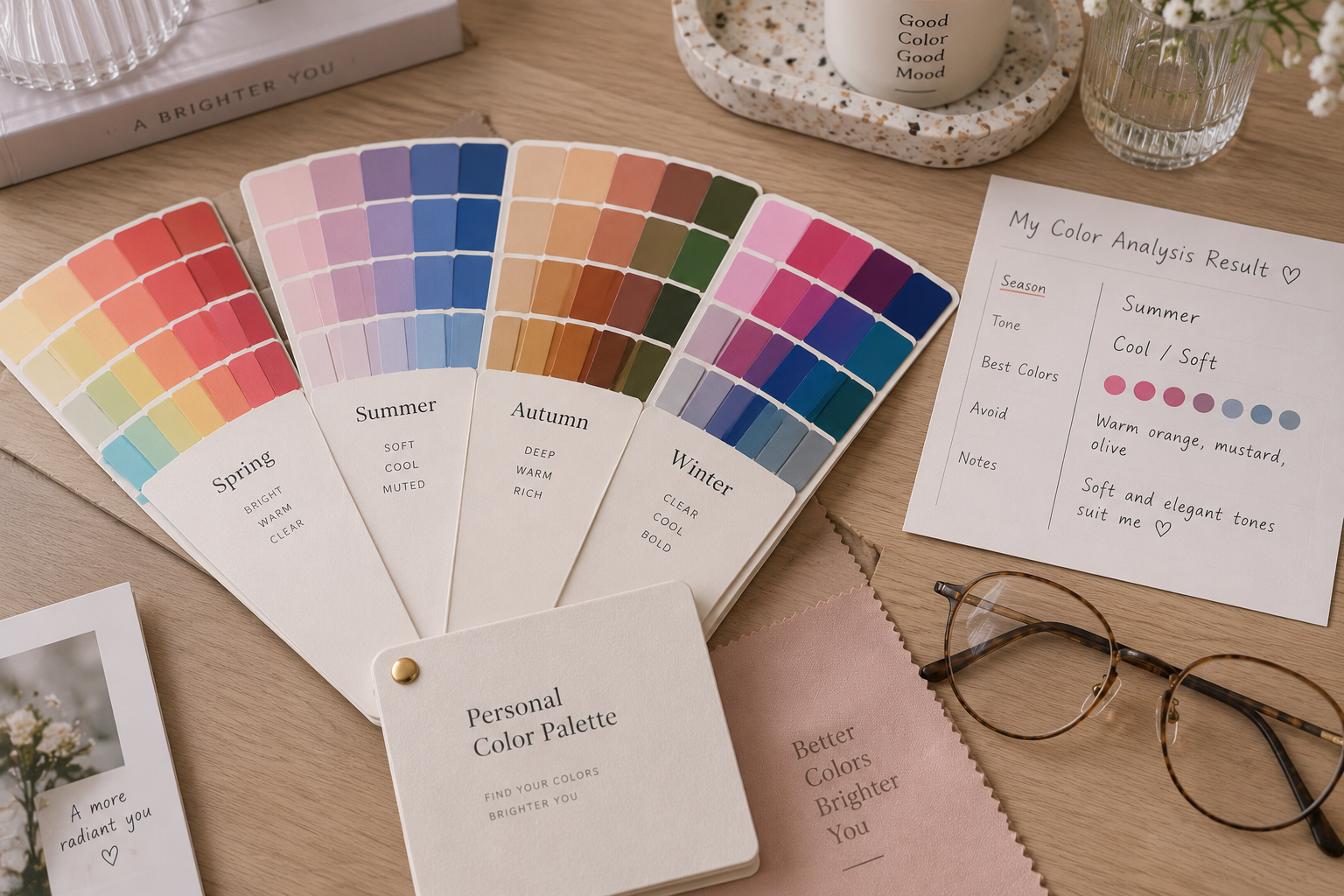
Korean personal color analysis is built on a 사계절 (sagyejeol), four-season framework — Spring, Summer, Autumn, and Winter — split along two axes: 웜톤 (womton) vs. 쿨톤 (kulton), warm tone vs. cool tone, and bright vs. muted. Spring and Autumn are warm; Summer and Winter are cool — and most people find the warm/cool split alone is the single most useful takeaway from the whole session, even before you get into which season you are specifically.
Standard sessions stop at the four seasons. Premium sessions go further, splitting each season into 12 or even 16 sub-types (adding light, medium, and deep variations within each), which is where the price starts climbing.
What it costs
Pricing varies by session type and studio, but the ranges have settled into a fairly consistent pattern in 2026:
| Session type | Length | Price (KRW) | Price (USD) |
|---|---|---|---|
| Group (2–3 people) | 30–40 min | ₩60,000–120,000/person | ~$45–90 |
| Standard 1:1 | 60–90 min | ₩100,000–180,000 | ~$75–135 |
| English-speaking | 60–90 min | ₩120,000–180,000 | ~$90–135 |
| Premium (12/16-tone) | 90–120 min | ₩250,000–400,000+ | ~$190–300+ |
English-speaking sessions sit at the higher end mostly because fewer studios offer them, not because the analysis itself is more involved.
Where to book in English
-
Color of You (Hongdae) — a tourist-friendly studio offering service in English, Chinese, and Japanese; bookable directly through Klook.
 Book Color of You on Klook →
Affiliate link — we may earn a small commission at no extra cost to you.
-
Meime Color and Beauty (Gangnam/Yeoksam) — a smaller, more casual studio with a fluent English-speaking consultant.
-
Season Of You — another well-reviewed option in Seoul, worth checking for availability if the two above are booked out.
Popular studios book out 1–2 months in advance, especially during peak travel seasons, so this isn’t something to leave for a walk-in on the day.
Booking tips
- Book through Klook, Creatrip, or Trazy rather than direct — these platforms often run 10–15% cheaper than booking with the studio directly, on top of being easier to book in English.
- Show up bare-faced. Makeup interferes with the skin reading and the draping results — most studios will explicitly ask you not to wear any.
- Bring your actual makeup bag, not just the products you think are your “best” ones — the pouch check is more useful with your full real-world rotation.
The free DIY version
If you want a rough read before committing to a paid session — or you’re not able to fit one into your trip — there are a few low-effort self-tests:
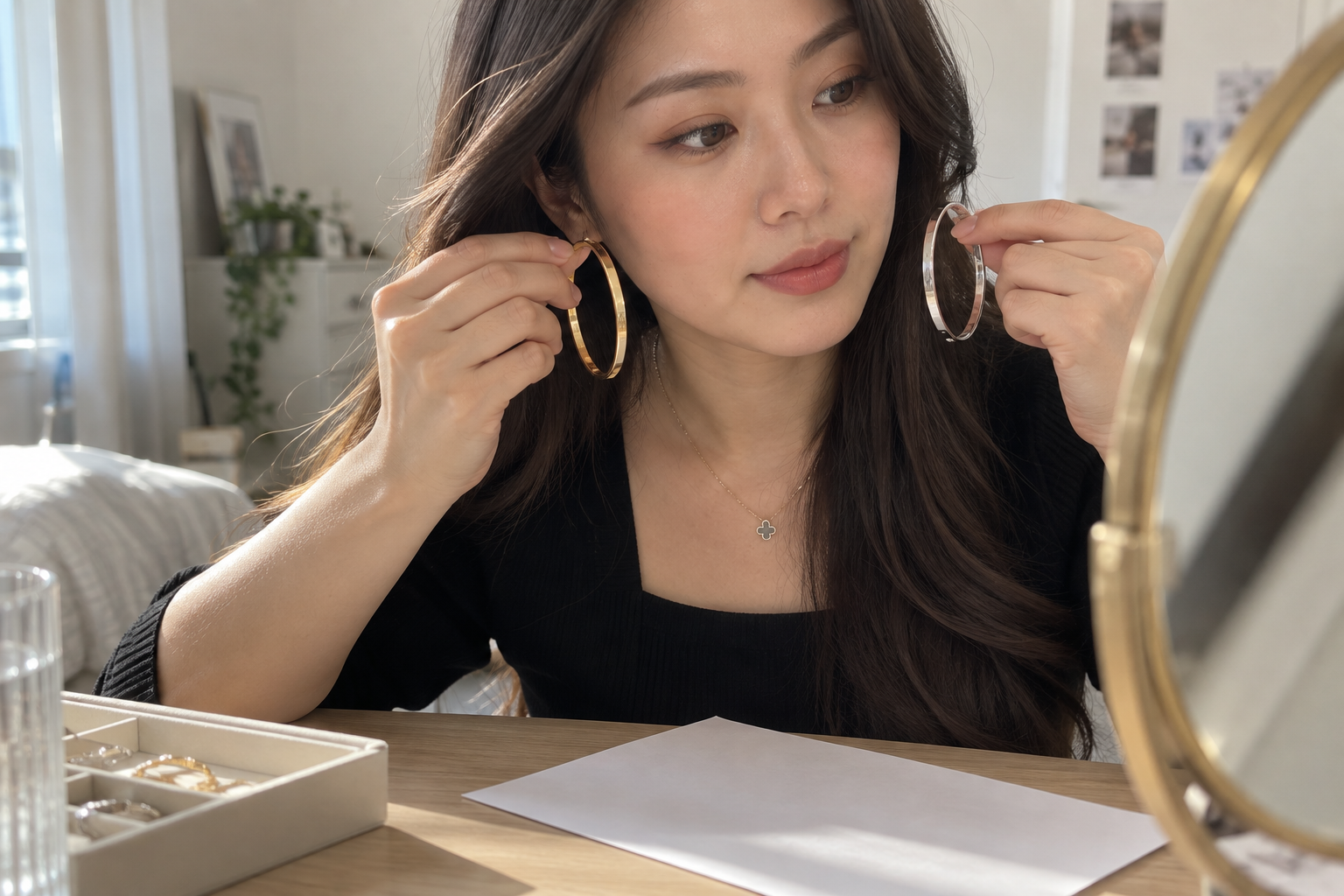
- Gold vs. silver jewelry. Hold both against your face in natural light. Gold flattering you more suggests warm; silver suggests cool.
- White paper test. Hold a plain white sheet next to your cheek. If your skin looks sallow or yellow-green against it, you likely lean warm; if it looks pink or ruddy, you likely lean cool.
- Coral vs. blue-pink lipstick. Try both against bare lips — whichever looks more natural rather than harsh is a decent undertone clue.
None of this replaces a real diagnosis, but it’s a reasonable way to walk in with a guess already in mind — or to decide the paid session isn’t necessary for what you need.
Worth pairing with a shopping trip
Once you know your palette, Myeongdong and Olive Young are the obvious next stop — see our Glass Skin 101 routine breakdown for where to start, and our shopping phrases guide if you’re picking out shades on your own without a consultant walking you through it.