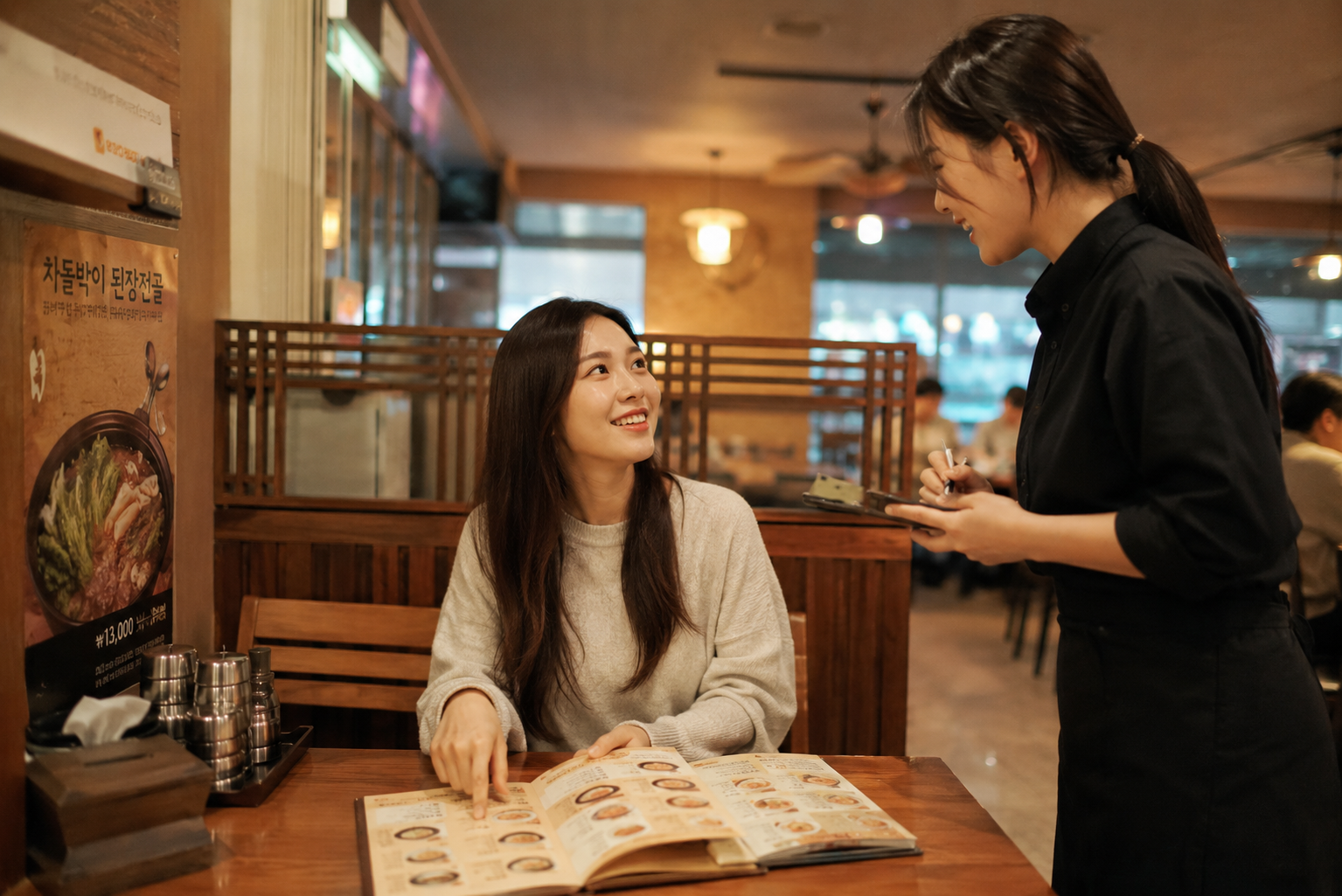
Ordering a meal in Korea doesn’t require fluency — it requires about six words and the confidence to say them a little too loudly across a restaurant. Table service here runs differently from what a lot of first-time visitors expect, and knowing that upfront saves you from sitting there waiting for a server who’s never coming over on their own.
Calling a server: 저기요
The single most useful word on this list. Servers in Korea don’t hover or check in — you call them over. 저기요 (jeogiyo), roughly “excuse me!” or “over here!,” said at normal restaurant volume (louder than it feels natural to a lot of visitors at first), is how you get a server’s attention to order, ask a question, or request the bill. Many restaurants also have a call button on the table — press it once and wait, no need to shout.
Ordering: 주문
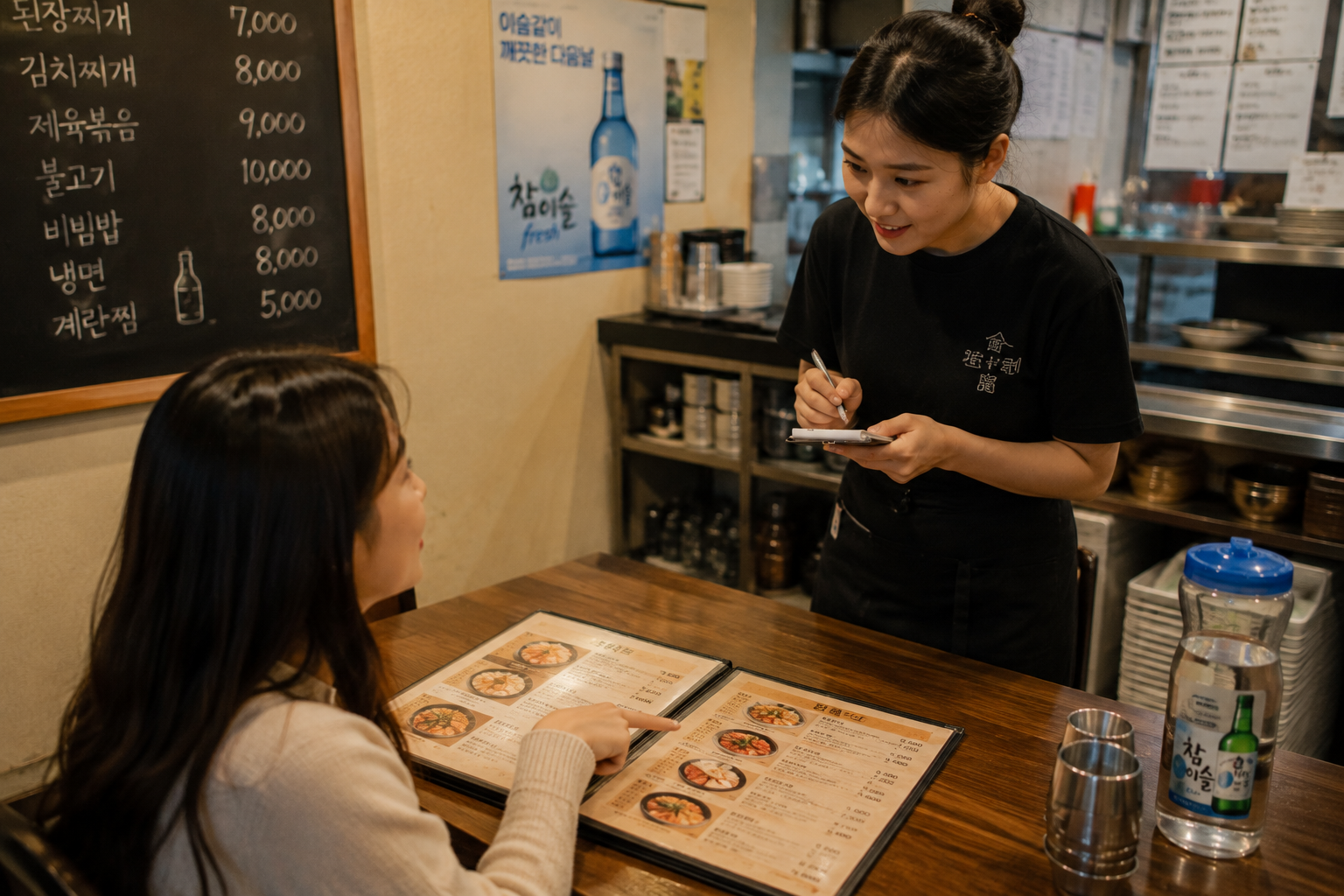
주문 (jumun) means “order.” “주문할게요” (jumunhalgeyo) — “I’d like to order” — is what you say once a server’s at your table. If you’re pointing at a menu item or photo rather than reading the name aloud, “이거 주세요” (igeo juseyo), “I’ll have this,” covers you completely. Between those two phrases, you can order almost anything without knowing a single dish name — useful the first time you’re ordering dwaeji gukbap in Busan or anything else you can’t yet pronounce.
Dine-in or to go: 포장
The same word that means “packaging” or “gift-wrapping” when you’re shopping does double duty at restaurants: 포장 (pojang) means “to go.” Say “포장이요” (pojangiyo) and you’re ordering takeout; say “여기서 먹을게요” (yeogiseo meogeulgeyo), “I’ll eat here,” if a server assumes otherwise. Worth asking upfront — not every restaurant offers both options.
Free extras: 반찬 and 리필
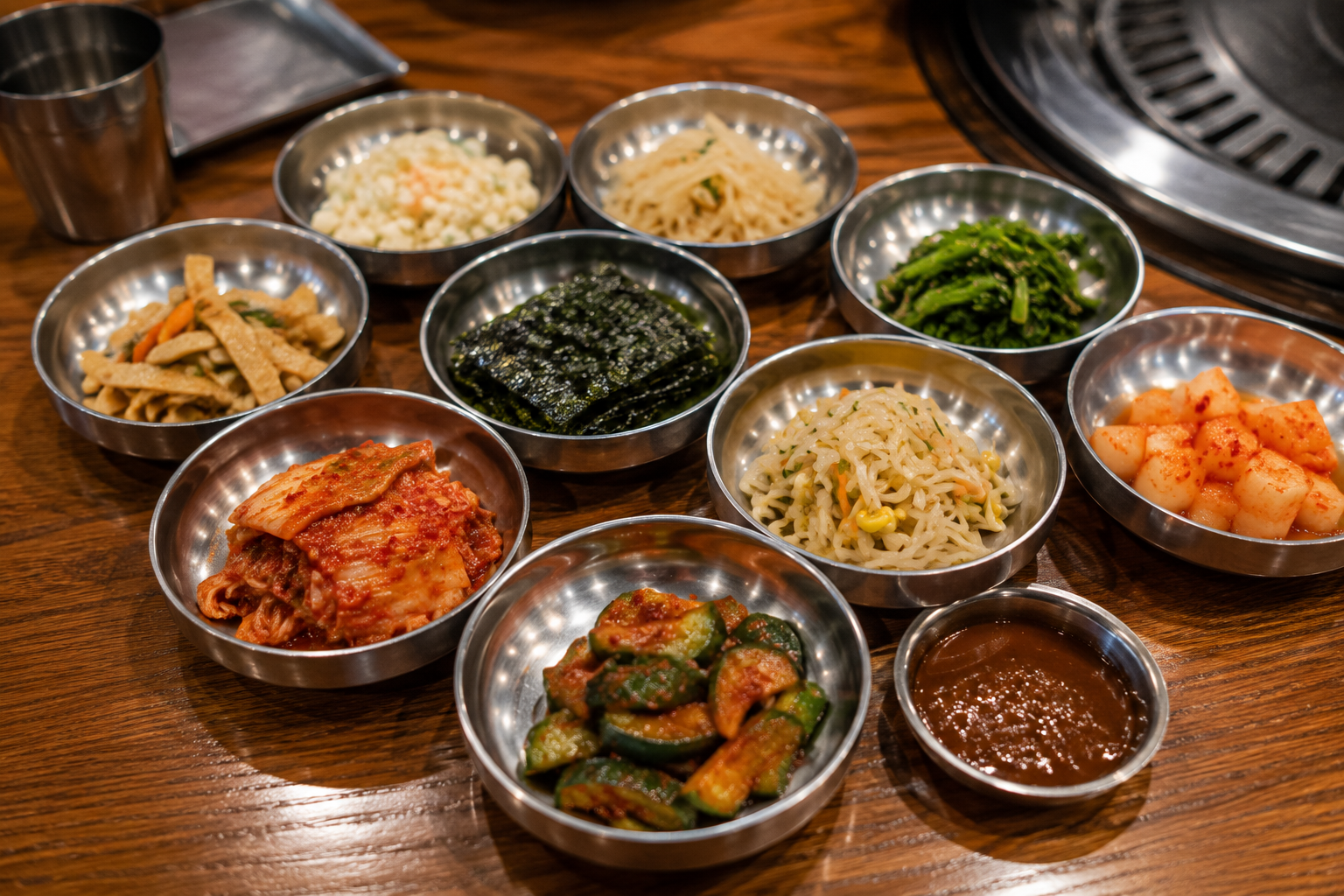
Korean meals come with 반찬 (banchan), small side dishes — kimchi, seasoned vegetables, whatever the kitchen’s serving that day — set down before your main dish arrives, at no extra cost. When they run low, 리필 (ripil), refill, is the word to know: “반찬 리필 되나요?” (banchan ripil doenayo?), “can I get a refill on the side dishes?” Water is usually self-serve from a cooler or dispenser near the entrance — free, and not something you need to ask a server for.
Asking for the bill: 계산
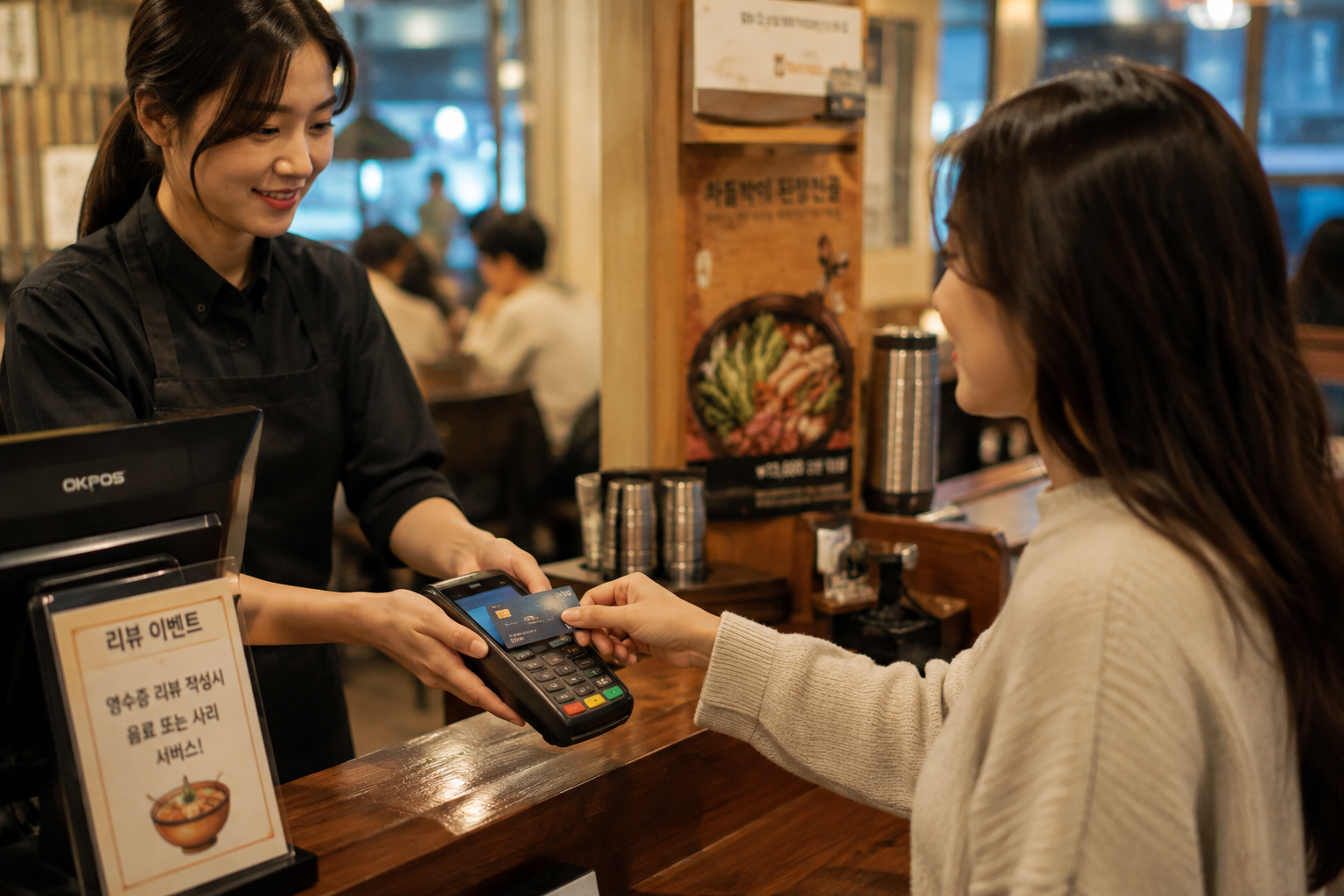
계산 (gyesan) means payment or checkout. “계산해 주세요” (gyesanhae juseyo) — “check, please” — is what you say, but two things trip people up: tipping isn’t expected anywhere, and a lot of restaurants want you to pay at a counter near the exit rather than at the table. If you’re not sure which applies, “계산이요” (gyesan-iyo) called out as you’re ready to leave prompts a server to tell you where to pay.
Keep an eye out for a “리뷰 이벤트” (ribyu ibenteu), review event, sign near the register too — plenty of restaurants offer a free drink or extra side for leaving a receipt review, usually on Naver Map.
Quick reference
Everything from this post, in one place:
- 저기요 (jeogiyo) — “Excuse me!” (to call a server)
- 주문할게요 (jumunhalgeyo) — “I’d like to order”
- 이거 주세요 (igeo juseyo) — “I’ll have this”
- 포장이요 (pojangiyo) — “To go, please”
- 여기서 먹을게요 (yeogiseo meogeulgeyo) — “I’ll eat here”
- 반찬 리필 되나요? (banchan ripil doenayo?) — “Can I get a refill on the side dishes?”
- 계산해 주세요 (gyesanhae juseyo) — “Check, please”
Worth remembering
Six words and a handful of short phrases cover a full meal out: getting someone’s attention, ordering without knowing a dish name, choosing dine-in or takeout, asking for more banchan, and paying. Pair this with our shopping phrases guide and you’ve got most of a day in Korea covered without needing to speak the language beyond a survival level.