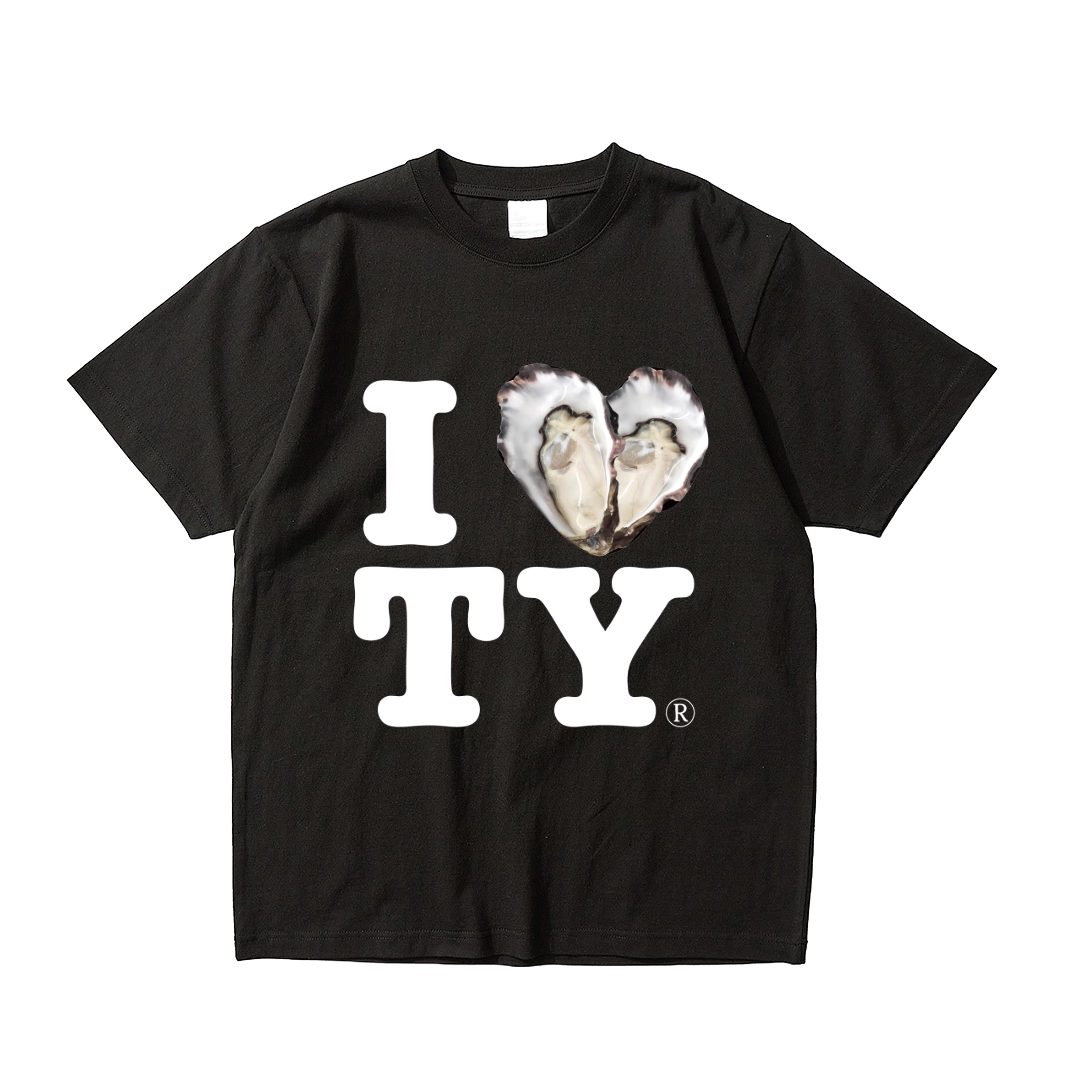
Hero image: TACLUB's "I ♡ TY" oyster tee, via Tongyeong Agassi Club (TACLUB).
The Korea souvenir everyone wants right now isn’t a K-beauty haul or a fridge magnet. It’s a cheap-looking T-shirt with a cartoon chestnut on it. Across Korea, small-town shops are selling deliberately kitschy shirts about the one thing their area is known for: chestnuts, oysters, potatoes. Travelers are building whole day trips around buying one.
The shirt that started it: Gongju’s “bamti”
Gongju is a small city in South Chungcheong Province, about an hour and a half south of Seoul by express bus. It was a Baekje kingdom capital, and it’s famous for its chestnuts.

Geumseoru Gate at Gongsanseong Fortress, a short walk from Sanseong Market. Photo: Ashy Minivet / Wikimedia Commons (CC0).
In May 2026, Lee Tae-hee, who runs a shop called 제일유통 (Jeil Yutong) in Gongju’s Sanseong Market, started selling a T-shirt with a plump chestnut character on the front, dressed up with a crown and jewels. Within a month it had gone viral. It now sells over 1,000 shirts a day on weekends. Lee says tourists wear it around the market, locals ask where they got it, and then the locals buy one too.
The joke only works in Korean, and it works on two levels.
1. 밤티. 밤티 (bamti) is Gen Z slang for something ugly, tacky, or just a little off. It reportedly started with a user called “Bamti” in the avatar game LINE Play, whose long-haired, bearded avatar people found hilariously ugly. It spread on X in 2025, and now people use it for anything from an outfit to a haircut. But read literally, 밤 is chestnut and 티 is tee. A chestnut tee is, by definition, a bamti.
2. 공주. 공주 (gongju) is the city’s name, but it’s also the everyday word for princess. So “공주 밤티” can mean “Gongju chestnut tee” or “ugly princess.” The crown is the giveaway. Wearing one is a self-own and a sightseeing receipt at the same time, and that’s exactly why people buy it.
Tongyeong’s oyster shirt comes in a seafood tray
Tongyeong, on the south coast, produces most of Korea’s 굴 (gul), oysters. Four young women from the city started a lifestyle brand called 통영아가씨클럽 (Tongyeong Agassi Club, or TACLUB) because they felt the town had nothing made for people their age.
Their first product was an “I ♡ TY” shirt where the heart is an oyster. The packaging is the gag: shirts come shrink-wrapped on a foam seafood tray, with a hand-lettered price card and a supermarket-style label, like you just bought them at the fish market. One oyster-print shirt is labeled 굴랑해 (gulranghae), a mash-up of 굴 and 사랑해 (saranghae, “I love you”).
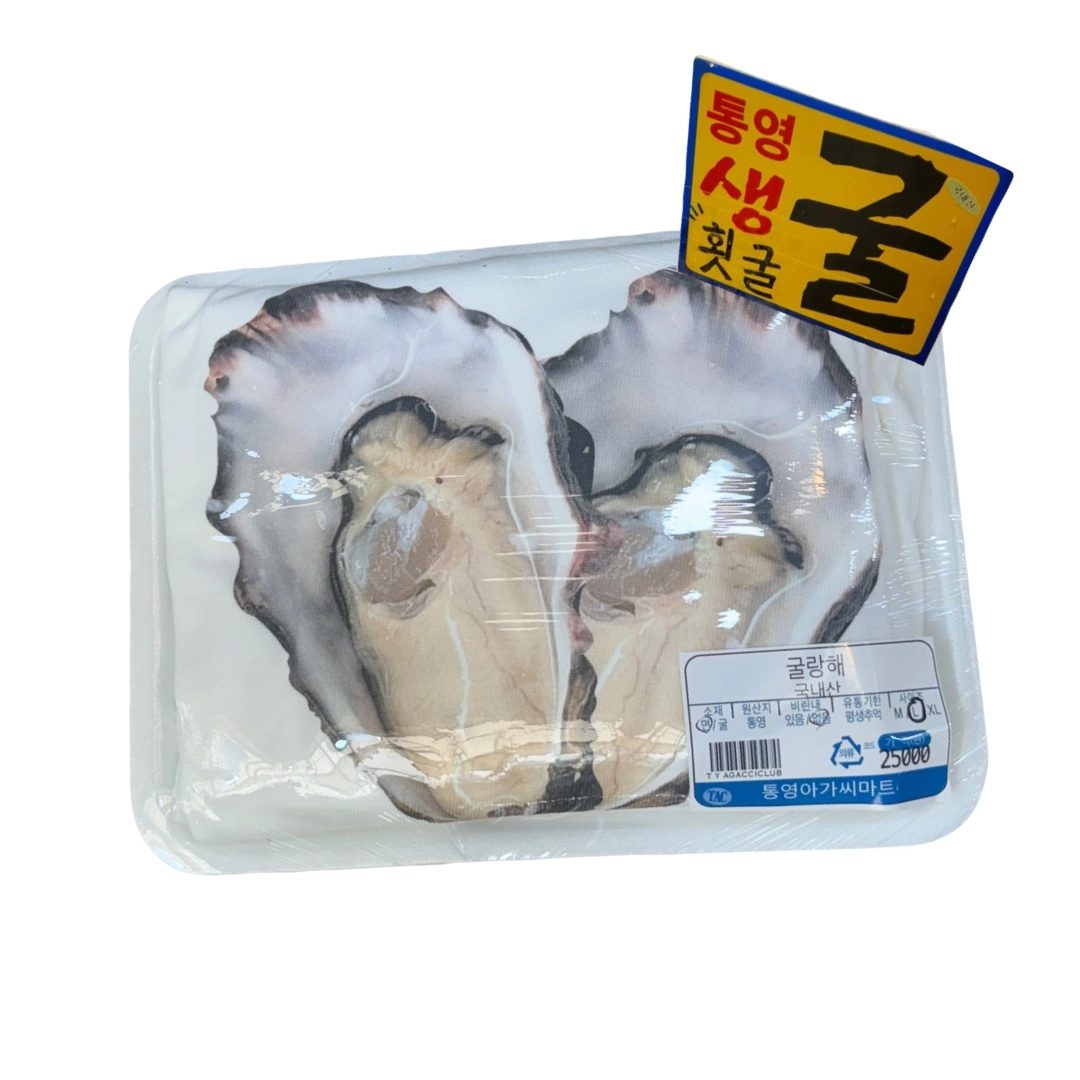
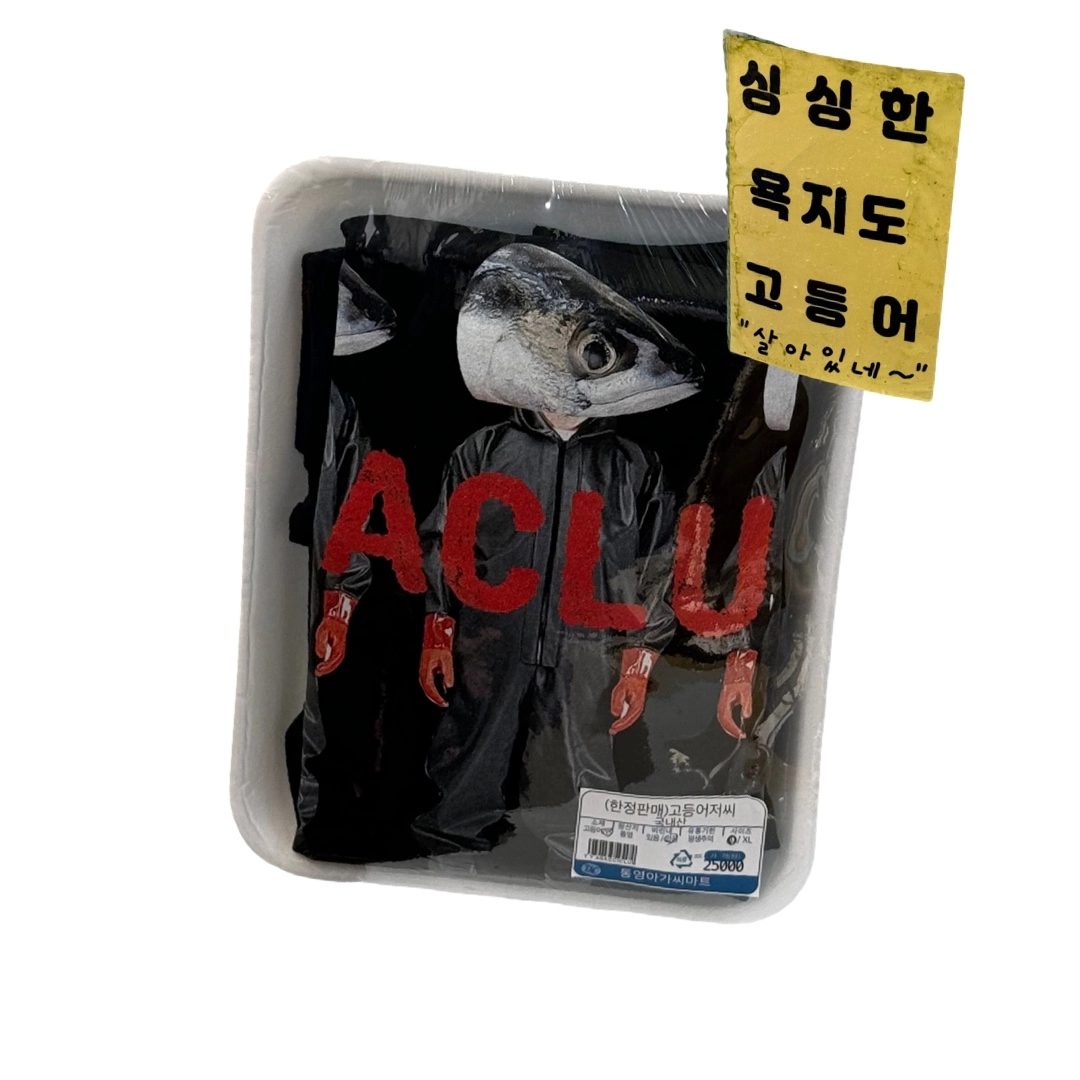
Images: Tongyeong Agassi Club (TACLUB).
- Prices (TACLUB online shop): short-sleeve oyster tee ₩28,000, long-sleeve ₩36,000, hoodie ₩55,000, oyster bandana ₩15,000
- Store: TACLUB opened a shop near Tongyeong Central Market in March 2026, at 30 Seomun-ro (look for the fish sign). It also sells sea urchin and mackerel shirts, mugs, keyrings, and beach towels
- Online: tongyeongagacciclub.com
More shirts to look for
- Gangneung — potato. 감자 (gamja) is Gangwon Province’s pride. Potato-character shops such as 삶은감자 (Salmeun Gamja, “Boiled Potato”) near downtown Gangneung sell potato tees alongside figures, keyrings, and potato-shaped mugs.
- Daejeon — Kkumdori. The space-fairy mascot of the 1993 Daejeon Expo is now a retro favorite, and Kkumdori shirts are part of the same wave. Pair it with a bread run to Sungsimdang.
- Gyeongju — Seokguram. A Supreme-logo parody built around the 1,300-year-old Buddha of Seokguram Grotto. Streetwear meets a UNESCO site.
Why these shirts are working
For years, travel in Korea has been about where to eat. Hanyang University professor Lee Hoon told the Korea Times that people aren’t buying these shirts because they need clothes. They’re buying the joke, and he argues that smaller cities need to give visitors something fun as well as useful.
It’s a little like “I ♥ NY”: a T-shirt that makes a place feel like somewhere worth going. The difference is that these were started by market shopkeepers and young locals, not a tourism board. And for small markets that were losing foot traffic, a shirt that sells a thousand times a weekend day counts as an economic plan.
If you want one
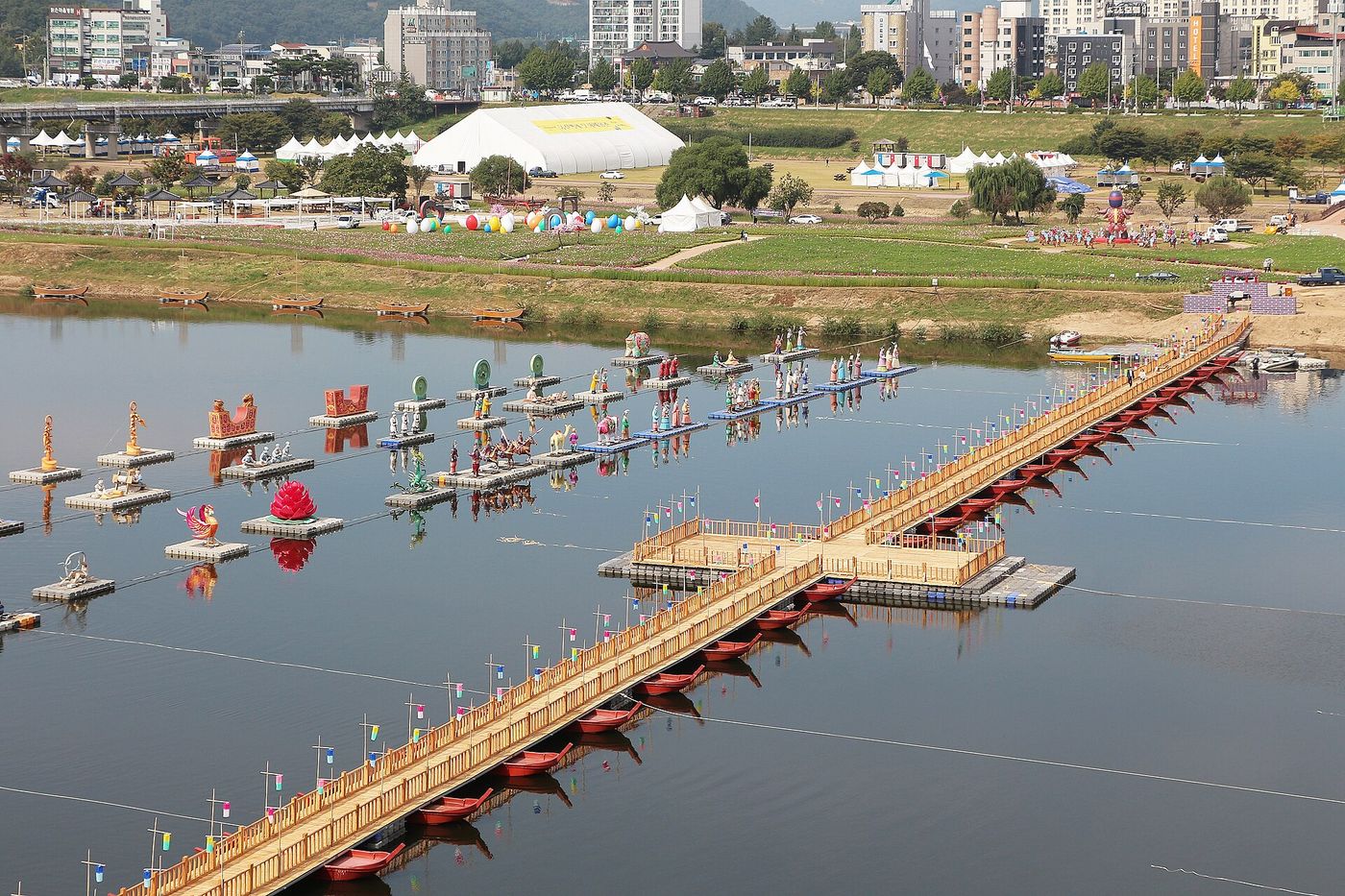
Festival floats on the Geum River in Gongju, September 2022. Photo: Bernard Gagnon / Wikimedia Commons (CC0).
- Go to Gongju this week. The 72nd Baekje Cultural Festival runs October 3–11, 2026 in Gongju and Buyeo, with events around Gongsanseong Fortress and Geumgang Sinkwan Park. Sanseong Market is a short walk from the fortress, so you can do both in one day.
- Jeil Yutong, Sanseong Market, Gongju: 43-32 Sanseongsijang 5-gil. Open Mon–Sat 10:30–18:30 and Sun 12:00–18:00. Weekends are when it sells out fastest.
- Watch out for knockoffs. “밤티공주” shirts from other sellers are now all over Korean shopping apps. If you want the original, buy it at the 시장 (sijang), the market itself.
- Explain it at home. Half the fun of a 기념품 (ginyeompum), souvenir, like this is telling people back home that your shirt says “ugly princess.”
- For more gift ideas, see our guide to Korean gift-giving culture.
Sources: The Korea Times, Hankook Ilbo, Chungnam Ilbo, Heypop, TACLUB shop, Hankook Ilbo on 밤티, Aju News on the Baekje Cultural Festival.