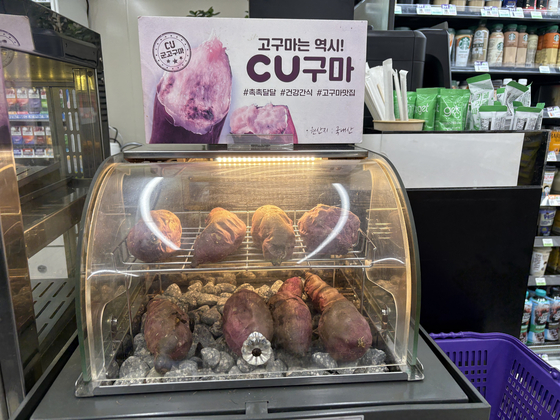
Hero image: a CU convenience store's roasted sweet potato warmer, via JoongAng Ilbo.
Somewhere around the start of September, a few things quietly change in Korea, and none of them are leaves. Supermarkets start stacking crates of a fruit that wasn’t there in August. A drum-can cart appears on a street corner it hasn’t occupied since spring. Convenience store fridges fill with limited-run flavors that vanish again by December. Autumn in Korea has a look, but it also has a very specific taste — and unlike the foliage, you don’t need to travel anywhere in particular to catch it.
Autumn Tastes Different in Korea
Korea still eats with the seasons more than a lot of visitors expect. Traditional markets rotate their produce noticeably from one month to the next, supermarkets follow close behind, and convenience stores — which move fast on trends — start pushing seasonal snacks almost the moment the temperature drops. Cafés join in too, with menus that shift for a few weeks and disappear. None of it requires seeking out a specific restaurant. It’s closer to background noise that gets louder the longer you’re there, which is exactly why it’s worth knowing what to listen for.
🍠 군고구마 — Roasted Sweet Potato
군고구마 (gun-goguma) is sweet potato, slow-roasted over hot stones or coals inside a repurposed oil drum, sold straight out of the drum in a paper bag. It’s less a dish than a signal — the first cart you see each year is a fairly reliable sign that the season has actually turned, the way a certain smell might mean autumn back home. You’ll spot the carts on street corners and near subway exits once evenings cool down, and increasingly, bagged versions turn up in convenience stores too, warmed under a heat lamp by the register.
🌰 군밤 — Roasted Chestnuts
군밤 (gunbam) usually shows up right alongside gun-goguma, sometimes from the same cart, sometimes from a dedicated one nearby. The appeal isn’t complicated: a small paper cone of hot, freshly roasted chestnuts is exactly the kind of thing that makes sense to eat while walking somewhere once your hands are cold. Vendors typically score the shells before roasting, so peeling them is quick rather than a project.
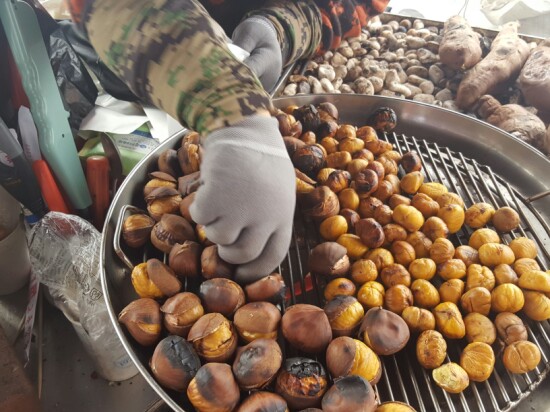
Image: bbinemo (Naver Blog).
🍊 감 — Persimmon
감 (gam) is the general word for persimmon, but you’ll meet it in two quite different forms. 홍시 (hongsi) is left to ripen until it’s almost liquid inside — soft enough to eat with a spoon, sweeter than the crisp persimmons sold elsewhere. 곶감 (gotgam) goes the other way: air-dried for weeks into something chewy and concentrated, closer to a natural candy than a piece of fruit. Same fruit, two different snacks — worth trying both.
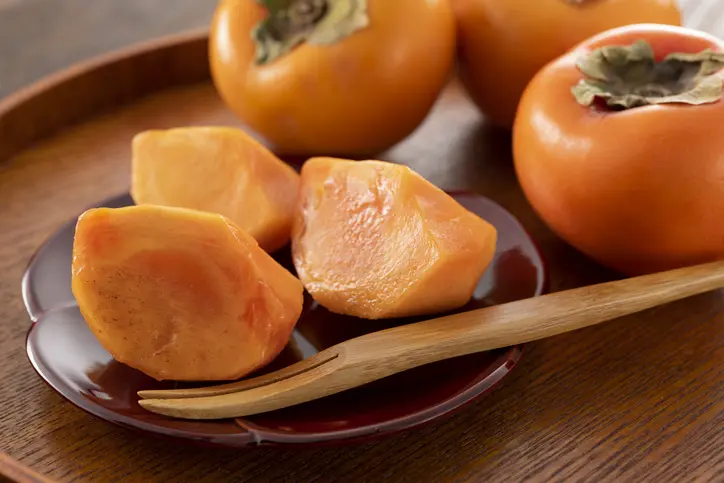
Image: Kormedi.
🍐 배 — Korean Pear
Korean pear, 배 (bae), tends to catch visitors off guard the first time they see one — it’s large, round, and closer in size to a grapefruit than to the pears most Western shoppers grow up with, with a crisp, watery bite that’s closer to an apple than the soft, grainy texture the word “pear” usually implies. It’s genuinely at its best in autumn, and it’s also a serious gift item — the kind of thing given, in an individually wrapped and boxed set, to family, coworkers, and landlords around Chuseok, Korea’s autumn harvest holiday. Seeing towers of boxed pears stacked at a supermarket entrance in September or October is as much a seasonal marker as anything else on this list.
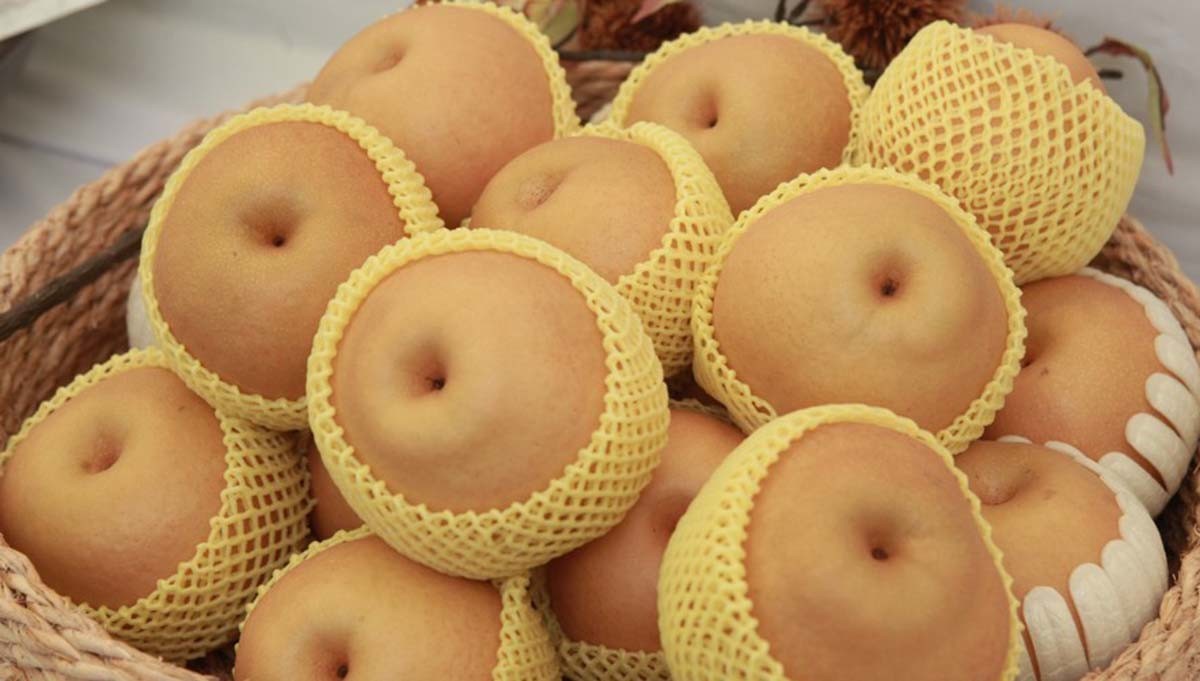
Image: Wikitree.
🦀 Autumn Seafood
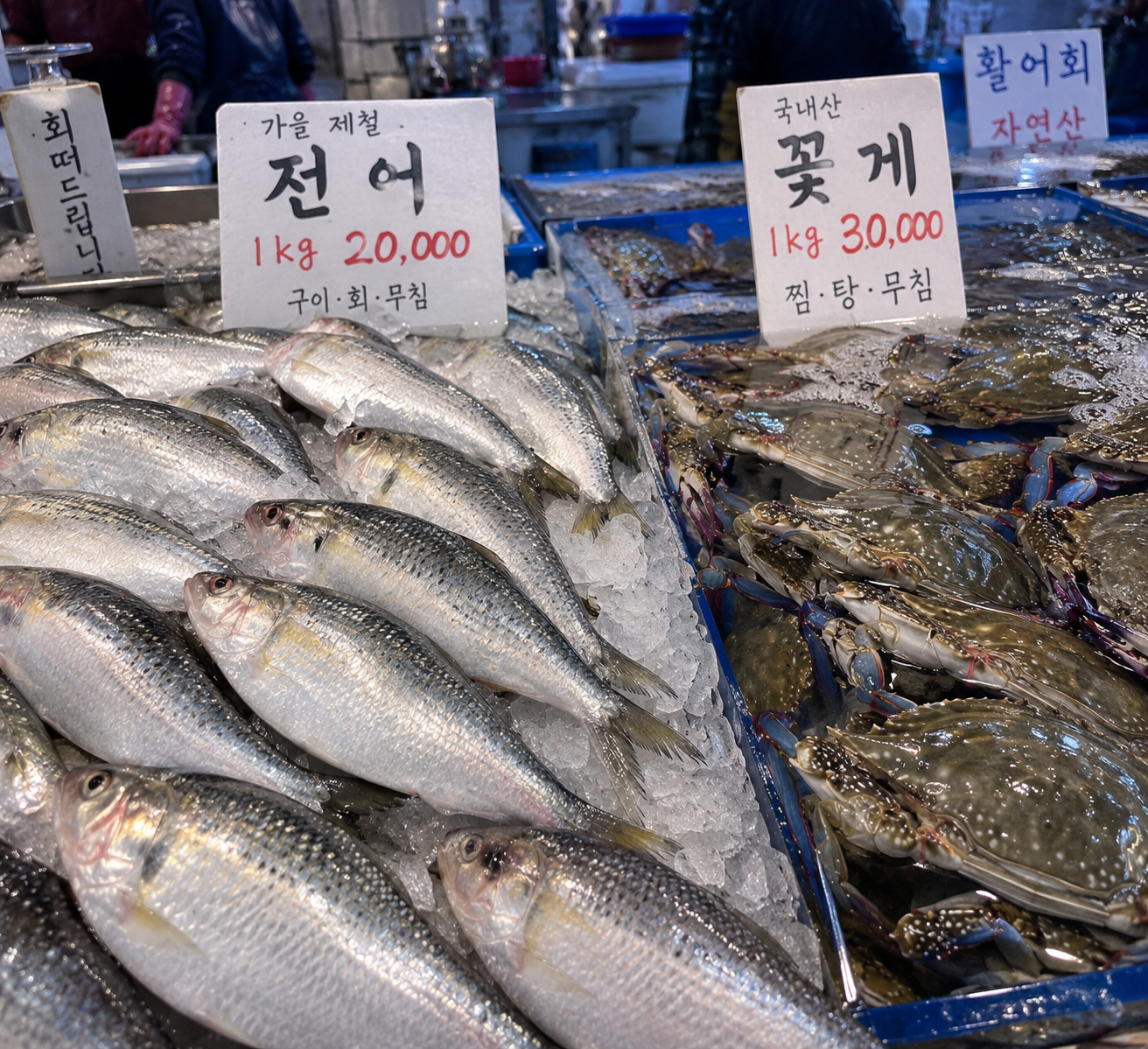
Seafood has its own calendar here too, and a few things genuinely peak in autumn rather than just being available year-round. 전어 (jeoneo), gizzard shad, is the clearest case — there’s a well-known Korean saying about the smell of it grilling being good enough to lure someone back home, which tells you how seriously people take it. Grilled whole or served raw, it’s at its best from around September into October. 꽃게 (kkotge), blue crab, is the other big one — female crabs turn heavy with roe in autumn, and show up steamed, in spicy stews, or marinated raw as ganjang gejang. Large prawns are worth flagging too. None of it requires a specialist restaurant — a seafood market, especially in a coastal city like Busan, is usually enough.
🥞 When Hotteok Starts Sounding Like a Good Idea
호떡 (hotteok) isn’t actually an autumn-exclusive food — you can find it plenty of the year. What changes is your interest in it. A hot, pan-fried disc of dough filled with melted brown sugar, cinnamon, and nuts is a fairly easy sell once the temperature drops, in a way it just isn’t in the middle of a humid Seoul summer. It’s a useful marker for something bigger: autumn is when Korea’s whole cold-weather street food culture starts making sense again, from hotteok to hot fish-cake skewers to steaming bowls of odeng broth handed out at the same stalls.
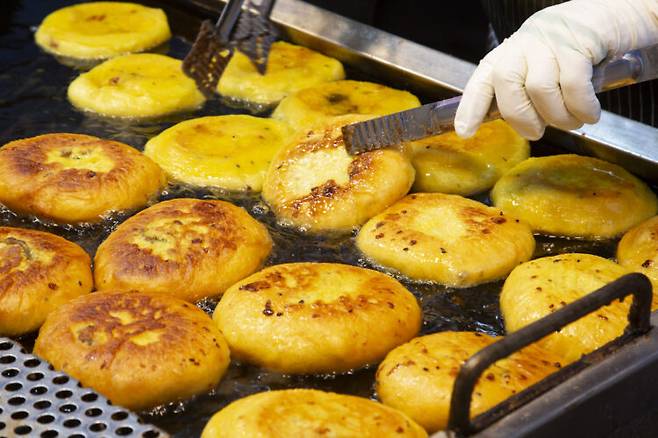
Image: Kormedi via Daum.
☕ Autumn Takes Over Korean Cafés Too
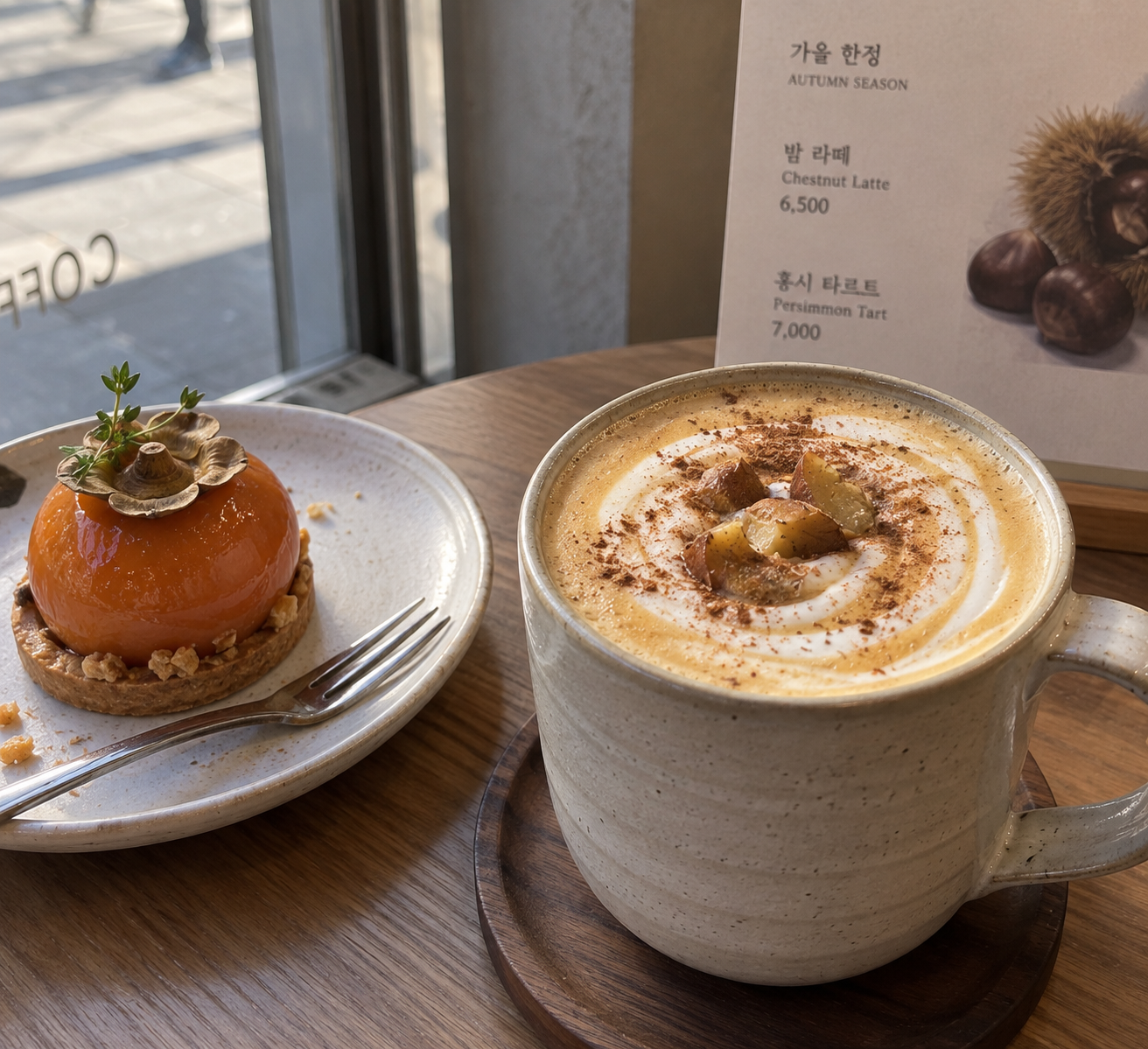
Korea’s café culture treats the seasons as a menu decision, not just a vibe. Once autumn sets in, chains and independent cafés alike tend to roll out limited-run drinks and desserts — chestnut lattes and cakes, sweet potato drinks and breads, persimmon desserts, sometimes fig or pumpkin. Not every café runs the same lineup, and it changes year to year, but the pattern holds: a short seasonal menu, gone once the ingredient’s window closes. It’s worth checking the seasonal board wherever you’re already sitting — it’s the most contemporary version of the same seasonal eating this whole article is about.
Where to Find Autumn Food in Korea
You don’t need a plan for this so much as a few places worth paying attention to:
- Traditional markets — the best source for seasonal produce, street snacks, and the widest variety of what’s actually in season that week.
- Supermarkets — an underrated one. What’s stacked at the entrance and priced as a seasonal special tells you what’s genuinely in season, no guessing required.
- Convenience stores — worth checking for limited packaged snacks and drinks that only exist for a few autumn weeks.
- Cafés — for the modern, dessert-and-drink version of the same seasonal ingredients.
- Local seafood markets — especially relevant in coastal cities like Busan, for autumn’s short seafood window.
A K-Decoded Autumn Food Checklist
Save this one for the trip:
- ☐ 군고구마 — roasted sweet potato
- ☐ 군밤 — roasted chestnuts
- ☐ 감 — persimmon (bonus points for trying both hongsi and gotgam)
- ☐ 배 — Korean pear
- ☐ Seasonal seafood — jeoneo, blue crab, or whatever’s fresh where you are
- ☐ 호떡 — hotteok
- ☐ One seasonal Korean café drink
- ☐ One completely unfamiliar autumn snack
You won’t find all eight in one afternoon, and that’s fine — this is a season to eat your way through, not a checklist to clear in one sitting.
FAQ
What food is Korea known for in autumn?
Roasted sweet potato (gun-goguma) and chestnuts (gunbam) from street carts, persimmon (gam) in both fresh and dried form, Korean pear (bae), and a short season of prized seafood like gizzard shad (jeoneo) and blue crab (kkotge).
What is the best Korean street food to eat in autumn?
Gun-goguma and gunbam are the two most distinctly autumn street foods — sold from drum-can carts that mostly disappear again once the cold weather passes. Hotteok is available year-round but becomes a much easier sell once temperatures drop.
Is Korean pear different from regular pears?
Yes. Korean pear is much larger and rounder, with a crisp, watery, apple-like texture rather than the soft, grainy bite common in Western pears. It’s also a significant gift item during Chuseok, Korea’s autumn harvest holiday.
What is the difference between hongsi and gotgam?
Both come from persimmon (gam). Hongsi is the fruit ripened until it’s soft enough to eat with a spoon. Gotgam is the same fruit air-dried for weeks until it’s chewy and intensely sweet, closer to a natural candy than fresh fruit.
Continue the Autumn in Korea Series 🍂
This one’s part of K-Decoded’s ongoing Autumn in Korea series — start with Why Autumn Is One of the Best Times to Visit South Korea for the full case, or jump to Korea Fall Foliage 2026 if it’s the leaves you’re planning around.