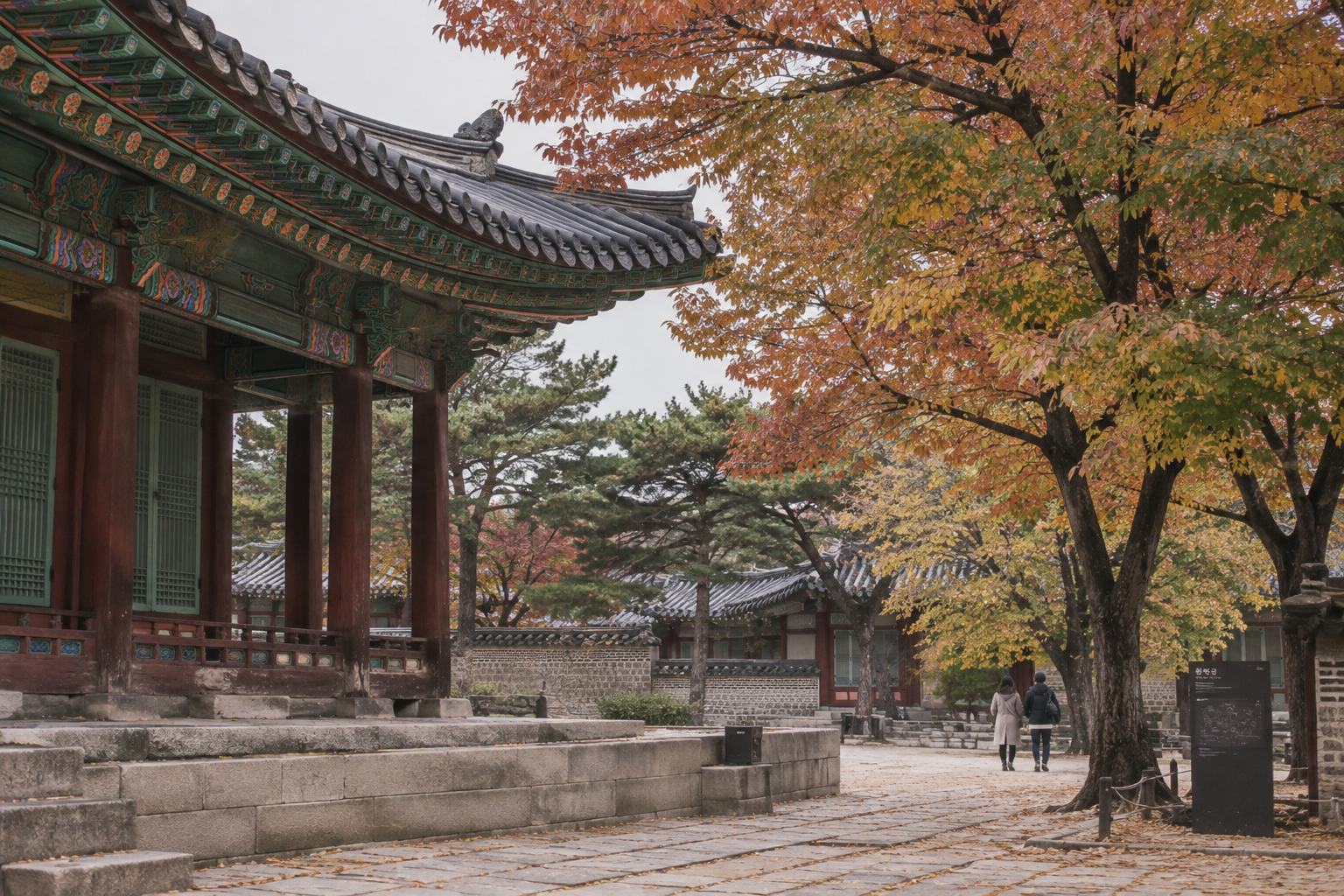
Fall foliage is one of the biggest reasons people plan a Korea trip around autumn specifically, rather than just visiting whenever works. But there’s a detail that trips up a lot of first-time visitors: Korea doesn’t reach peak colour everywhere at once. Foliage begins in the cooler mountainous, northern parts of the country and moves gradually toward central Korea and the south over several weeks.
This is Post #3 in K-Decoded’s Autumn in Korea series, and it answers one question: when and where should you go to see autumn leaves in Korea in 2026? Because of how the season moves, the right destination can matter as much as the right week — a trip built around one famous mountain can miss the colour entirely if the dates don’t line up.
Korea Fall Foliage 2026 Forecast
2026 Forecast Update
The official 2026 foliage forecast has not yet been released. This guide will be updated when confirmed dates become available.
Korea’s Forest Service and the Korea Tourism Organization typically publish their seasonal forecasts once autumn conditions are close enough to predict reliably, usually from mid-to-late September onward. Any specific 2026 date you see elsewhere before then isn’t an official forecast.
The general pattern the season usually follows:
- Seoraksan generally begins changing colour in late September, with peak colour typically arriving in mid-to-late October.
- Seoul’s parks and palaces typically reach peak colour in early-to-mid November.
- Naejangsan and Jirisan, farther south, typically peak from late October into mid-November.
- Busan, Korea’s southernmost major city, is usually last, sometimes holding colour into early December at lower elevations.
These are general tendencies, not 2026 dates — actual timing shifts year to year with temperature and rainfall, and can run later after a warm autumn.
How Korea’s Fall Foliage Season Works
The short version: colour moves from the mountains and the north toward the cities and the south, and from higher elevation toward lower elevation.
Temperature drops first at altitude and in Korea’s northern, more mountainous regions — why Seoraksan, high and near the top of the country, is consistently the earliest major destination to turn. Seoul sits at lower elevation and holds onto warmth longer, so its parks and palaces change weeks later. Southern, coastal cities like Busan are warmer still, so their colour arrives later again.
The practical takeaway: “peak foliage in Korea” isn’t one date. Someone visiting in mid-October and someone visiting in mid-November should often be looking at different destinations, not the same itinerary shifted by a few weeks.
Where to See Fall Foliage in Korea
1. Seoraksan National Park
Seoraksan is Korea’s most famous foliage destination, and its position at the country’s northeastern edge, with genuine alpine terrain, is exactly why it changes early. Jagged granite peaks and deep valleys make for some of Korea’s most dramatic mountain scenery, with routes ranging from short cable-car-assisted viewpoints to full day hikes. It’s also the single most crowded foliage destination once colour peaks — a weekday or early-morning visit makes a real difference.
Best for: Dramatic mountain scenery Typical position in season: Earlier
2. Seoul
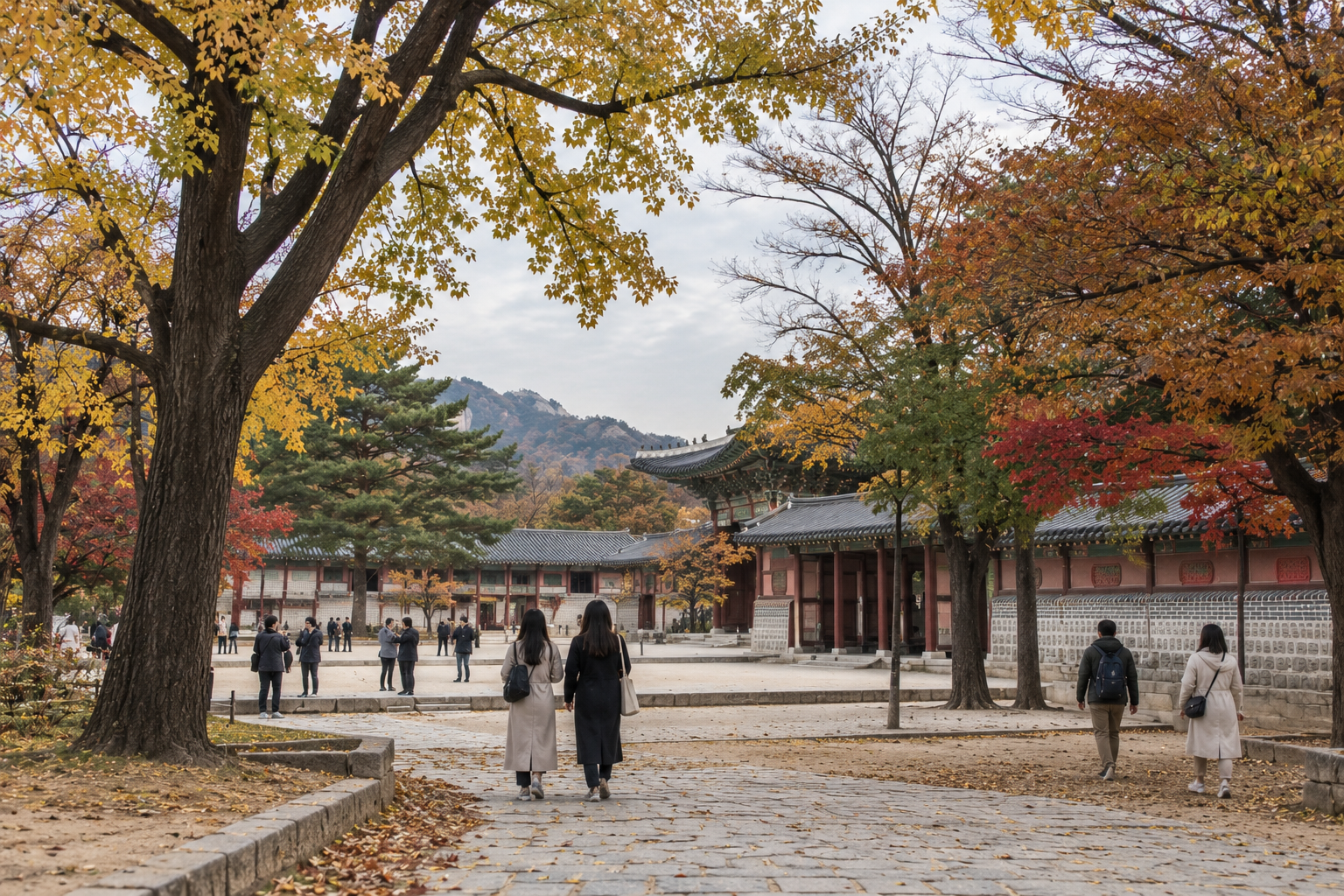
You don’t have to leave Seoul to see real foliage. Seoul Forest, Namsan, Changdeokgung, Deoksugung, Olympic Park, Bukhansan, and the paths around Seokchon Lake all turn in autumn, several within a short subway ride of each other. Seoul’s colour generally lands mid-season, after the mountains and before the south — a convenient base if foliage is only part of your trip rather than the whole point of it.
Best for: First-time visitors and easy foliage sightseeing Typical position in season: Middle
3. Nami Island
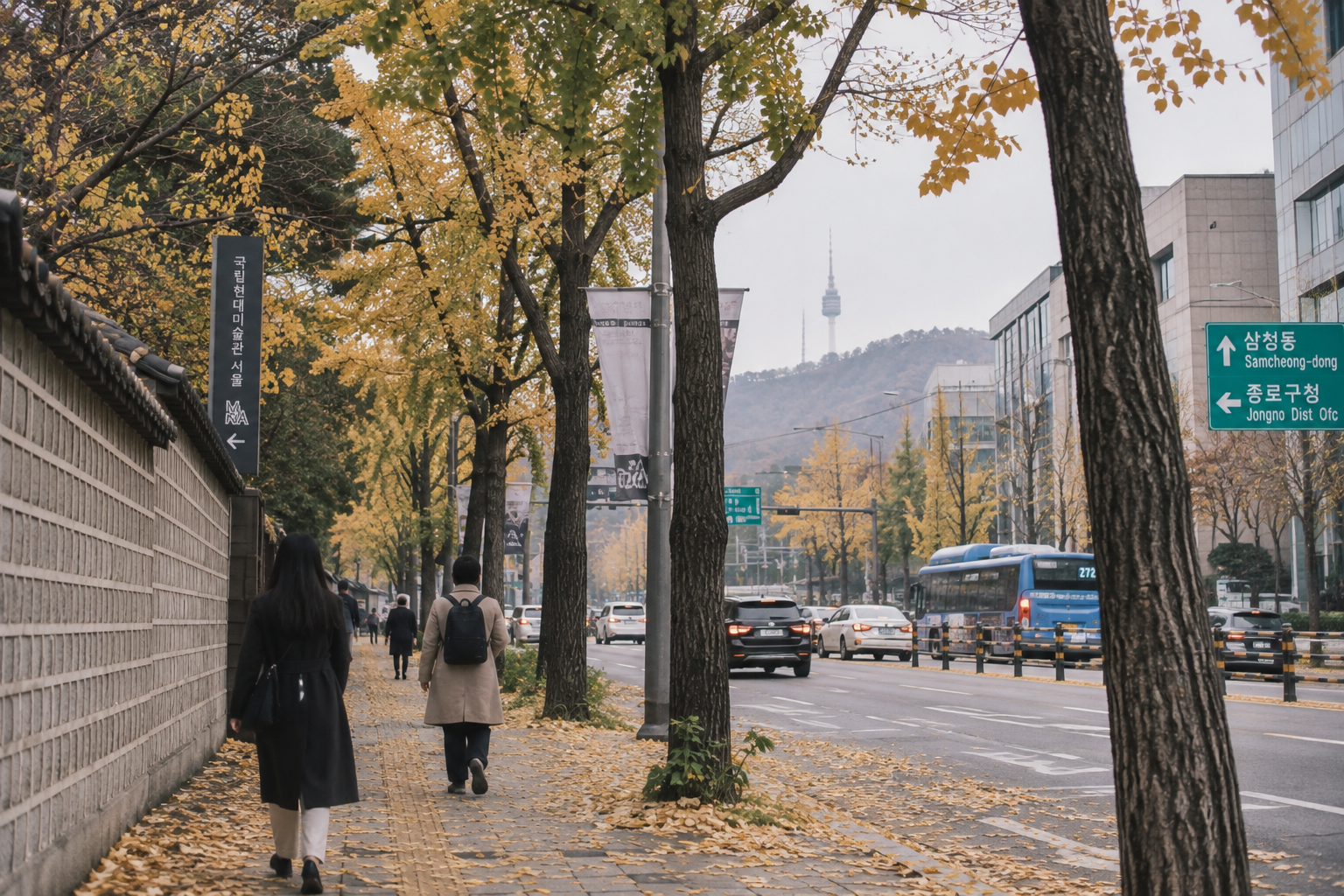
Nami Island’s tree-lined, golden ginkgo avenues are some of the most recognisable autumn images in Korean tourism, and it’s an easy day trip from Seoul by train and a short ferry. Go in with realistic expectations, though: this is one of Korea’s most heavily visited destinations, and the paths that photograph so well are often full of people trying to get the same shot.
Best for: Easy day trip and classic ginkgo scenery Typical position in season: Early-to-mid season, depending on annual conditions
4. Gyeongju
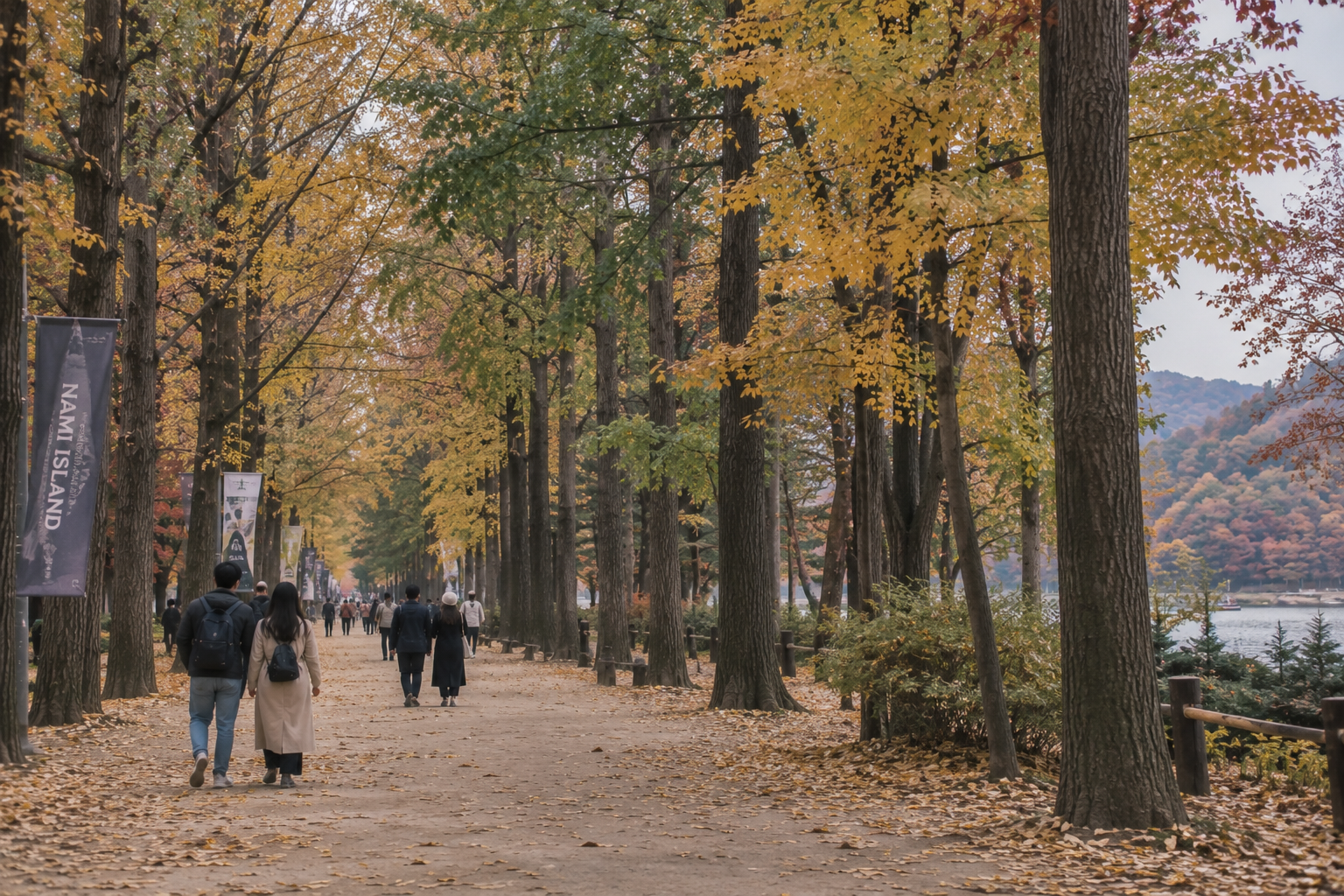
Gyeongju pairs autumn colour with over a thousand years of history, for travellers who want more than scenery out of the trip. Bulguksa’s temple grounds, the royal tombs of Daereungwon, and the Bomun area’s lakeside paths all take on the same seasonal colour as Seoul’s palaces, spread across an old capital built for walking between sites.
Best for: History + autumn scenery
5. Naejangsan National Park
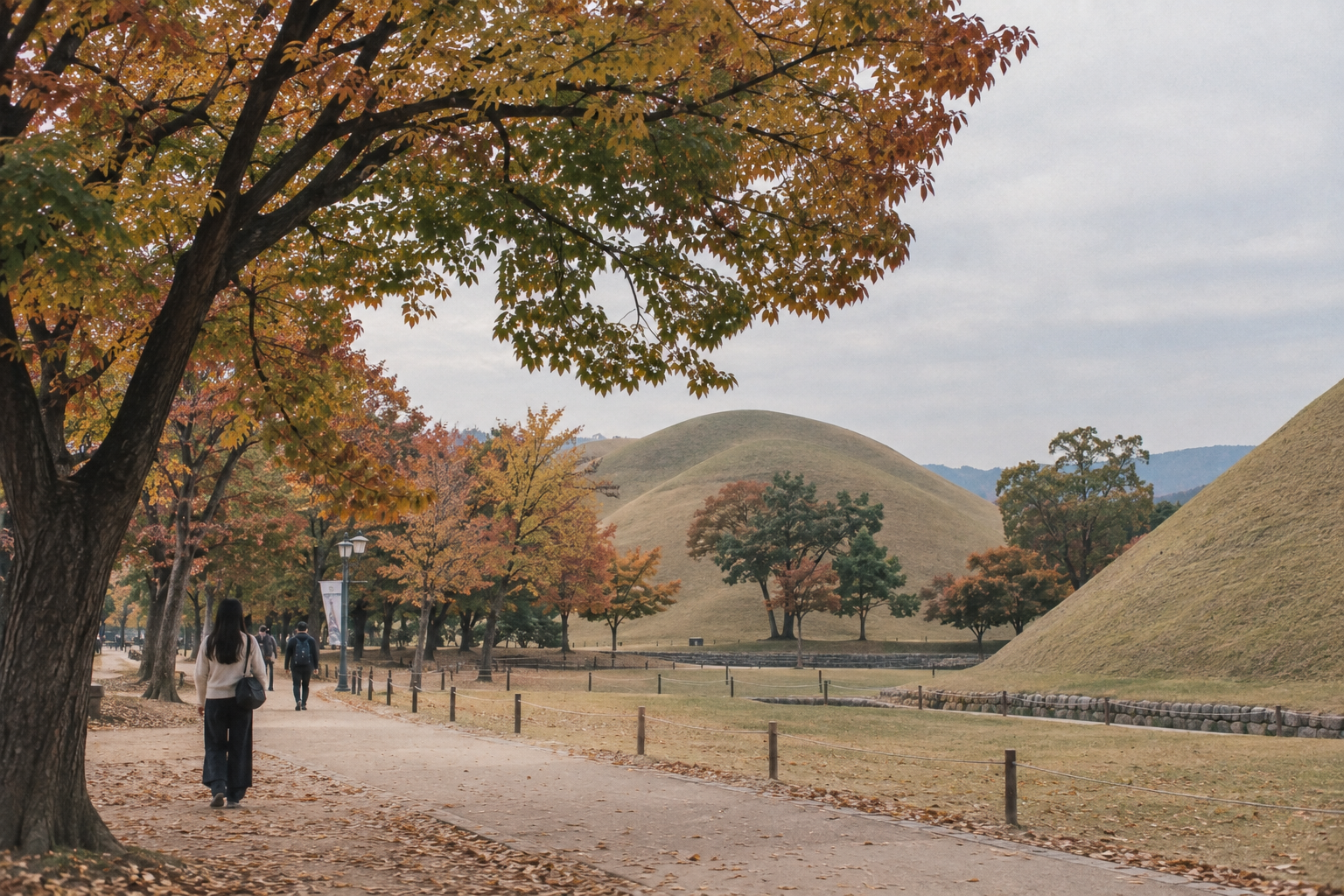
Naejangsan is one of Korea’s best-known later-season destinations, associated with dense, saturated red maple colour rather than a mix of yellows and oranges. That reputation means it can get extremely busy during peak weekends — arguably worse than Seoraksan for anyone hoping for a quiet walk.
Best for: Strong red maple scenery Typical position in season: Later than northern mountain destinations
6. Jirisan National Park
Jirisan is Korea’s southern mainland mountain range, and one of its largest. Because it spans a big range of elevations, foliage timing varies within the park itself — upper ridgelines can be past peak while lower trails are still turning. It’s a rewarding hiking destination for anyone who wants mountain landscapes without Seoraksan’s crowds.
Best for: Hiking and mountain landscapes
7. Busan
Busan generally sees autumn later than anywhere else on this list, making it a genuinely useful option for travellers arriving toward the back end of the season. Geumjeongsan, the mountain rising behind the city, along with the parks and temple areas around it, turns well after Seoul has finished. What makes Busan worth calling out is the combination: coast, mountains, and late autumn colour together, at a point when much of the rest of the country has already gone bare.
Best for: Travellers visiting Korea later in the season
When Should You Visit Korea for Fall Foliage?
Earlier in the season
Consider mountainous, northern destinations such as Seoraksan.
Middle of the season
Seoul and central Korea become increasingly relevant.
Later in the season
Look toward southern destinations like Naejangsan, Jirisan, and Busan.
If your dates are fixed, choose your destination based on where the season should realistically be when you land — not by locking in one famous location and hoping the timing works out.
Seoul vs Mountains for Autumn Foliage
Choose Seoul if:
- It’s your first trip to Korea
- You don’t want to plan complicated day trips
- You want foliage alongside cafés, palaces, shopping, and neighbourhood sightseeing
Choose the mountains if:
- Foliage is a major reason for the trip
- You enjoy hiking
- You’re comfortable travelling outside the major tourist areas
- You want larger-scale natural landscapes
Avoiding the Autumn Crowds
- Travel on weekdays where possible — weekend crowds at Seoraksan and Naejangsan during peak week can be dramatic.
- Start early, before popular trails and viewpoints fill up.
- Don’t assume the famous viewpoints are the only good ones — a lot of foliage is just as good a short walk from the spot everyone’s photographing.
- Expect the best-known national parks to be genuinely packed during peak weekends, not just busy.
- Check transport before heading to rural or mountain destinations — bus schedules to some trailheads thin out outside peak season.
What If You Miss Peak Foliage?
If you land somewhere too early or too late, you can often adjust where you go rather than the trip itself.
Too early? → Look north or toward higher elevations, where colder temperatures mean the leaves have already started changing.
Too late? → Look farther south or toward lower elevations, where the season lags behind.
That’s really the core idea behind this guide: because Korea’s foliage moves predictably from north to south and high to low, understanding the progression is more useful than memorising one set of dates.
Is Korea Worth Visiting If You Miss Peak Foliage?
Yes. Foliage is a major part of Korea’s autumn appeal, but it isn’t the only one — the weather, the hiking, the palaces, and the food season all hold up whether or not the leaves happen to be at their best the week you’re there. For the fuller case, see Why Autumn Is One of the Best Times to Visit South Korea.
Continue the Autumn in Korea Series 🍂
- ← Korea in Autumn: September vs October vs November
- Next → Seoul in Autumn: Best Places to See Fall Colours
FAQ
When is peak fall foliage in Korea in 2026?
The official 2026 forecast hasn’t been released yet. In a typical year, Seoraksan peaks in mid-to-late October, Seoul follows in early-to-mid November, and southern destinations peak from late October into mid-November — general patterns, not confirmed 2026 dates.
Is October a good time for autumn leaves in Korea?
Generally, yes — October is when most mountain and northern destinations are turning or at peak, while Seoul and southern Korea are still building toward their own peak.
When do autumn leaves appear in Seoul?
Typically mid-to-late October, with peak colour more often landing in early-to-mid November, shifting somewhat year to year with the weather.
Where is the best autumn foliage in South Korea?
Depends on timing and taste: Seoraksan for early, dramatic mountain scenery; Seoul for convenience; Naejangsan for saturated red maples; Busan for a later-season trip.
Is November too late for fall foliage in Korea?
Not necessarily. Early November often still has strong colour in Seoul and central Korea, and Busan can hold colour later still — though the northern mountains are usually finished by then.