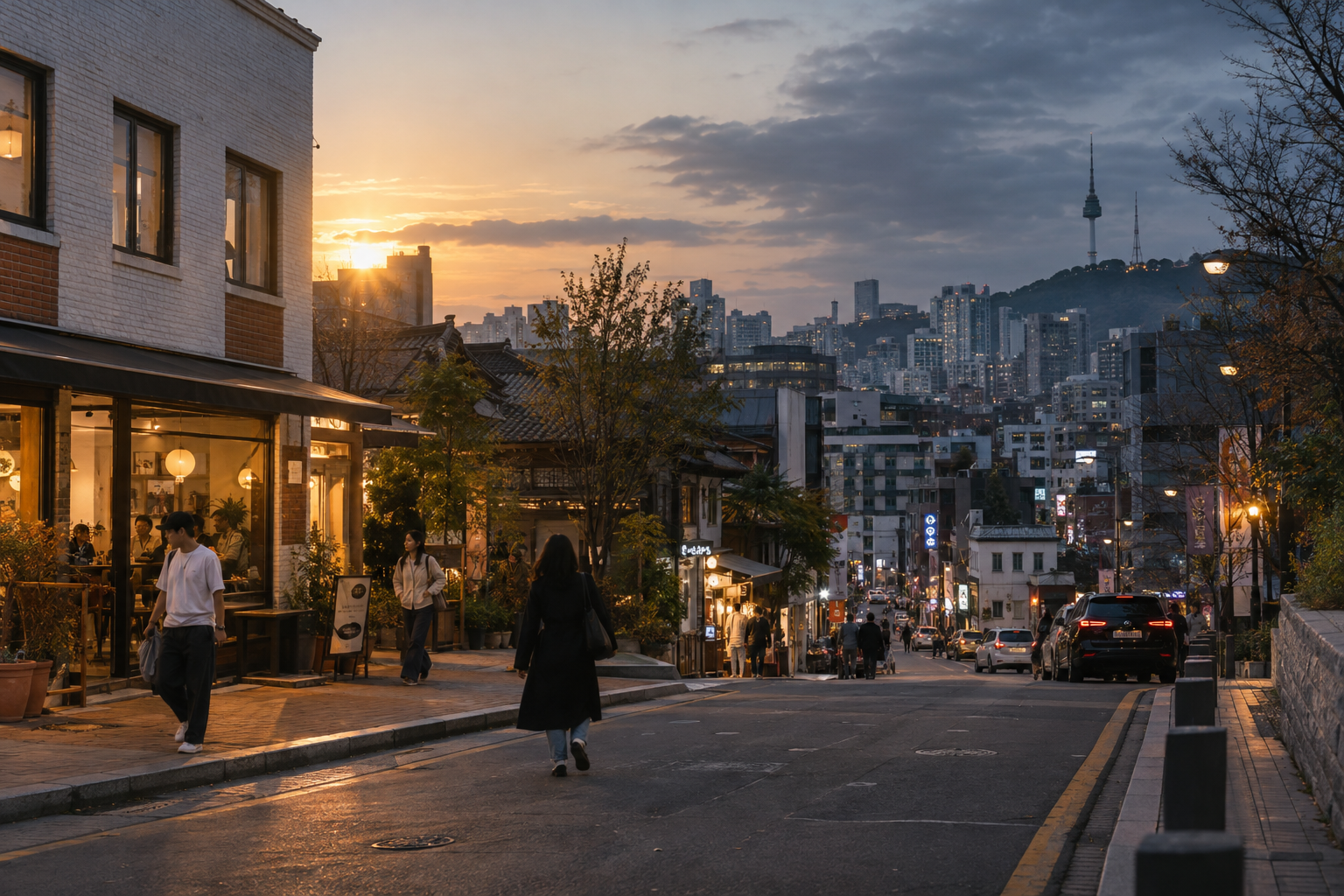
Korean has a word for the in-between stretch when one season is giving way to another — 환절기 (hwanjeolgi), the “season-change period.” That word does a lot of work in this article, because 가을 (ga-eul), autumn, isn’t one season in Korea, it’s three fairly different ones stitched together under the same label. September, October, and November are all marketed as “autumn,” but the weather, the foliage, and the crowds shift enough between them that picking the wrong month can leave you underdressed, foliage-less, or stuck behind a tour group at every palace gate.
This is Post #2 in K-Decoded’s Autumn in Korea series, and it answers one question directly: should you go in September, October, or November? Not a full guide to what to do once you’re there — just the trade-offs between the three, so you can match the month to what you actually want from the trip.
September — Best for Warmer Weather & Early Autumn
Early September in Korea still feels like summer’s tail end — warm, sometimes humid, with air conditioning still doing real work. It’s usually later in the month, past the third week or so, before the air starts to thin out and autumn actually arrives. Foliage is minimal to nonexistent for most of September; you’re not visiting for the colour.
The other thing to plan around is 추석 (Chuseok), Korea’s autumn harvest holiday. Dates shift with the lunar calendar, but when it falls in September it can affect domestic transport, hotel availability in smaller cities, and the opening hours of some restaurants and businesses — worth checking against your dates before booking.
Best for: warmer weather, outdoor sightseeing, and travellers who don’t need peak foliage.
Keep in mind: Chuseok travel disruptions and the chance of lingering summer humidity, especially early in the month.
October — Best for the Classic Korea Autumn Experience 🍂
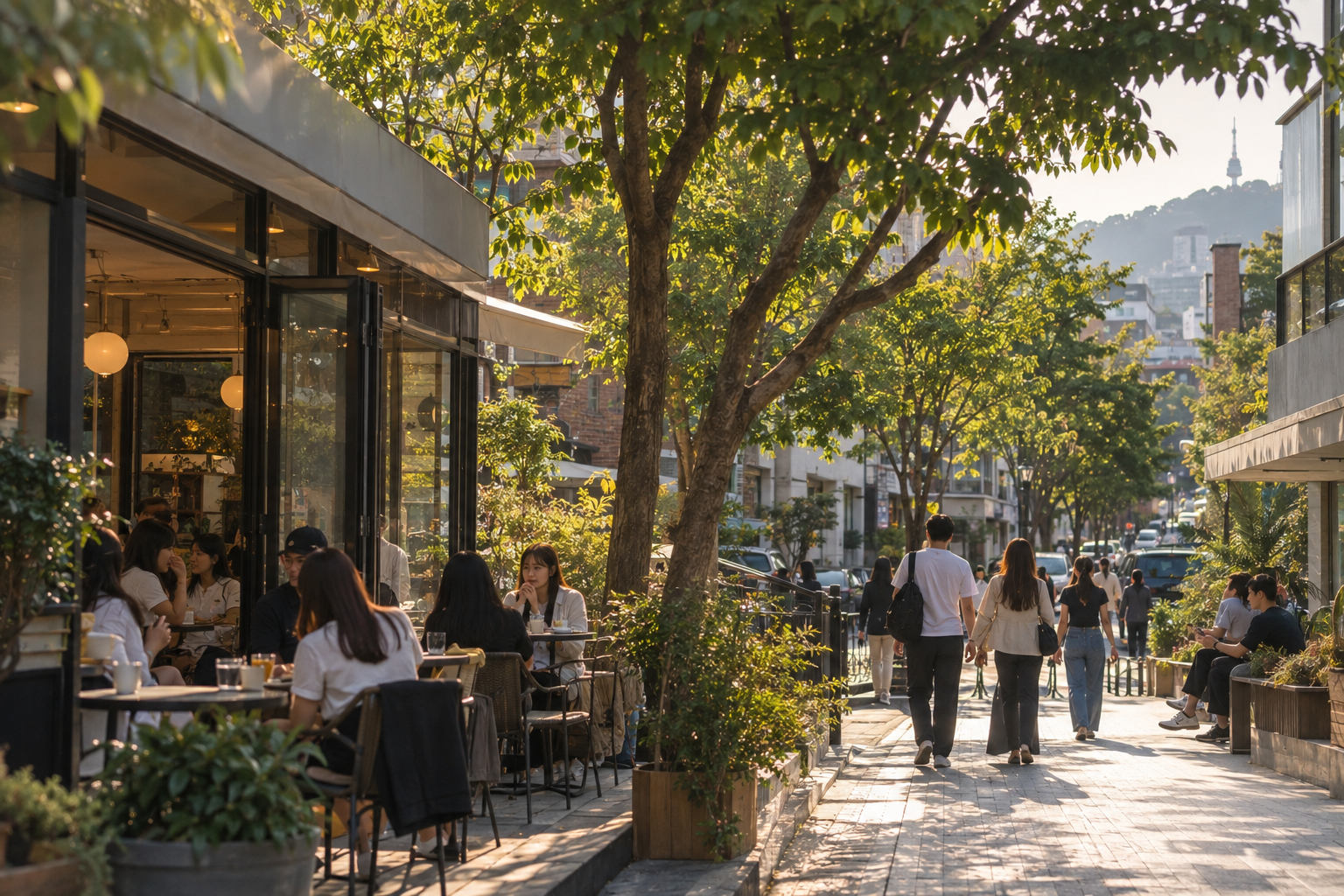
October is the month most people picture when they imagine autumn in Korea, and it’s usually the easiest one to recommend. The air turns properly cool, and 단풍 (danpung), the autumn leaves, start changing in earnest, and the country’s outdoor life — hiking trails, palace grounds, riverside parks — opens back up after a summer spent avoiding the heat.
It’s a strong month for hiking, for wandering places like Changdeokgung or Namsan, and for festivals that cluster into the cooler weather. The one thing to know going in: foliage doesn’t peak everywhere at once. Mountain regions and northern areas typically turn before cities and the south, so “October” doesn’t guarantee full colour at every destination on a given date — it varies by location and by year.
That popularity has a cost. The best-known spots get busy, particularly on weekends and around whatever week the colour is peaking locally, and accommodation in foliage hotspots can fill up or get pricier.
Best for: first-time visitors, foliage, hiking, sightseeing, and the classic Korean autumn experience.
Keep in mind: crowds and higher accommodation demand, especially on weekends.
November — Best for Cooler Weather & Late Autumn
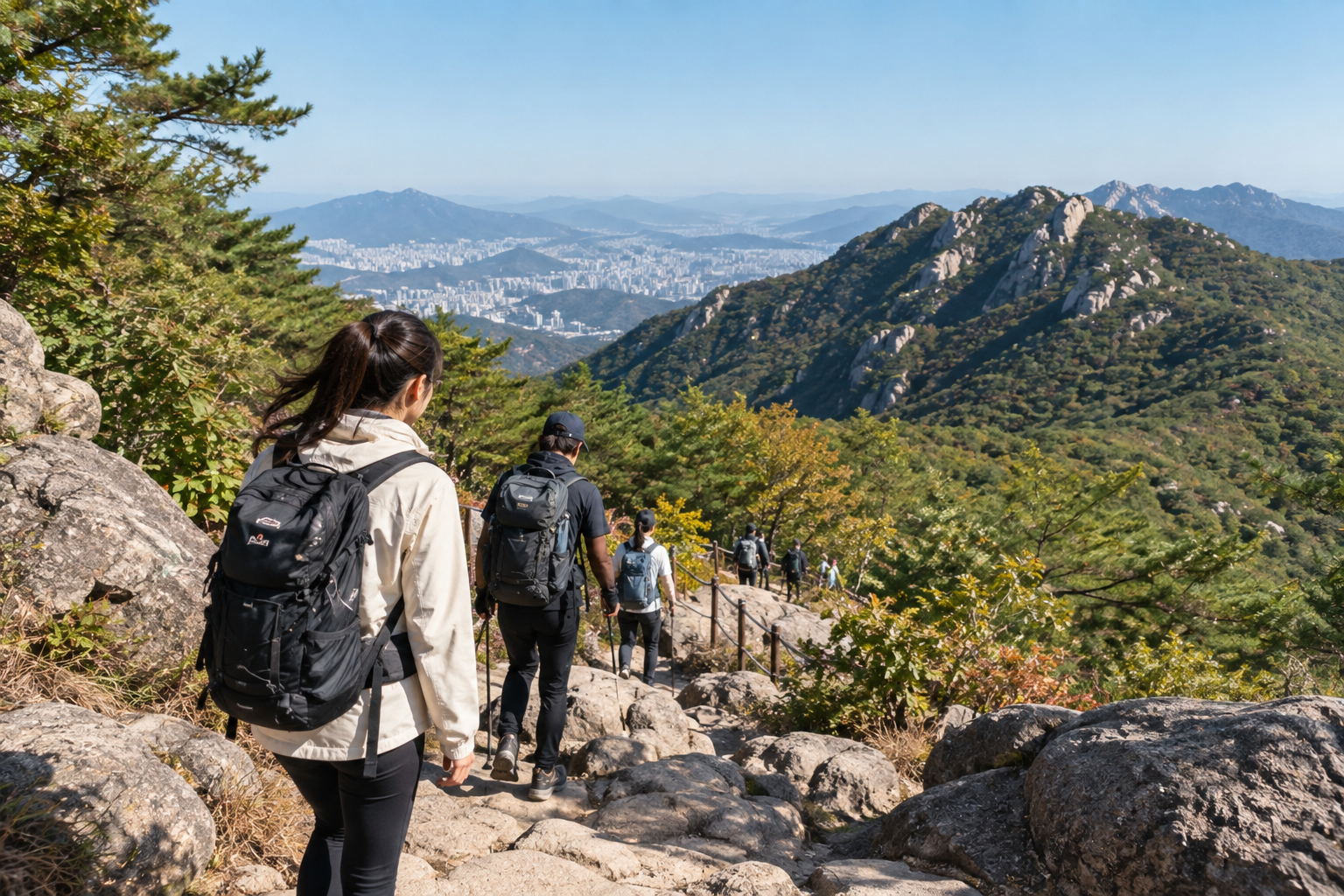
By November, autumn is winding down rather than peaking. Temperatures drop noticeably, and layering up becomes necessary rather than optional. Early November can still hold onto some late colour depending on the region and how the year has gone, but by the back half of the month things are trending toward winter.
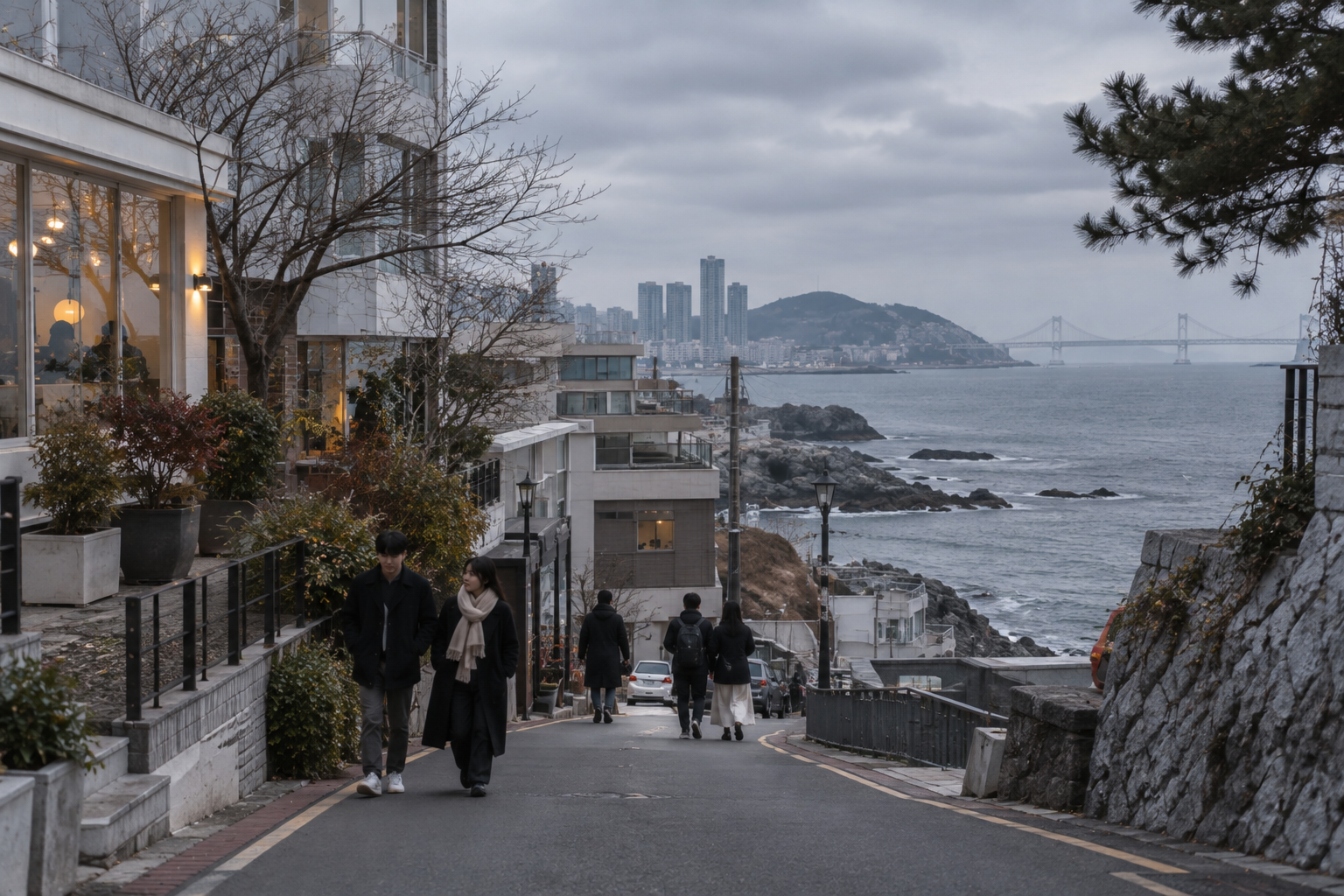
Geography matters more here than in October. Southern destinations like Busan tend to hit their seasonal changes later than the mountainous north, so a November trip focused on southern Korea can still land some autumn scenery even as Seoul is turning cold and bare. What November mostly offers instead is quieter travel — fewer crowds at the sights that were packed a few weeks earlier.
Best for: cooler temperatures, late-autumn atmosphere, and travellers heading farther south.
Keep in mind: you’ll need real cold-weather layers, and foliage becomes less reliable as the month goes on.
September vs October vs November
| September | October | November | |
|---|---|---|---|
| Overall feel | Late summer → early autumn | Classic autumn | Late autumn → early winter |
| Weather | Warmer | Mild/cool | Cool/cold |
| Foliage | Limited/early | Increasing/peak depending on location | Late foliage in some regions |
| Crowds | Moderate, except holidays | Higher | Generally lower |
| Clothing | Light layers | Layers + jacket | Warmer jacket/coat |
| Best for | Warm-weather travellers | Classic autumn trip | Cooler late-autumn travel |
So, Which Month Should You Choose?
Choose September if…
You prefer warmer weather and autumn foliage isn’t your main priority.
Choose October if…
You want the classic Korea autumn experience and this is your first trip.
Choose November if…
You like cooler weather, are travelling later in the season, or plan to spend time in southern Korea.
For most first-time travellers specifically chasing an autumn experience, October is likely to offer the best balance of weather, foliage, and things to do. That said, the exact best dates still depend on your itinerary and how much foliage actually matters to your trip — a food- and city-focused visit has a lot more flexibility than one built around catching peak colour at a specific mountain.
What About Fall Foliage?
One thing worth understanding before you lock in dates: Korea’s foliage doesn’t turn all at once. It moves geographically, generally starting in the mountainous north and working its way toward central and southern regions over several weeks. That’s why the same month can mean full colour in one part of the country and still-green trees in another.
We’re covering the timing and regional spread properly in the next post.
Next → Korea Fall Foliage 2026: When & Where to See Autumn Leaves
Continue the Autumn in Korea Series 🍂
- ← Why Autumn Is One of the Best Times to Visit South Korea
- Next → Korea Fall Foliage 2026: When & Where to See Autumn Leaves
- Coming soon → Seoul in Autumn: Best Places to See Fall Colours
- Coming soon → What to Wear in Korea During Autumn