This is part of our ongoing Seoul travel guide series — if you haven’t already, check out our posts on setting up an eSIM and navigation apps, taking the limousine bus in from Incheon Airport, and tax-free shopping at Olive Young and SPAO.
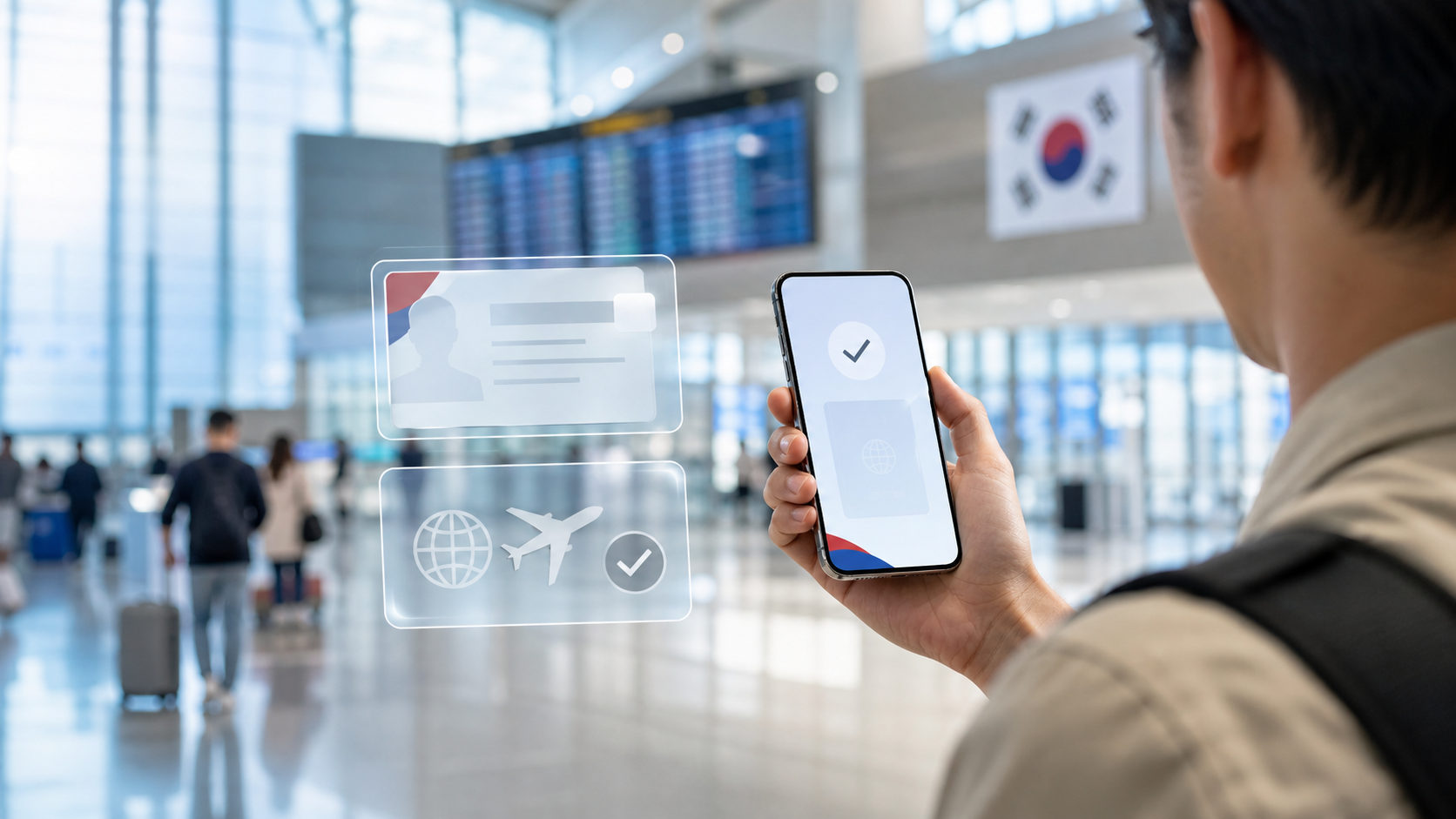
Before you fly to Seoul, there are two pieces of entry paperwork worth understanding — the e-Arrival Card and K-ETA. They sound similar, but they’re not the same thing, and mixing them up is exactly how people end up on a scam site paying way more than they should. Here’s the simple version.
The e-Arrival Card
This is the digital replacement for the old paper arrival card you used to fill out on the plane. As of January 1, 2026, it’s the only option — paper forms are gone.
- Cost: 무료 (muryo), free
- Who needs it: Most foreign visitors entering Korea
- When to submit: Within 72 hours of your arrival (it expires after that, so don’t fill it out weeks ahead)
- What it covers: 여권 (yeogwon), passport, details, flight info, and where you’re staying in Korea
- Time it takes: About 5 minutes
No printout needed — immigration pulls it up when they scan your passport — but a screenshot of your confirmation is a smart backup.
K-ETA
This is a separate system — a pre-travel 입국 (ipguk), entry, authorization you apply for before you even book, not something you fill out per trip.
- Cost: ₩10,000 (about $8) — this one does have an official fee
- Who needs it: Citizens of certain visa-exempt countries — though currently waived through December 31, 2026 for eligible countries (US, UK, Canada, Australia, Japan, most of the EU, and others)
- Validity: Good for 3 years or until your passport expires — covers multiple trips, not just one
How they connect
If you hold a valid K-ETA, it covers your arrival declaration too, so you skip the e-Arrival Card. If you don’t have one — including if you’re using the current exemption — you’ll need to submit the e-Arrival Card instead. Right now, most exempt-country travelers fall into this second group: no K-ETA needed, but the e-Arrival Card still is.
Avoid third-party sites
Search “Korea arrival card” and you’ll likely see paid third-party sites before the real one. Some charge anywhere from $10 to well over $100 for a form that’s free, or for K-ETA processing well above the actual $8 fee. They’re not stealing your info — they typically do submit the form — you’re just paying for something you could do yourself in minutes. Still, it’s the same pattern as any 사기 (sagi), scam, site: markup on something that should be free or cheap, dressed up to look official.
Only use the official government sites:
- e-Arrival Card: e-arrivalcard.go.kr
- K-ETA: k-eta.go.kr
Before entering any passport information, check the URL. If it
doesn’t end in .go.kr, close the tab.